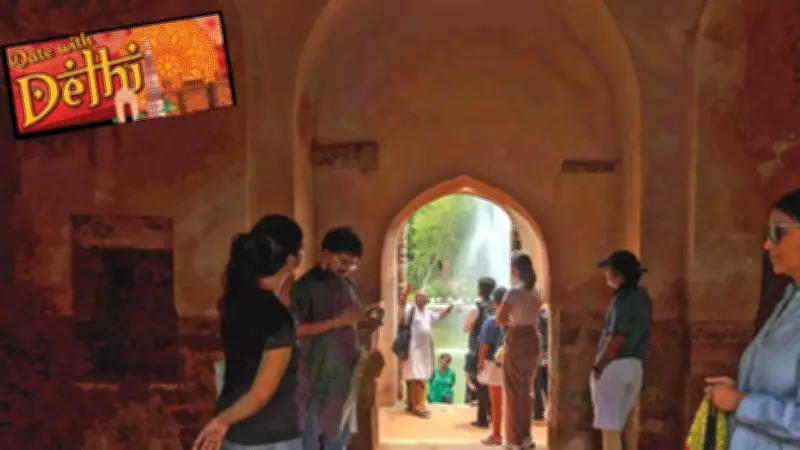
Delhi's Soul Revealed Through Heritage Walks: Storytellers Keep City's Pulse Alive
In Delhi, history does not sit quietly behind museum glass. It spills vibrantly into bustling streets, lingers in the sacred atmosphere of ancient dargahs, hides within the forgotten walls of crumbling havelis, and sometimes hums with quiet energy inside a 14th-century tomb. To truly understand this magnificent city – layered with contradictions, teeming with life – one must deliberately slow down. Just enough to hear its whispers. And walking through Delhi's historic neighborhoods does exactly that.
The Storytellers: Guardians of Delhi's Narrative
At a recent gathering of community leaders, when asked what Delhi must never lose, heritage walk leader Mohammad Anas gave a poignant reply: "Dilli ke kahaani sunane wale" – the storytellers of Delhi. Numismatist and history enthusiast Shah Umair added, "Aur Dilli ke kahaani sunne wale" – and those who listen to Delhi's stories. Tales of City founder Abu Sufiyan completed the thought, emphasizing that "Addebaazi," the unique conversational art that forms Delhi's soul, must never disappear. These kisse (tales), kahaaniya (stories), and the people who tell and receive them constitute the very pulse of Delhi's thriving walk culture, ensuring narratives remain alive across generations.
"Walking reveals the lived character of a city, its textures, sounds, stories and everyday traditions that cannot be experienced while you are in a vehicle," explains Sachn Bansal, chief explorer and founder of Delhi Walks. His organization curates immersive experiences around vanishing havelis, explores the ishq (love), mushk (fragrance) and mausiki (music) of Dargah Nizamuddin, and offers food-led explorations like Chaat Walks and Chai Conversations. Delhi's walk culture is fundamentally powered by these dedicated storytellers – historians, photographers, and enthusiasts who interpret the city's complex layers for others. Through their guided walks, static monuments transform into dynamic portals, ordinary streets reveal forgotten histories, and everyday neighborhoods turn into living, breathing archives.

Physical Presence: The Key to Emotional Connection
"An Instagram reel may be visually beautiful, but when you're sitting in your own space, it becomes just another piece of digital content," observes Mohammad Anas Khan, founder of Unzip Delhi. "When you physically step into a monument, you experience it in a completely different light. When you walk into Delhi's monuments, you truly feel the grandeur of its built heritage, and that profound sensation can only be experienced when you're physically present."
This emotional intimacy is precisely what walking through Delhi restores. From within a car, the city becomes merely a blur of traffic lights and concrete flyovers. On foot, it becomes richly textured. You notice intricate stone carvings (while perhaps frowning at scribbled graffiti on ancient pillars), observe fading calligraphy, and catch the sweet smell of jalebi wafting from a century-old shop. Walking fundamentally changes the scale of human attention and perception.
Anoushka Jain, founder of Enroute Indian History, strongly believes in this transformative power. "Walking allows you to observe even the smallest architectural details, elements you would completely miss from a rickshaw or car, especially in fast-moving Old Delhi. Even if you explore just one concentrated area, as long as you do it on foot, you'll remember it for life. It creates deeply intimate, personal memories."
Monuments as Portals to the PastNumismatist and history enthusiast Shah Umair, known as Sikkawala, offers a powerful perspective: "Monuments are portals, not mere relics. Within a single monument, I can narrate five different scripts, five intersecting narratives, all coexisting within the same structure. When you stand inside these spaces, touch their walls and truly inhabit them, you connect with the lives of those who were there 500 years ago. In that magical moment, you become part of that historical continuum."

This continuity defines Delhi's uniqueness. Unlike many global historic cities preserved as static heritage zones, Delhi is vibrantly lived in. Ancient tombs, sacred shrines, and historical ruins exist seamlessly within the fabric of everyday contemporary life. "When you walk, you slow down. You notice the layers… The sounds of everyday life, the smell of food being cooked, the texture of old walls, the language spoken in a lane, the rhythm of people moving through their day," describes Ramit Mitra, founder of DelhiByFoot. "That full sensory immersion is what creates a genuine emotional connection with a place, with a city."
The Evolution of Walk Culture and Deeper Understanding
"Fifteen years ago, people would ask us, 'What is a heritage walk?' Now they ask, 'What is so special about your heritage walk?' This shift clearly shows how the audience has evolved," quips Ramit Mitra. "Earlier participants were often well-traveled globetrotters who had experienced heritage walks worldwide. Today, a much more varied demographic joins us – people from all walks of life and across age groups. Many participants confess they pass by these places daily but never knew about the rich stories and heritage waiting to be discovered."
These walks consciously move beyond merely spilling historical facts or listing names, dates, and royal dynasties. "The aim is to create a composite understanding of political systems, the evolution of architecture, language, society, and administration," Mitra explains. "We share viewpoints from multiple authors and thinkers who have written about different periods and societies during the walks."
Delhi's historic neighborhoods were meticulously shaped long before modern transportation existed, and their human scale is best understood on foot. "Walking allows for careful observation and genuine interaction, whether noticing subtle architectural details, hearing local oral histories, or understanding how spaces are still used today," says Sachn Bansal. "This physical and emotional closeness fosters a deeper, more personal connection to Delhi."
"Walking is essential to understanding Delhi," adds Nitika Arora of Darwesh Taleweavers, who describes herself as a core Dilliwali. "Many of the subcontinent's most decisive historical moments unfolded here, yet we pass their sites daily without recognition. Heritage walks slow people down, restore vital context, and re-establish a meaningful dialogue between the city and its inhabitants." Perhaps this is the real gift of walking – it transforms the city from a passive backdrop into an active, engaging conversation.
Creating Community and a Sense of Belonging
Beyond history and architecture, these walks often create something beautifully unexpected – spontaneous moments of human connection, shared nostalgia, and collective discovery among strangers exploring the city together. Walk leader Dushyant Singh Panwar shares, "Many participants have told me that these deeply experiential explorations take them back to their childhood or youth, triggering emotional recollections lost in daily routine. These walks do not just inform people; they create genuine joy and a powerful sense of belonging."
Walking naturally creates social intimacy. Anoushka Jain notes that the five or ten minutes of casual walking between two scheduled stops often lead to meaningful conversations, shared personal stories, and even the beginning of new friendships. "As adults, we have so few organic spaces to make new friends. Walking through Delhi creates that precious space," she reflects. In a city constantly rushing forward, these heritage walks offer a sacred pause – a chance to listen, connect, and remember why Delhi's stories matter more than ever.