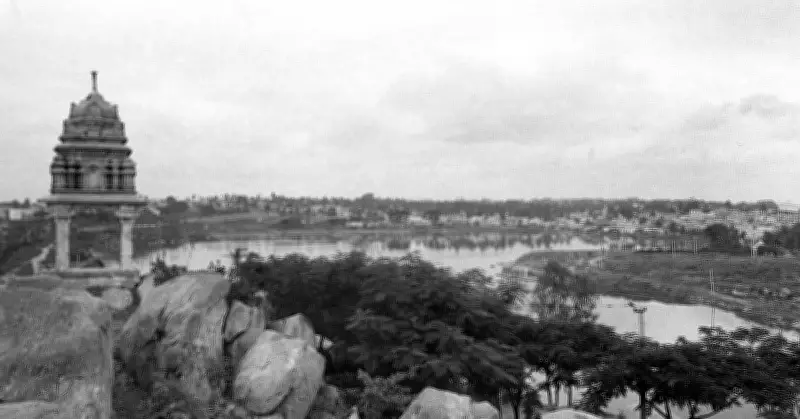
Unveiling Bengaluru's Hidden Topography Through Historical Names
Often overshadowed by its bustling urban sprawl, Bengaluru's geographical essence lies in its elevation and terrain, a fact frequently overlooked by residents and visitors alike. Situated 900 meters above sea level on the Deccan Plateau, the city is far from a monotonous flatland; it is a dynamic landscape characterized by distinct ridges and valleys that shape its physical and cultural identity.
The Cyclist's Perspective and Historical Confirmations
Cyclists navigating Bengaluru's streets intuitively sense the undulating nature of the terrain, experiencing firsthand the climbs and descents that define the city's layout. This topographical reality is not a modern discovery but is deeply embedded in Bengaluru's history, as evidenced by ancient place names that have survived through centuries.
Inscriptions and historical records reveal names such as Srinivagilu, Chikkabettahalli, Hesarughatta, and Mallapura, each offering clues to the local landscape. For instance, names ending in 'betta' or 'halli' often denote hills or elevated areas, while terms like 'kere' reference water bodies like the Kempambudhi Kere, highlighting the interplay between land and water in this region.

Connecting Past and Present: What Names Tell Us
These historical names serve as a linguistic map, guiding us to understand how early settlers perceived and interacted with their environment. They reflect a time when Bengaluru's terrain was more visibly influential in daily life, from agriculture to settlement patterns. By studying these names, we gain insights into:
- The natural ridges that may have offered strategic advantages or scenic views.
- The valleys that likely supported farming or water collection systems.
- The overall topography that influenced urban development long before modern infrastructure.
This connection between name and terrain underscores the importance of preserving such cultural heritage, as it enriches our appreciation of Bengaluru's unique character beyond its concrete facade.
Implications for Urban Awareness and Conservation
Recognizing Bengaluru's terrain through its names encourages a deeper engagement with the city's natural assets. It prompts discussions on sustainable urban planning that respects the original landscape, potentially mitigating issues like flooding or heat islands. Moreover, it fosters a sense of place among citizens, linking them to the historical roots of their home.
In an era of rapid urbanization, this perspective reminds us that Bengaluru is not just a metropolis but a living terrain, with stories etched in its very nomenclature. By looking past the concrete, we rediscover a city shaped by its elevation and valleys, a testament to the enduring relationship between people and place.