German Author Ingo Schulze's Pune Event Delves into Morality and Social Fracture
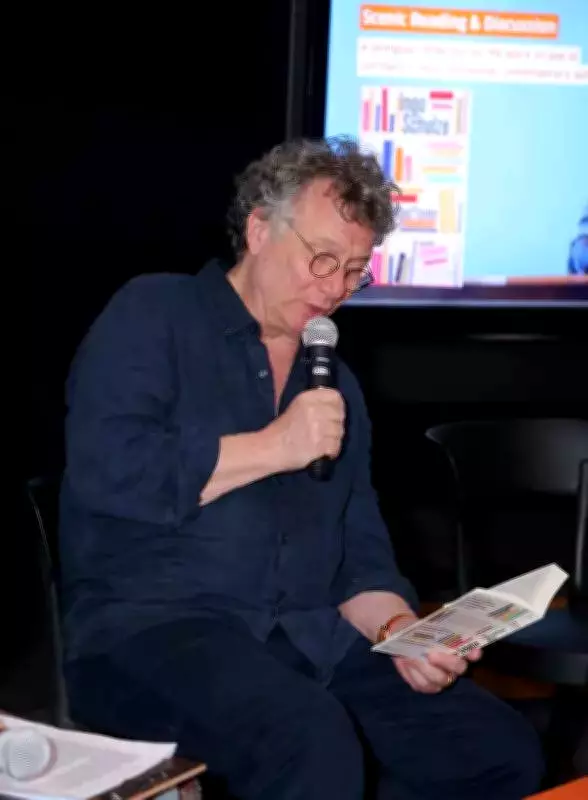
A bilingual scenic reading and discussion with acclaimed German author Ingo Schulze transformed a literary evening in Pune into a profound examination of morality, memory, and social fracture. The event, held on Tuesday at Max Müller Bhavan on Boat Club Road, was presented by the Goethe-Institut in collaboration with the department of German at Savitribai Phule Pune University.
Exploring 'The Righteous Murderers' Through Bilingual Readings
The session centered on Schulze's celebrated novel Die rechtschaffenen Mörder, translated into English as The Righteous Murderers. The evening unfolded through compelling readings in both German and Marathi, creating a unique cross-cultural literary experience. The novel follows a respected antiquarian bookseller in post-reunification Germany whose deepening isolation and resentment lead him toward association with xenophobic violence.
At its core, the work probes complex questions of moral responsibility, complicity, and how righteousness can mask dangerous radicalization. Schulze's narrative challenges readers to confront uncomfortable truths about societal breakdown and individual accountability.

The Unsettling Question of Radicalization
The heart of the evening revolved around the disturbing question that drives Schulze's novel: what causes a well-educated and cultured citizen to turn toward extremism? The author resisted providing simplistic answers, emphasizing the complexity of human behavior.
"It is never certain that a person turns bad, and that uncertainty is central to the novel," Schulze explained. "In the first half, you follow a man who appears to be moving in a troubling direction. But in the second part, another narrator enters—someone with his own interests and blind spots. Suddenly, contradictions emerge."
Schulze highlighted the essential ambiguity when addressing radicalization: "This ambiguity is essential when addressing radicalization. Who has the authority to judge when people move towards the far right, and on what moral ground?"
Limits of Culture and Education
The discussion repeatedly returned to the limitations of culture and education as safeguards against intolerance. Schulze observed that books, music, and intellectual life do not automatically prevent resentment from taking root in individuals or societies.
"As a writer, I do not want to tell readers what to think or which side to choose," Schulze stated. "What matters to me is how readers respond and how dialogue opens. Literature should provoke thought rather than provide easy answers."
Interactive Engagement with Students
Students from the Goethe-Institut adopted the perspectives of specific characters from the novel and questioned Schulze accordingly, creating an unusually interactive literary discussion. The author expressed how this approach challenged his own understanding of his work.
"In over 30 years of writing, this has never happened," Schulze revealed. "Moments like these force me to rethink my own characters and even myself. One reader asked why I portrayed a figure so harshly, and I had to admit that this character is very close to me. Writing him meant confronting my own ego and my own position in the world."
Literature in Political and Historical Context
As president of the Deutsche Akademie für Sprache und Dichtung (German Academy for Language and Poetry), Schulze also reflected on how literature is inseparable from the political and historical moment in which it is created and read.
"Literature begins as a story, but it always becomes a conversation about ourselves and the times we live in—shaped by politics, economics, and history," he explained. "The hardest and most necessary question remains how, in a world marked by destruction and violence, one can choose not to become bitter, yet remain open to others."
The event demonstrated how literary discussions can transcend cultural boundaries while addressing universal human concerns about morality, responsibility, and social cohesion in increasingly fractured societies.