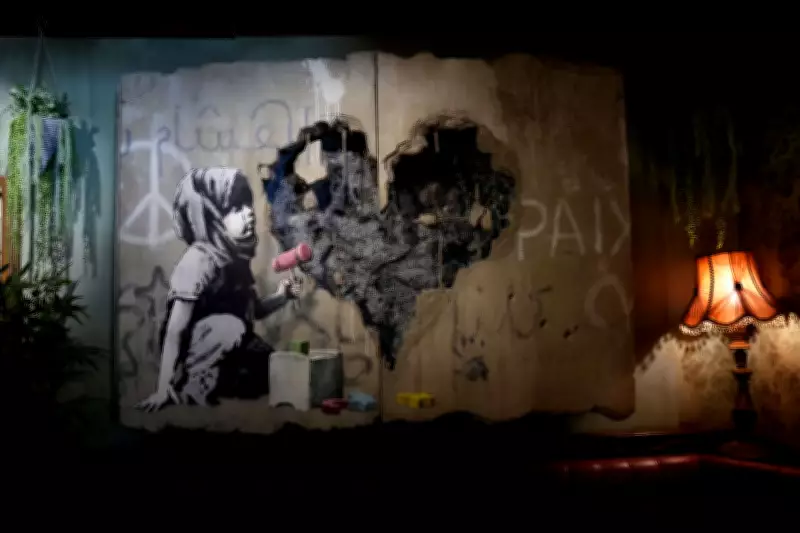
The Unmasking of Banksy and the Filter Slip: When Illusions Shatter
In a revelation that sent shockwaves through the art world, the enigmatic graffiti artist known globally as Banksy has been identified as Robin Gunningham, a 51-year-old man from Bristol, United Kingdom. A Reuters investigation confirmed his identity, ending nearly three decades of speculation about the mysterious figure behind provocative street art. Simultaneously, a seemingly unrelated incident occurred in China where a beauty influencer's digital filter momentarily failed during a livestream, revealing her natural appearance and causing her to lose 140,000 followers within days.
The Immediate Fallout: Value Plummets and Followers Flee
On social media platform X (formerly Twitter), Banksy's fans and art experts immediately began discussing the potential devaluation of his work. "The mystery was 90% of the art," one user commented, while another stated bluntly: "As soon as I saw him, I immediately knew the value of his pieces was going down because he had lost the most important part of his brand." This reaction mirrors what happened to the Chinese influencer when her carefully curated digital persona was briefly disrupted by a software glitch, exposing a warmer complexion and different facial features than her filtered image typically presented.
The Psychological Mechanism: Why We Punish Revelation
Social commentator Santosh Desai explains this phenomenon: "Banksy, when anonymous, was himself a part of the art he created. That whole aura that Banksy represented with his anonymity is now gone. Similarly, when an illusion breaks with filters slipping, people feel betrayed, as the implicit contract they had with someone 'cool' is violated." This emotional response finds philosophical roots in Plato's "Allegory of the Cave," where prisoners mistake shadows for reality and resist enlightenment that challenges their comfortable illusions.

Sociologist Erving Goffman's theory of self-presentation further illuminates this dynamic. In his 1959 work "The Presentation of Self in Everyday Life," he described how we maintain "front-stage" performances while hiding "back-stage" realities. When these performances are exposed through revelations like Banksy's identity or a filter glitch, the entire curated persona feels devalued.
The Hyperreal World: When Simulations Become Reality
French philosopher Jean Baudrillard's concept of "hyperreality" from "Simulacra and Simulation" (1981) explains our current predicament. He argued that simulations can become more real than reality itself. In today's digital landscape, our filtered personas and curated identities aren't merely hiding reality—they have become the only reality we accept. When these simulations glitch or collapse, we experience genuine panic and betrayal.
This dynamic plays out dramatically in popular culture. The film "The Truman Show" (1998) depicts a man living in a perfectly manufactured reality. When he discovers the artificial nature of his world, viewers confront their own complicity in maintaining illusions. Similarly, Banksy himself once noted: "I don't know why people are so keen to put the details of their private life in public; they forget that invisibility is a superpower."
Research Confirms: Authenticity Versus Curation
A 2024 study on beauty filters in influencer marketing found that filtered content creates perceptions of deception and lowers authenticity scores, directly harming trust and engagement. When filters disappear, followers don't just disengage—they feel personally betrayed because their "intimate" relationship was never with the real person. Another research project titled "Instagram Versus Reality" concluded that unfiltered content actually produces stronger positive consumer reactions, yet most creators and audiences still cling to edited versions because hyperreal standards have become the default.

The Broader Implication: Our Staged Existence
What unsettles us about these revelations is not merely the truth of physical appearance or identity, but the confrontation with the distance between myth and reality. We have reached a point where we struggle to live without gently edited versions of ourselves and others. Banksy may be a 51-year-old Bristol man who invests in migrant rescue boats, and the Chinese influencer may have a warmer complexion than her filters suggest, but our collective punishment of these revelations exposes how much of contemporary life has become performance.
Ultimately, these two incidents—separated by geography and context—reveal a shared discomfort in our hyper-curated age. When illusions collapse, whether through investigative journalism or technological glitches, our affection and valuation plummet because we're forced to acknowledge how extensively we've all participated in creating and maintaining these fictions.