Despite Drastic Percentile Reduction, NEET-PG 2025 Leaves 1,140 Postgraduate Medical Seats Unfilled
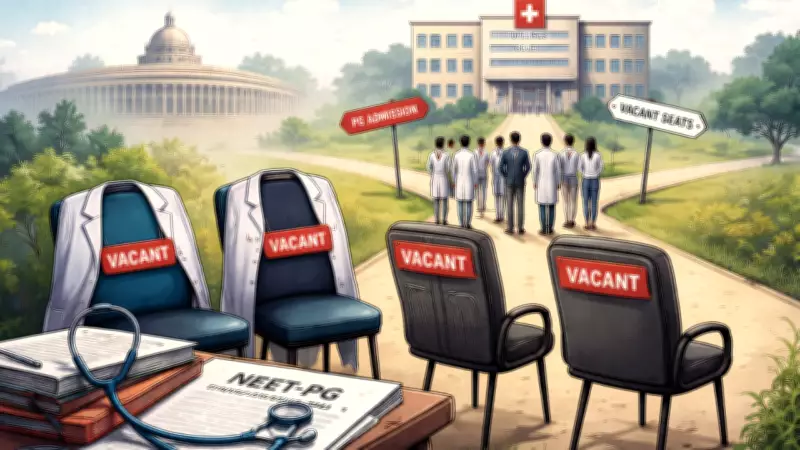
In a significant development that has reignited debates about India's medical education system, 1,140 postgraduate medical seats remained vacant after the Stray Round of counselling for NEET-PG 2025, according to official data presented in Parliament. This persistent vacancy issue emerged despite the Union Health Ministry implementing a steep reduction in qualifying percentiles specifically designed to prevent such situations.
Government's Eligibility Expansion Fails to Fill Seats
The Ministry's response to previous vacancy concerns was to dramatically widen eligibility criteria for the 2025 admission cycle. The qualifying percentile was reduced to above the 7th percentile for unreserved category candidates and above the 5th percentile for UR-PwD candidates. For SC, ST, and OBC candidates, all were declared qualified for counselling regardless of their percentile scores.
"The qualifying percentile was reduced in order to ensure that valuable PG medical seats do not remain vacant," stated the Ministry in its Rajya Sabha reply tabled on March 17th. However, this substantial expansion of the candidate pool failed to achieve its intended purpose, with over a thousand seats remaining unallocated even after multiple counselling rounds.

Beyond Simple Eligibility: Systemic Issues Emerge
The persistence of vacancies despite lowered thresholds suggests the problem extends far beyond mere entrance requirements. When a reduced cut-off—which typically expands the available candidate pool significantly—still results in substantial vacancies, the issue appears to move beyond the entrance threshold itself and into deeper systemic challenges.
The Parliament reply, while not explicitly detailing reasons, clearly indicates that widening eligibility alone has not resolved the longstanding vacancy problem in postgraduate medical admissions. This creates a layered situation where the examination mechanism remains officially supported while its outcomes reveal underlying structural issues.
NEET's Legal Status Remains Unchanged Despite Vacancies
The vacancy data emerged in response to a parliamentary question that also inquired whether the Centre was considering discontinuing NEET, with some critics calling the examination "exclusionary in nature." The government firmly rejected any such move, reiterating its commitment to NEET as the common entrance mechanism for medical admissions across India.
The Ministry referenced Section 14 of the National Medical Commission Act, 2019, which mandates a uniform entrance test for both undergraduate and postgraduate medical education. Officials described NEET as a "historic reform" that has improved transparency and liberated students from taking multiple entrance examinations.
Fragmented Counselling Structure Complicates Resolution
Part of the complexity lies in how counselling itself is organized across multiple authorities. The Medical Counselling Committee (MCC), operating under the Directorate General of Health Services, handles counselling for 50% of All India Quota seats and 100% of seats in Central and Deemed Universities.
Meanwhile, state governments conduct counselling for State quota seats, with state counselling authorities also managing private medical college admissions. This fragmented structure means the vacancy issue doesn't reside within a single office or under one authority, making coordinated solutions more challenging.
Multiple Factors Likely Contributing to Vacancies
When seats remain vacant after repeated counselling rounds, the problem likely reflects not just who is allowed to compete, but also where the seats are located, how they are priced, and how they are perceived by candidates. The Ministry's reply, while not delving into these specific factors, presents data that points toward broader challenges in the postgraduate medical admission process.

The current situation suggests that if seats remain vacant even after the qualifying bar has been lowered sharply, the issue cannot be explained by access concerns alone. Multiple intersecting factors—including geographical distribution of seats, fee structures, institutional reputation, and specialty preferences—likely contribute to the persistent vacancy pattern.
Looking Forward: Systemic Evaluation Needed
For now, the Centre's position remains clear: NEET continues as the non-negotiable entrance mechanism supported by legal framework and policy language as the vehicle for medical education reform. However, the vacancy numbers presented to Parliament demonstrate that the admission system faces problems that cannot be addressed by legal defence alone.
The larger question emerging from this data is whether the system around NEET is working as intended when, despite eligibility expansion, valuable postgraduate medical education opportunities remain unfilled. This situation calls for comprehensive evaluation of multiple factors beyond entrance thresholds to ensure India's medical education infrastructure optimally serves both aspiring doctors and public health needs.