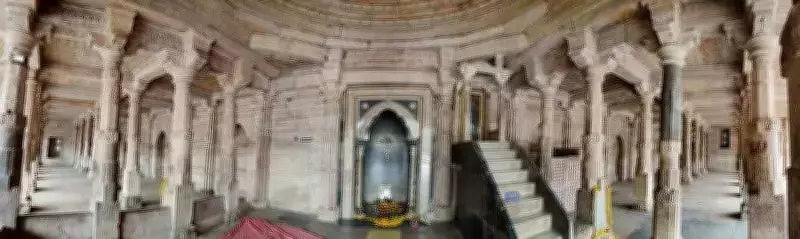
ASI Report on Bhojshala Complex Ignites Demand for Return of Vagdevi Idol from British Museum
The release of the Archaeological Survey of India's long-awaited survey report on the Bhojshala-Kamal Maula Mosque complex in Dhar, Madhya Pradesh, has sparked more than just legal discussions in courtrooms. It has ignited a fervent and decades-old demand for the repatriation of the Vagdevi idol, currently housed at the British Museum in London, where it has been displayed for nearly 150 years.
Archaeological Findings and Public Reaction
After an extensive 98-day investigation employing state-of-the-art scientific techniques for excavation, study, and documentation, the ASI team concluded that the Bhojshala complex was constructed using remnants of ancient temples. The report also suggested the historical existence of a Vagdevi temple at the site.
For the residents of Dhar, this finding transcends mere archaeological significance; it represents a profound validation of their long-held beliefs. Within a day of the report's public release, the call for the return of the Vagdevi idol spread rapidly across the region, described by one observer as "spreading like wildfire."

Voices from the Ground
Kamla Solanki, a devotee from Dhar who attended the evening aarti at Bhojshala—permitted by the ASI on Tuesdays—expressed her heartfelt plea: "My only desire now is that the idol should reach Bhojshala as soon as possible. My request to Prime Minister Narendra Modi is that he retrieves all our relics back to India. He should ensure the idol's return."
Ashish Goyal, state vice-president of the Hindu Front for Justice and a petitioner in the Bhojshala case being heard by the Indore bench of the Madhya Pradesh High Court, emphasized that the ASI report strengthens their legal position. "Vagdevi is ours. Once the court adjudicates the title based on the ASI report and transfers the complex to Hindus, we will urge the Madhya Pradesh government and PM Modi to initiate efforts to bring the goddess back to her original abode," he stated.
Historical Context and Disputed Identity
The idol in question, cataloged under museum number 1909,1224.1 at the British Museum, was excavated from Bhojshala and transported to London in October 1879 by Major General William Kincaid, who served as the political agent for Bhopawar and commandant of the Malwa Bhil Corps.
The British Museum describes the artifact as a "Standing figure of the Jaina yaksini Ambika carved in a coarse white marble," with detailed notes on its four-armed design, tiered crown, and inscribed base. However, Goyal challenges this characterization, citing the work of eminent Indian archaeologist Padma Shri Vishnu Sridhar Wakankar. "Wakankar visited the British Museum and confirmed it was the same statue of Vagdevi, crafted in 1035 using sphatik (crystal quartz). We can substantiate this when required," he asserted.
Political Commitments and Ongoing Legal Proceedings
The demand for Vagdevi's return is not new; it has periodically surfaced in political and cultural dialogues over the years. In October 2022, then Madhya Pradesh Chief Minister Shivraj Singh Chouhan made a public commitment during the Young Thinkers Conclave in Indore, declaring: "I assure you that the initiative to bring back the idol of goddess Vagdevi would be taken effectively."
The Indore bench of the Madhya Pradesh High Court has scheduled March 16 as the next hearing date to receive objections, opinions, suggestions, and recommendations on the ASI report, further propelling this issue into the legal and public spotlight.