Nashik Police Crack Down on Fake Currency Network, Arrest Five Suspects
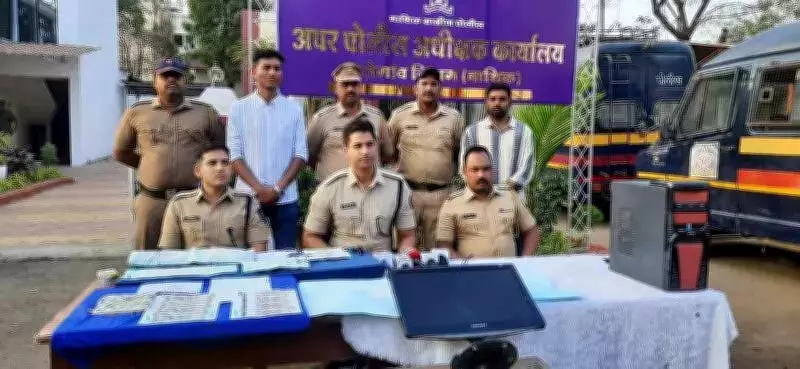
In a significant crackdown on financial crime, Malegaon police have arrested five individuals in connection with a sophisticated fake currency racket operating across Nashik and Chhatrapati Sambhajinagar. The arrests, made on Thursday, target those accused of printing and circulating counterfeit Indian currency notes in the Rs 500 denomination. Authorities are actively searching for three additional suspects believed to be involved in the illegal operation.
Complaint from Private Bank Triggers Investigation
The case came to light on January 23 when a private bank filed a formal complaint at the Chawani police station in Malegaon. According to Additional Superintendent of Police Teghbir Singh Sandhu, the complaint alleged that a farmer from Nandgaon had deposited 100 counterfeit Rs 500 notes as part of his six-month instalment payment totalling Rs 89,000 for a tractor purchased on loan from the bank. This suspicious transaction immediately raised red flags, prompting a thorough police investigation.
On the same day, an FIR was registered under sections 179 (using as genuine forged or counterfeit currency) and 180 (possession of forged or counterfeit currency) of the Bharatiya Nyaya Sanhita. Preliminary investigations by the police revealed that the farmer was not merely an unwitting victim but was actively involved in the circulation of the fake notes. Sandhu stated, "His questioning led police to his uncle, his uncle's friend from Kannad village in Chhatrapati Sambhajinagar and several others before zeroing in on the prime accused, Santosh Kelaskar."
Modus Operandi and Key Arrests
Malegaon Camp Assistant Superintendent of Police Darshan Duggad provided detailed insights into the racket's operations. The prime accused, Santosh Kelaskar, a resident of Chhatrapati Sambhajinagar, operated as a graphic designer with a clandestine setup in one room of the town. Kelaskar would print batches of 200 counterfeit Rs 500 notes and sell them to prospective clients or intermediaries in the chain for Rs 16,500 per batch.
Duggad explained, "After collecting the notes from Kelaskar, the next in chain would pass them on, adding his own commission." This multi-layered distribution network facilitated the widespread circulation of the fake currency. The police have arrested five individuals, including Kelaskar, the farmer, his uncle, his uncle's friend, and one other accomplice. During the raids, authorities seized computers, printers, and papers used in the printing process, providing crucial evidence.
Legal Proceedings and Ongoing Investigations
A local court has remanded all five arrested accused to police custody for four days to facilitate further interrogation and evidence gathering. Despite these arrests, the investigation is far from over. Duggad emphasized, "Three people are still at large. Investigations are underway to find out the nexus and where the accused were engaged in the illegal business." The police are working to uncover the full extent of the racket, including potential links to broader criminal networks and the geographical spread of the counterfeit notes.
This case highlights the persistent challenge of fake currency in the Indian economy and underscores the vigilance of law enforcement agencies in combating such financial crimes. The arrests serve as a warning to those involved in similar illicit activities, demonstrating the authorities' commitment to maintaining the integrity of the nation's currency system.