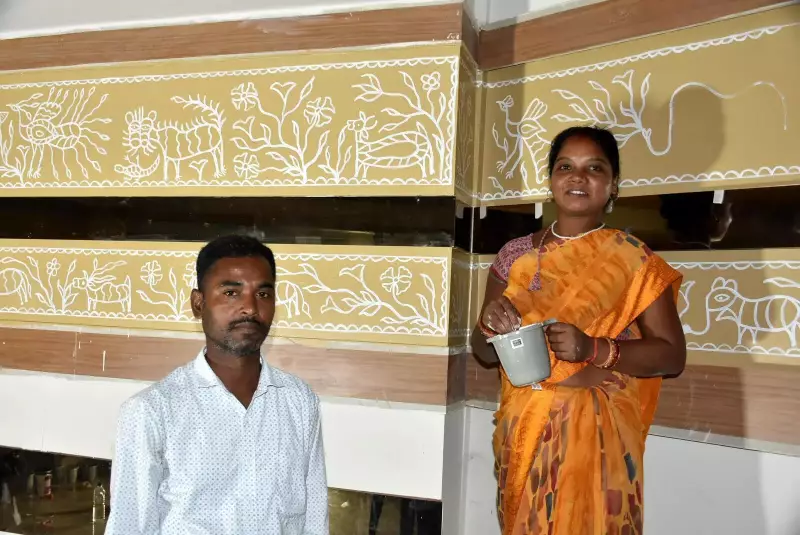
In a race against the clock, a dedicated artist couple from Hazaribag is breathing life into the walls of the soon-to-be-inaugurated Rabindra Bhavan in Ranchi. They are covering the blank surfaces with stunning, vibrant depictions of Jharkhand's rich tribal heritage.
A Labor of Love and Legacy
For the past week, the couple has been investing nearly eight hours each day into this monumental task. They are meticulously painting the walls with traditional designs from the Sohrai and Kohvar art forms. Their tools are as authentic as their art—natural pigments and brushes made from local materials.
The emerging murals are a beautiful tapestry of themes central to tribal storytelling. The walls now showcase forests, various animals, and scenes from rural life, each stroke telling a story of the land and its people.

The Soul of Sohrai and Kohvar Art
Sohrai is a ritualistic wall-painting tradition practiced by the tribal communities of Jharkhand. Historically, it is the women who create these vivid artworks during harvest and festive seasons. Using natural earth pigments and brushes crafted from bamboo, they transform simple mud walls into vibrant canvases. These artworks depict animals, plants, and geometric motifs, all deeply connected to agrarian life and spiritual beliefs.
Anita Devi, one half of the artistic duo, shared her feelings with ToI. "We feel fortunate to paint the walls of the Rabindra Bhavan with our ancient art forms that reflect the soul of Jharkhand’s rich cultural heritage," she said. "Artists from around the world will perform here. They will feel connected to art, nature, and community through these walls."
Preserving History on Canvas and Wall
Anita and her husband, Amit Kumar, are not just stopping at the murals. They have also created approximately 50 paintings on canvas to further adorn the interior of the Rabindra Bhavan.
Amit explained the deeper purpose behind their work. "Through these paintings, we have depicted the lives of tribals and wildlife, including the extinct ones, of Jharkhand," he said. He added a poignant note, "Though some animals are now found in fewer numbers, the art forms will keep them alive." Their project, therefore, serves as both a celebration and a conservation effort, ensuring that the memory of Jharkhand's ecological and cultural past remains vivid for future generations.