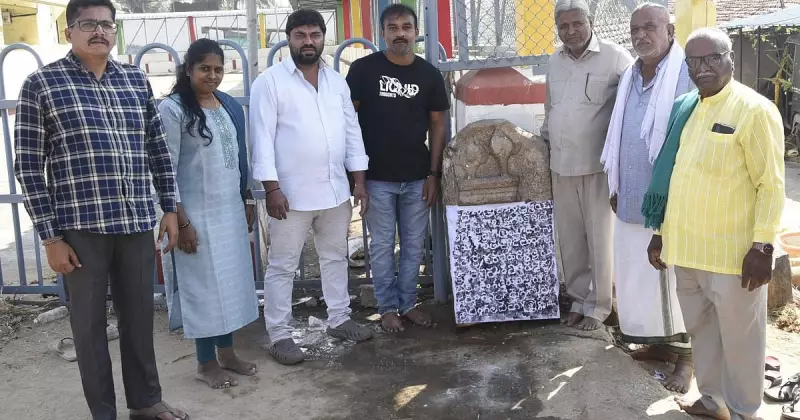
The recent discovery of an ancient inscription in Karnataka has provided a remarkable glimpse into the 12th century, unearthing evidence of a long-standing and profound connection between the Hoysala Empire and the Tamil region of Tamilakam. This significant find offers fresh insights into the cultural and historical interplay between these two powerful South Indian entities.
The Discovery at Sri Mahalakshmi Temple
The key artifact is a broken soapstone piece known as a 'Kalasha'. It was found at the Sri Mahalakshmi Temple in K Bettahalli, located in the Pandavapura taluk of Mandya district. This object, dating back approximately 850 years, serves as a tangible link to a bygone era. Its recent identification and study have opened a new window for historians and archaeologists, allowing them to piece together a more nuanced narrative of South India's past.
Deciphering the 12th Century Connection
The inscription on the Kalasha is pivotal. It explicitly documents and reveals what scholars are calling an eternal relation between Hoysala Karnataka and Tamilakam. This term suggests a bond that was recognized even in that historical period as being deep, enduring, and significant. The find moves beyond mere speculation of trade or conflict, pointing instead to established cultural, political, or religious exchanges that were formalized and recorded.

Such discoveries are crucial for understanding the fluid boundaries and interconnected histories of regional kingdoms in pre-modern India. They challenge simplistic narratives and highlight the continuous movement of ideas, people, and traditions across the Deccan and into the Tamil country.
Implications for Historical Understanding
The implications of this discovery are substantial for several reasons:
- It provides primary source evidence for a relationship that might have been referenced in later texts or folklore.
- It adds a specific geographical data point in Mandya district, helping map the extent of Hoysala influence and interaction.
- It enriches the history of the Hoysala Empire, known for its magnificent temple architecture, by detailing its broader socio-political networks.
- It reinforces the deep, centuries-old cultural links between modern-day Karnataka and Tamil Nadu, offering a historical perspective on contemporary connections.
Archaeologists and historians, including those involved in the discovery like Sneha Madiyalkar and Md Hussain, will now focus on a detailed epigraphic study. The full translation and context of the inscription could reveal more about the nature of this bond—whether it was a diplomatic alliance, a record of a gift or endowment, or a testament to shared religious patronage. The news of the find was widely reported on 07 January 2026, marking a new chapter in South Indian historiography.
In conclusion, the 850-year-old Kalasha from K Bettahalli is more than a broken stone; it is a messenger from the past. It silently testifies to an era of dynamic interaction between the Hoysalas and Tamilakam, reminding us that India's history is woven from countless such threads of connection, now waiting to be rediscovered and understood.