Rediscovering a Literary Giant: Akhtarul Iman's Life and Legacy
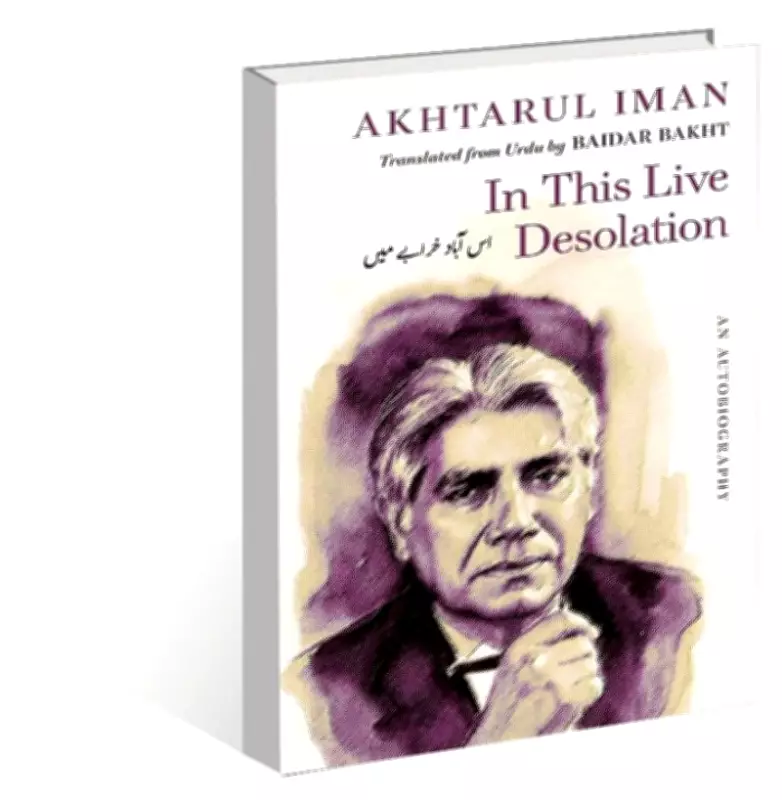
The famous line, "Jin ke apne ghar sheeshe ke hote hain, wo doosron par patthar nahin phenkte" (Those with houses made of glass do not throw stones at others), delivered by actor Raj Kumar in the Hindi film 'Waqt', is etched in popular memory. Yet, its author, Akhtarul Iman, remains largely unknown to many. A new English translation titled 'In This Live Desolation', by Bedar Bakht, brings this forgotten Urdu poet's autobiography to a wider audience, published by Speaking Tiger in a 272-page volume priced at Rs 699.
Pioneering Modern Urdu Poetry
Akhtarul Iman, born in 1915 in the villages of western Uttar Pradesh and Haryana, rose to prominence as a key figure in 20th-century Urdu literature, with a stature comparable to Faiz Ahmad Faiz, Sahir Ludhianvi, and Firaq Gorakhpuri. Breaking away from the classical ghazal traditions of poets like Ghalib and Mir, he emerged as a pioneer of the modern nazm, a poetic form that allowed for the expression of revolutionary ideas and social realism.
His early life, marked by a carefree yet challenging childhood, involved travels with his father seeking work as a mosque imam, roaming through fields, forests, and rivulets, and dodging snakes and birds—reminiscent of RK Narayan's 'Malgudi Days'. These formative years, described in witty and melancholic tones akin to Satyajit Ray's Apu trilogy, set the stage for his literary journey.

A Witness to Literary and Historical Shifts
During the 1930s, Akhtar began writing and participating in competitions under the mentorship of teachers in Delhi and Aligarh. This period coincided with the birth of the progressive movement (taraqqi pasand tehreek) in Urdu literature, which shifted poetry from romantic ghazals to themes of social realism, anti-imperialism, and working-class struggles. He was an active participant in this transformation, experimenting with the nazm alongside contemporaries in cities like Delhi, Aligarh, Lahore, Bombay, and Hyderabad.
His accounts provide a unique glimpse into an undivided India, where places and people flowed seamlessly across what would later become borders due to Partition. He describes Delhi and Lahore as existing on the same highway and mentions interactions with film personalities like SM Yusuf and Najm Naqvi, who migrated to Pakistan, alongside Indian figures like BR Chopra and Krishen Chandar.
Dual Career in Bombay Cinema
Akhtar's story is not just that of a poet finding work in Bombay cinema; it reflects a dual realm where his literary prowess and film career intersected. The language of early talkie films in Bombay was Urdu or Hindustani, flourishing due to the influx of poets and authors in the 1930s and 1940s. He documented his early days in Pune and Bombay, where he worked with Shalimar Pictures and BR Chopra, and his homes became addas (hangouts) for Urdu literary giants in the film industry.
In his illustrious career, he wrote stories, dialogues, and lyrics for nearly 100 films, including classics like 'Kanoon', 'Waqt', and 'Dharmputra', earning two Filmfare awards. His autobiography, serialized in an Urdu periodical and published posthumously in 1996, offers scattered episodes rather than an exhaustive life account, filled with juicy gossips about relationships and the rise and fall of the Urdu progressive movement.
Translation and Literary Impact
Bedar Bakht's translation is impeccable, making Akhtar's life appear more contemporary and accessible. However, the English version may render the original Urdu text somewhat archaic and mundane. The autobiography, while aptly portraying his career progression, does not deeply connect his life to his Urdu poetry or explore his inspirations, assuming Urdu readers are familiar with his work.
To fully appreciate his muse, readers are encouraged to consult his poetry spread across 12 volumes, including two in English translation. This English volume includes 19 translated poems, such as the celebrated nazm 'Ek Ladka' (A Boy), offering a glimpse into his intellectual journey. The reviewer, a filmmaker and archivist, notes that this translation highlights the need for more local language works to be revived in English, preserving the rich literary heritage for future generations.