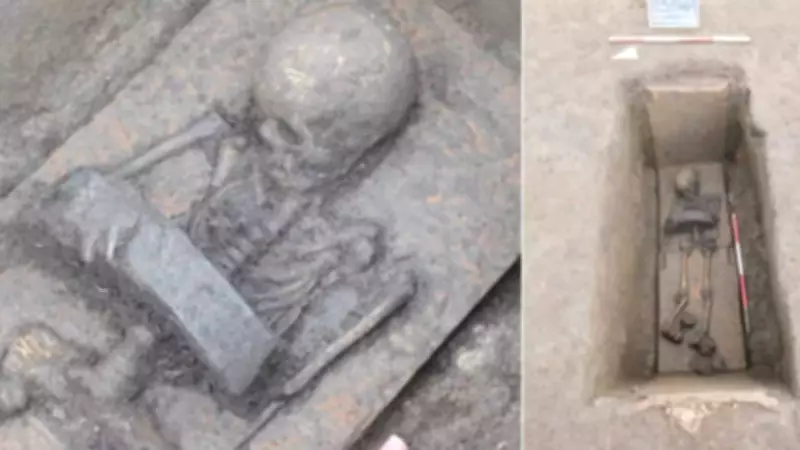
Major Archaeological Discovery in Southern Italy Reveals Ancient Samnite Child Warriors
A groundbreaking archaeological discovery in southern Italy is fundamentally reshaping our understanding of ancient social structures and hereditary nobility. Recent excavations at Pontecagnano Faiano in the province of Salerno have uncovered 34 elite tombs dating back approximately 2,500 years to the Samnite period, specifically the 4th century BC.
Preventive Archaeology Uncovers Historical Treasure
The remarkable findings emerged during what is known as preventive archaeology—a systematic approach mandated by Italian law that requires archaeological investigation before any new construction projects begin. The Superintendency of Archaeology, Fine Arts and Landscape for the provinces of Salerno and Avellino (SABAP) conducted these excavations at the site of a decommissioned tobacco factory, now slated for redevelopment.
This government agency, responsible for protecting Italy's cultural heritage, has revealed tombs that represent a significant departure from previously held notions about social hierarchy during the Samnite era. The Samnites were an ancient Italic people who inhabited central and southern Italy before the establishment of the Early Roman period.

Elite Tombs and Warrior Belts
Among the 34 funerary structures discovered, most consist of simple trench graves with tile coverings. However, several stand out as high-status chamber or box tombs constructed using expensive materials like travertine and tufa stone. The most extraordinary discovery, however, involves the burial of children with large bronze warrior belts—artifacts typically reserved for adult male warriors of great distinction.
These miniature warrior belts represent a profound archaeological revelation: they indicate that Samnite society practiced a form of hereditary nobility where elite status was marked from birth rather than earned through merit or battle achievements. The belts were symbolic representations of the noble status these children would have attained had they lived to adulthood.
Redefining Ancient Social Structures
The discovery of these child warriors provides compelling evidence that social hierarchy in Samnite culture was hereditary rather than merit-based. According to archaeological analysis, these infants from elite families were buried with warrior belts as markers of their birthright—a practice that challenges previous assumptions about how warrior societies functioned.
This finding suggests that noble status in Samnite society was predetermined by family lineage rather than individual accomplishment in battle. The bronze belts placed on these children served as both status symbols and what would have been their future identity as warriors and leaders within their community.
Historical Significance and Future Research
The Pontecagnano Faiano excavation represents one of the most significant archaeological discoveries related to the Samnite civilization in recent decades. The 34 tombs provide an unprecedented window into the funerary practices, social organization, and cultural values of this ancient Italic people.
Archaeologists continue to analyze the artifacts and remains, with particular focus on understanding the broader implications of hereditary nobility in pre-Roman Italian societies. The discovery not only enriches our knowledge of the Samnites but also offers comparative insights into how other ancient civilizations structured their social hierarchies.
As preventive archaeology continues to uncover Italy's buried history, this discovery at Pontecagnano Faiano stands as a testament to the importance of archaeological preservation in the face of modern development. The findings will undoubtedly influence scholarly understanding of ancient Mediterranean societies for years to come.