Major Archaeological Discovery: 1,000-Year-Old Temple Structure Found in Rajasthan's Jhunjhunu District
Archaeologists have made a groundbreaking discovery in Rajasthan, unearthing a remarkably preserved 1,000-year-old temple structure in the state's Jhunjhunu district. This significant find, officials confirm, could potentially fill major gaps in the early medieval history of the Shekhawati region, which has historically lacked documented evidence from earlier periods.
Excavation Details and Site Location
The discovery occurred during an ongoing excavation that commenced in January 2026. The Rajasthan Department of Archaeology and Museums has been conducting this archaeological dig at Tyonda village in Khetri tehsil, specifically at a site locally referred to as ‘Reedh ka Teela’. While Shekhawati is renowned globally for its exquisite 18th and 19th-century painted havelis, archaeological evidence from preceding centuries has remained comparatively sparse until now.
Official Site Inspection and Initial Findings
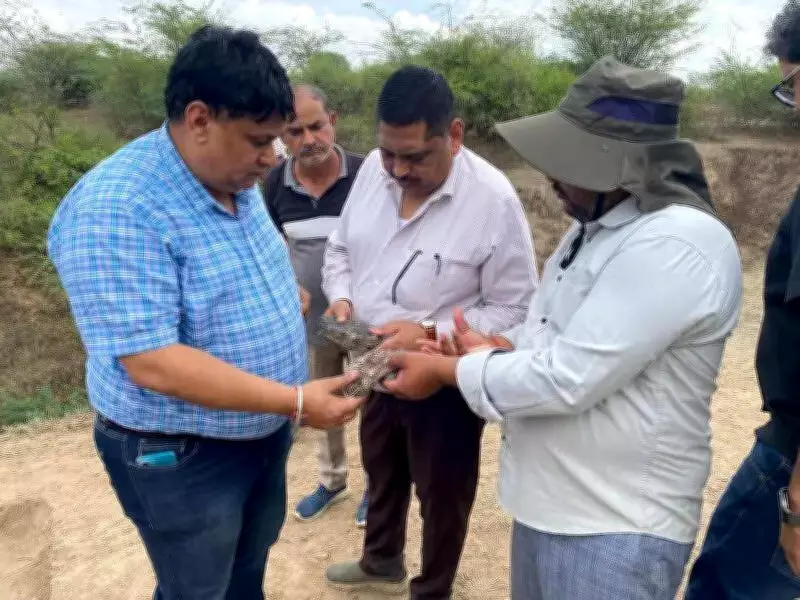
A high-level team of archaeological experts visited the excavation site on Saturday to review progress and assess the discoveries. The delegation included Department of Archaeology and Museums Director Pankaj Dharendra, Jaipur Circle Superintendent Neeraj Tripathi, and Albert Hall Museum Superintendent Mahendra Nimhala.

Neeraj Tripathi provided detailed insights into the recovered artifacts: "We have successfully retrieved fragments of idols depicting Goddess Lakshmi and Lord Ganesha, along with numerous pottery pieces and terracotta artifacts discovered across different soil layers. These findings strongly indicate sustained human habitation and continuous religious activity at this location over an extended period."
Architectural Features and Historical Significance
Excavation Officer Vivek Shukla briefed officials about the architectural elements uncovered at the site. The discoveries include a well-defined stone temple structure with a clearly identifiable floor plan, semicircular architectural remains, multiple pillar bases, intricately carved door frames, and exquisitely detailed stone blocks. Collectively, these elements point toward the existence of a sophisticated and well-developed religious complex during the early medieval period.
Tripathi elaborated on the historical context: "These architectural remains originate from a crucial era when Rajasthan witnessed the emergence of powerful regional dynasties and flourishing temple-building traditions that fundamentally shaped the region's cultural landscape. While regions like Mewar and Marwar possess extensively documented temple architecture from this historical period, archaeological findings from Shekhawati have remained relatively limited. This makes our current discovery particularly significant for understanding the complete historical narrative of Rajasthan."
Broader Historical Implications for Shekhawati Region
The archaeological team believes this excavation could fundamentally reshape historical understanding of the Shekhawati region. Tripathi emphasized: "This discovery may help establish Shekhawati not merely as a late-medieval mercantile hub, but as a region with substantially deeper historical roots connected to ancient settlements and vibrant religious activity that predates its commercial prominence."
Preservation Efforts and Scientific Documentation
During the site inspection, Director Pankaj Dharendra issued specific directives to ensure proper preservation and scientific analysis of the discovered remains. He emphasized the necessity of collecting samples for comprehensive scientific testing and implementing meticulous preservation protocols, including chemical conservation and thorough documentation.
The documentation process involves comprehensive site mapping and detailed artifact drawings, tasks assigned to senior draftsmen Rajnikant and Sunil Sankhla. Conservation efforts are being conducted under the direct supervision of Neeraj Tripathi to maintain archaeological integrity.

Dharendra concluded: "This archaeological discovery represents a potential milestone in understanding Rajasthan's cultural continuum across centuries. Our immediate priority involves ensuring scientific preservation of these invaluable remains and obtaining accurate dating through advanced archaeological methods. This temple structure provides a tangible connection to Rajasthan's rich historical past that we are committed to preserving for future generations."