

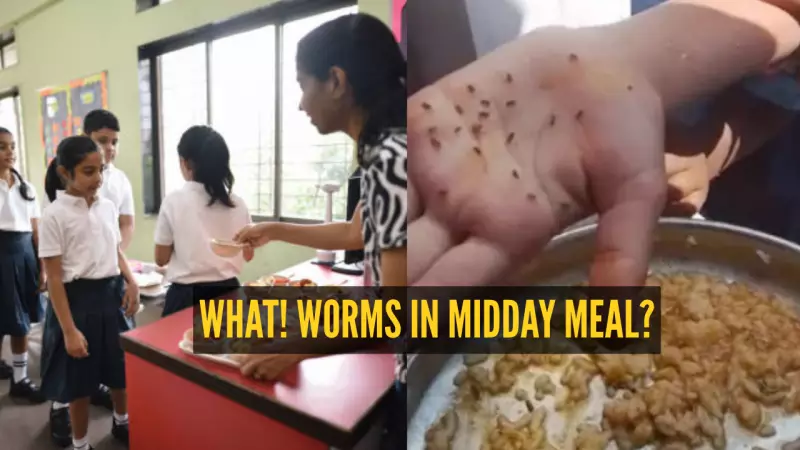
In a shocking lapse of food safety, worms were discovered in rice meant for the midday meal at a government school in Karnataka's Koppal district. The incident has raised serious health concerns and prompted immediate administrative action against negligent staff.
Incident Details and Immediate Fallout
The unsettling discovery was made on Tuesday at a government school located in Bisaralli village, within the Koppal taluk. School staff and students themselves spotted the worms in the rice that was supposed to be cooked for the crucial midday meal. Following the report, the district administration swiftly moved to suspend the school cook and two other staff members for their failure to follow standard operating procedures.
The Deputy Commissioner of Koppal personally visited the affected school to assess the situation on the ground. He conducted a thorough inspection of the kitchen and food preparation areas at the government-aided school in Bisaralli. The official also interacted directly with students to gather firsthand feedback on the quality of meals being served under the scheme.

Supply Chain Concerns and Scale of the Scheme
Preliminary investigations point towards the supply chain as a potential source of the problem. Officials indicated that the rice for the midday meal scheme is supplied from multiple godowns across Koppal district, while other ingredients like dal, oil, and condiments come from designated agencies. Initial assessments suggest that poor-quality rice and dal may have been supplied by private contractors to the schools.
The scale of this lapse is significant, as the midday meal scheme is a vital source of nutrition for a vast number of children in the region. Official data reveals that more than 2.8 lakh (280,000) schoolchildren in Koppal district alone depend on this scheme daily for a balanced, nourishing meal intended to boost their energy and productivity.
Official Response and Storage Guidelines
The Deputy Commissioner confirmed the act of negligence, noting that the specific sack of rice in question had been dispatched to the school as far back as October. The kitchen staff's failure to adhere to proper storage and inspection protocols led to the contaminated rice reaching the cooking stage.
To prevent such incidents, proper storage of grains is crucial. Here are key methods to keep rice and dal free from pests:
- Use Airtight Containers: Always store rice and dal in clean, completely dry, airtight containers made of glass, steel, or thick plastic. This prevents moisture and deters pests like rice weevils.
- Control Moisture: Keep the storage containers in a dry place. Using a dehumidifier in the storage room can significantly reduce moisture levels that attract insects.
- Natural Repellents: Adding natural repellents with strong aromas, such as a few cloves, garlic cloves, or a cinnamon stick, into the storage container can help keep weevils away.
The incident underscores the critical need for stringent quality checks at every stage of the midday meal supply chain, from procurement to the final serving, to safeguard the health of millions of schoolchildren across India.






