As the world prepares to observe the International Day of Persons with Disabilities this Wednesday, a significant conversation is unfolding in Kolkata. While activists and experts are united in their demand for better accessibility and rights, a nuanced debate persists on the very language used to describe the community: should it be 'disabled' or 'specially abled'?
The Case for 'Specially Abled': Dignity and Strength
Many professionals advocate for a shift in terminology, arguing that language profoundly shapes societal attitudes. Psychiatrist Jairanjan Ram emphasises that terminology is far from mere semantics. "Language shapes our attitude, so the terminology is important," he stated. He believes that using the term 'Disability Day' inadvertently clubs people as an inferior group, overlooking the fact that many differently abled individuals are more efficient in various tasks and deserve respectful recognition.
This perspective is echoed by psychotherapist Minu Budhia, founder director of Caring Minds. She explains that words like "disabled" tend to emphasise limitations, often interpreted as "no ability." In contrast, terms like 'differently abled' or 'specially abled' highlight individual strengths. "This shift in vocabulary is about recognising that every person has a unique range of abilities that blossom when they are taught, guided and supported through methods that match their way of learning," Budhia said. For her, it's about creating inclusive environments that celebrate differences instead of stigmatising them.

The Political Argument for 'Disabled': Recognising Discrimination
On the other side of the debate, disabled rights activists argue that erasing the term 'disabled' negates a crucial political and social reality. Nandini Ghosh, an assistant sociology professor at IDSK and a member of the Disability Activists' Forum, West Bengal, firmly disagrees with using 'specially abled.' "We cannot say ‘specially abled' as everybody has special abilities. By saying ‘specially abled', we are somehow negating the experiences of discrimination faced by disabled persons," Ghosh asserted.
She stresses that the identity and experiences of discrimination cannot be separated from a disabled person. Until societal structures of discrimination and marginalisation are removed, avoiding the term 'disabled' is counterproductive. Activist Shampa Sengupta supports this view, pointing to the legal framework. "According to the UN definition and the laws of our country, any person who is facing barriers is termed as ‘disabled persons'. So calling it ‘specially abled' doesn't hold any meaning," she explained.
Unified Demand: Beyond Words to Tangible Access
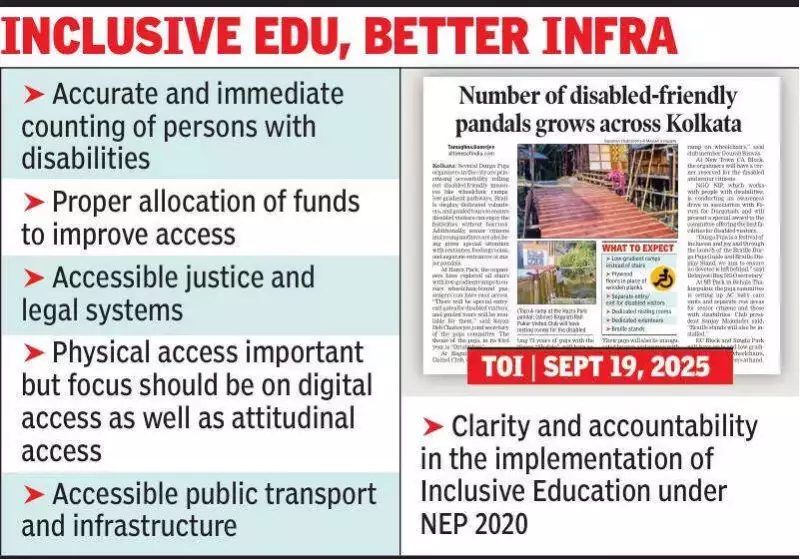
Despite the terminology divide, all voices converge on the urgent need for improved access and inclusion. The demands extend beyond physical infrastructure. Nandini Ghosh outlined key needs, including proper centres for census data and adequate financial allocations. She highlighted that physical, digital, and attitudinal access are all critical for the rights of disabled persons.
Shampa Sengupta identified accessible public transport and infrastructure as major, unmet demands. The medical community also weighed in on the need for systemic support. Dr. Saren Panja, an intensivist, remarked that the current nomenclature can hurt sentiments, making people feel inadequate. "A system should be in place that nurtures and supports them. The change should begin with the name," he suggested.
As Kolkata and the rest of the country approach the International Day of Persons with Disabilities, the debate underscores a community's vibrant push for both respect in language and concrete action in policy. The consensus is clear: whether one says 'disabled' or 'specially abled', the path forward must be paved with dignity, understanding, and unwavering commitment to accessibility in every form.