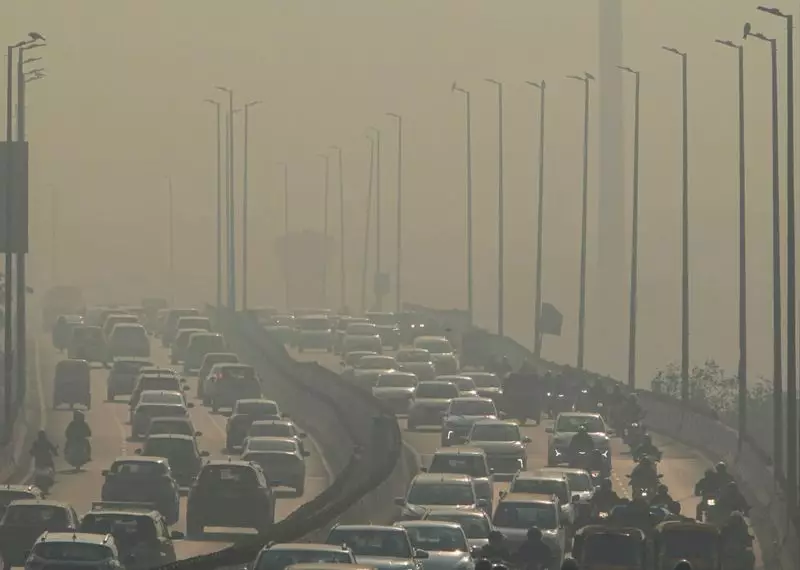
Residents of India's capital woke up to a thick, hazardous haze on Tuesday morning as the city's air quality index (AQI) sharply declined, entering the 'Very Poor' category. The situation was even more alarming in specific localities, where pollution levels crossed into the 'Severe' zone, posing significant health risks.
Key Areas Slip into Severe Pollution Zone
According to data released by the Central Pollution Control Board (CPCB), the overall 24-hour average AQI for Delhi stood at 309 at 7 am, firmly placing it in the 'Very Poor' bracket. However, the monitoring stations at Anand Vihar and Wazirpur recorded far more dangerous readings. Anand Visar reported an AQI of 405, while Wazirpur registered 403, both breaching the 400-mark that signifies 'Severe' air quality.
Other areas also showed concerning levels. The readings from major monitoring stations included:

- Alipur: 386 (Very Poor)
- Dwarka Sector 8: 374 (Very Poor)
- ITO: 351 (Very Poor)
- Jahangirpuri: 346 (Very Poor)
This widespread deterioration indicates a pervasive pollution problem affecting large swathes of the National Capital Region (NCR).
Understanding the AQI Scale and Health Implications
The Air Quality Index is a crucial tool for communicating how polluted the air currently is or how polluted it is forecast to become. The scale classifies air quality from 0 to 500, divided into six categories:
- Good (0-50): Minimal impact.
- Satisfactory (51-100): Minor breathing discomfort for sensitive people.
- Moderate (101-200): Breathing discomfort for people with lung, heart disease, children, and older adults.
- Poor (201-300): Breathing discomfort for most people on prolonged exposure.
- Very Poor (301-400): Respiratory illness on prolonged exposure.
- Severe (401-500): Affects healthy people and seriously impacts those with existing diseases.
The shift to 'Very Poor' and 'Severe' categories triggers serious health advisories. Authorities warn that such air can cause respiratory effects even on healthy individuals and have more pronounced impacts on vulnerable groups like children, the elderly, and those with pre-existing heart or lung conditions.
Factors and Official Response
While the specific meteorological conditions leading to this spike were detailed in the source report, a combination of factors typically contributes to such episodes in Delhi during this season. These often include local vehicular emissions, industrial pollution, dust from construction sites, and regional agricultural burning, all trapped by unfavorable weather conditions like low wind speed and dropping temperatures.
The Commission for Air Quality Management (CAQM), the central body tasked with overseeing pollution control in the NCR, is closely monitoring the situation. While the report did not mention the immediate re-imposition of the stringent Graded Response Action Plan (GRAP) stages, the continued 'Very Poor' air quality often leads to the enforcement of stage-wise measures. These can include:
- Increased parking fees to discourage private transport.
- Enhanced public transport services.
- Strict checks on polluting industries and construction sites.
- Ban on certain categories of diesel vehicles.
Environmental experts and health officials have urged citizens to take necessary precautions. They advise limiting outdoor activities, especially during the morning and evening hours when pollution concentration is highest. Wearing N95 or equivalent masks outdoors, using air purifiers indoors, and avoiding strenuous exercise in the open are recommended, particularly for sensitive groups.
The deteriorating air quality in Delhi highlights the persistent environmental challenge faced by the metropolis. As winter approaches, conditions are often conducive to the accumulation of pollutants, making sustained, multi-pronged action from authorities and behavioral change from citizens critical to safeguarding public health.