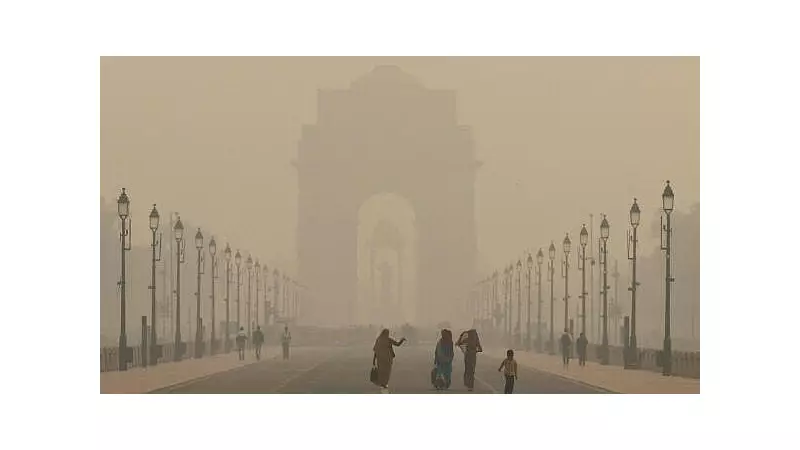
The national capital continues to choke under a thick blanket of haze as its air quality was recorded in the 'very poor' category on Wednesday. The overall Air Quality Index (AQI) for Delhi stood at a concerning 342, according to monitoring agencies.
Multiple Areas Record Severe Pollution Levels
Data from the Central Pollution Control Board (CPCB) revealed a grim picture across the city. The highest AQI was recorded at Nehru Nagar, which peaked at a severe 378. This was not an isolated incident, as numerous other monitoring stations reported air quality deep within the 'very poor' range.
The list of affected areas is extensive and includes major localities such as RK Puram, Burari, and Anand Vihar. In the outer regions, Mundka and Bawana also registered dangerously high pollution levels. Residents in Vivek Vihar, Alipur, Shadipur, and even the North Campus area of Delhi University are breathing air deemed very harmful to health.

Health Implications and Advisory
An AQI between 301 and 400 is classified as 'very poor' and comes with a health warning that respiratory illness can be aggravated upon prolonged exposure. The air quality data, recorded and published on 03 December 2025, indicates a persistent environmental crisis.
Such consistently poor air quality poses significant health risks, especially for children, the elderly, and individuals with pre-existing heart or lung conditions. Doctors typically advise limiting outdoor activities, wearing N95 masks when outside, and using air purifiers indoors during such periods.
A Recurring Winter Challenge
The deterioration of Delhi's air in early December is a recurring annual phenomenon. A combination of factors including vehicular emissions, industrial pollution, construction dust, and adverse meteorological conditions like low wind speed and dropping temperatures contribute to the problem. The situation often worsens with incidents of stubble burning in neighboring states, although the current CPCB bulletin focuses on the recorded data within the city.
The widespread nature of the pollution, from Nehru Nagar to North Campus, underscores that this is a city-wide public health issue requiring urgent and sustained action from authorities and collective public awareness.