

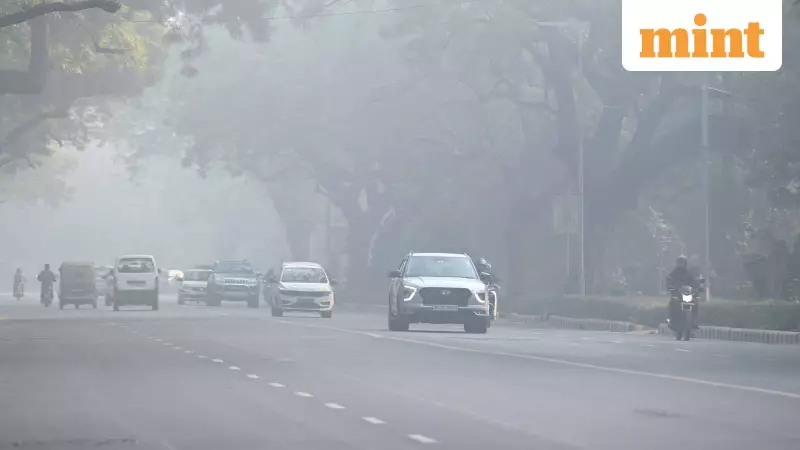
The air quality in Delhi and surrounding National Capital Region (NCR) continued to pose serious health concerns on Wednesday, with toxic smog enveloping the city in a familiar winter haze. Despite a marginal improvement from previous days, pollution levels remained firmly in the "very poor" category, offering little relief to residents.
Current Air Quality Status
According to data from air quality tracker aqi.in, Delhi's AQI stood at 371 at 9 am on Wednesday, showing some improvement from Tuesday's reading of 420 at the same time. However, this level still falls within the "very poor" category that indicates significant health risks, especially for vulnerable groups.
The visual landscape across Delhi-NCR on Wednesday morning presented a grim picture that has become increasingly common during winter months. Thick, toxic smog covered large parts of the city, reducing visibility and creating hazardous breathing conditions for millions of residents.

Particulate Matter Analysis
While overall air quality remained concerning, data revealed a noticeable dip in particulate matter concentrations. PM 2.5 levels measured 232 at 9 am on Wednesday, compared to 278 at the same time on Tuesday. Similarly, PM 10 levels, which represent the main pollutant in Delhi, showed improvement at 282 on Wednesday morning versus 371 recorded 24 hours earlier.
Despite these reductions, both PM 2.5 and PM 10 concentrations remain alarmingly high compared to World Health Organization safety standards. The WHO recommends that exposure to PM 2.5 should not exceed 15 μg/m3 and PM 10 must stay below 45 μg/m3 for safe breathing conditions.
Regional Air Quality Variations
The pollution crisis extended beyond Delhi to neighboring cities, with varying severity across the NCR:
Gurugram recorded an AQI of 365 at 9 am, slightly better than Tuesday's 371 reading.
Noida in Uttar Pradesh showed some improvement but remained highly polluted with an AQI of 390, down from Tuesday morning's 431.
Greater Noida suffered the worst air quality in the region, maintaining Wednesday's AQI at 440, unchanged from the previous day's dangerously high levels.
Weather Outlook and External Factors
Meteorological conditions offer little hope for immediate improvement. The India Meteorological Department confirmed there is no forecast for rainfall in the next seven days, meaning natural cleansing of the atmosphere remains unlikely in the foreseeable future.
In some positive news, the ash cloud from the Hayli Gubbi volcano in Ethiopia did not impact Delhi's already compromised air quality as initially feared. The IMD confirmed that the volcanic ash passed through the upper atmosphere and posed "no risk to anyone on the surface." The ash cloud has since moved away from northern India toward China.
The persistent air pollution crisis in Delhi-NCR continues to challenge authorities and residents alike, with current conditions demanding immediate protective measures and long-term solutions to address the root causes of winter smog.






