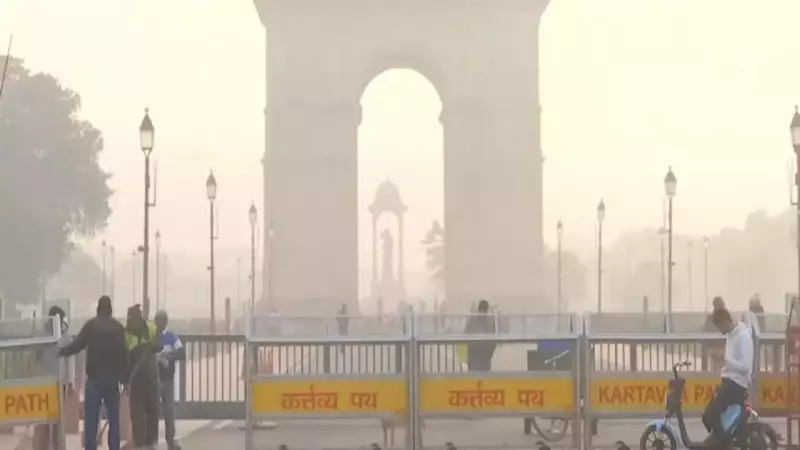
Delhi's Air Quality Deteriorates Further, Multiple Areas Record 'Very Poor' Levels
Delhi residents woke up to another day of hazardous air on Monday as the city's air quality index climbed to 299, firmly placing it in the "poor" category according to the Central Pollution Control Board (CPCB). The current reading shows a significant deterioration from Sunday's 4 pm recording of 279.
The national capital has now experienced two consecutive days of poor air quality, marking a reversal from the brief improvement witnessed on Sunday when conditions had upgraded from "very poor" to "poor." The AQI had previously dropped to 279 from Saturday's concerning 305 reading.
Worst-Affected Areas and Pollution Hotspots
Nehru Nagar emerged as the most polluted location in Delhi with an alarming AQI of 354, pushing it into the "very poor" category. Several other areas also recorded dangerously high pollution levels, including Rohini at 341, Bawana at 339, RK Puram at 336, Mundka at 330, and Punjabi Bagh at 328.

Multiple monitoring stations reported very poor air quality, with Anand Vihar (325), Jahangirpuri (321), Vivek Vihar (321), Shadipur (324), and Pusa (322) all registering concerning readings that pose significant health risks to residents.
Some Areas Show Moderate Improvement
Amid the widespread pollution, NSIT Dwarka provided some relief with the lowest AQI reading of 195, placing it in the "moderate" category. Other areas with relatively better air quality included Mandir Marg at 207 and IGI Airport T3 at 248, though these still represent concerning pollution levels.
The CPCB categorizes air quality index into six distinct levels based on pollution concentration and associated health risks. A score between 201-300 qualifies as "Poor" and can cause breathing discomfort even among healthy individuals, while readings between 301-400 fall under "Very Poor" and pose serious health hazards to all exposed populations.
Long-Term Trends Show Some Improvement
Despite the current spike in pollution levels, Delhi-NCR has demonstrated consistent improvement in air quality throughout 2025. Official data reveals that Delhi's average AQI for January to November 2025 stood at 187, representing a notable decline from 201 in 2024 and 213 recorded in 2018.
This year's average AQI from January to November marks the lowest in eight years, excluding the unusual circumstances of 2020 when COVID-19 lockdowns dramatically reduced pollution levels. The winter months typically witness frequent deterioration in air quality, making pollution a persistent health concern for Delhi's residents who must take precautions during periods of poor air quality.