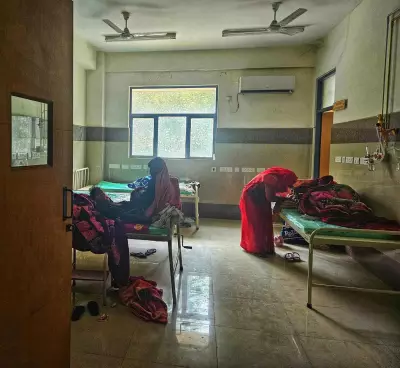
The West Bengal government has announced ambitious plans to establish four additional model Anti-Rabies Clinics across the state, significantly expanding access to specialized care for animal bite victims. This expansion comes as the state currently operates only one such facility despite having an extensive rabies vaccination network spanning all districts.
Current State of Rabies Care in Bengal
At present, the ID Hospital in Kolkata hosts the sole model Anti-Rabies Clinic in West Bengal. This facility represents a significant advancement in rabies treatment, featuring eastern India's first laboratory capable of testing both rabies antigens and antibodies. According to Asis Kumar Kundu, nodal officer for the model ARC at ID Hospital, the clinic provides comprehensive care beyond standard vaccination services.
"We are equipped with a laboratory for testing rabies antigen as well as antibodies, in addition to providing high-quality care to animal-bite victims," Kundu stated. "There is a need to replicate such clinics in other districts."

Expansion Plans and Locations
The state health department has identified four strategic locations for the new model ARCs: medical colleges at Barasat, North Bengal, Bankura and Murshidabad. This geographical spread aims to ensure that quality rabies care becomes accessible across different regions of West Bengal, reducing the burden on the single existing facility in Kolkata.
The current model clinic at ID Hospital handles a diverse range of animal bite cases, including not just dog and cat bites but also incidents involving foxes, monkeys, and other animals. This comprehensive approach to animal bite management will be replicated in the new facilities.
Challenges in Rabies Elimination
During a recent rabies conference held on Wednesday, joint DHS Dipankar Maji highlighted significant challenges in the state's rabies control efforts. "We are talking about vaccinating stray dogs. But barring a few civic bodies, none have the infrastructure to handle it," Maji revealed, pointing to systemic gaps in animal vaccination programs.
The conference brought together numerous experts including microbiologist Asis Manna, WHO representative Pritam Roy, pharmacologist Anjan Adhikari, and paediatric medicine specialist Uttam Kumar Sarkar. These professionals addressed critical topics such as bite management protocols, challenges and opportunities in rabies elimination, and ethical considerations in treatment.
The expansion of model Anti-Rabies Clinics represents a crucial step toward strengthening West Bengal's public health infrastructure and moving closer to the goal of rabies elimination in the region.