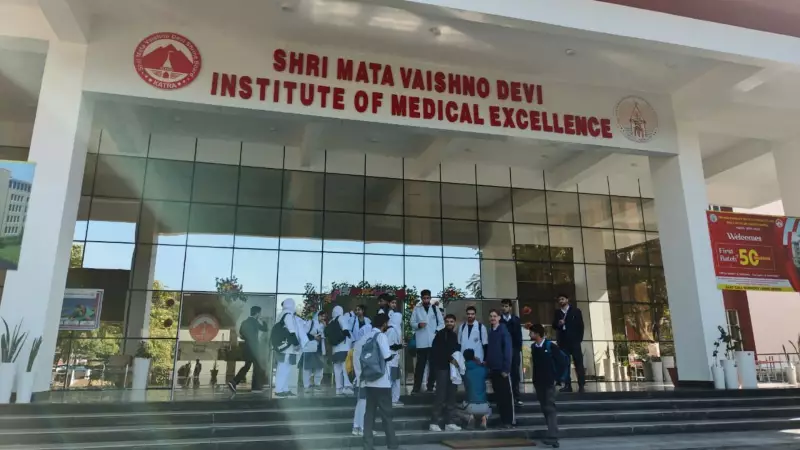
The Shri Mata Vaishno Devi Institute of Medical Excellence (SMVDIME) in Jammu and Kashmir has been plunged into crisis after the National Medical Council (NMC) abruptly withdrew permission for its MBBS course. The decision, based on a surprise inspection, has been labelled a "farce" by college authorities, who allege it was influenced by political protests targeting the admission of Muslim students.
A Sudden Blow and Allegations of a Pre-Determined Verdict
On Tuesday, the NMC revoked the Letter of Permission (LoP) granted to SMVDIME to run an MBBS course for the 2025-26 session. The council cited severe deficiencies in infrastructure, faculty strength, and clinical material. However, the institute's administration paints a starkly different picture.
Officials claim the inspection on January 2 was conducted with only a 15-minute notice, catching the college during its winter vacation when nearly half the faculty was away. They assert the inspection team's mind was made up before arrival. "The team appeared predetermined to withdraw the LoP right from the moment they arrived on the campus," a college official stated.

The decision forced the administration to send its first batch of 50 MBBS students home on Wednesday, leaving their academic future in limbo. "How can they do this to us?" was the common refrain among devastated students and faculty.
The Shadow of Protests and a Contentious Student Demography
Faculty and students directly link the NMC's action to ongoing agitation by the Shri Mata Vaishno Devi Sangarsh Samiti, a coalition of nearly 60 pro-RSS and pro-BJP organisations. This group has been protesting the admission of Muslim students to the institute, built using offerings from Hindu pilgrims at the famed shrine.
Of the 50 students in the inaugural batch, 44 were Muslim. The Samiti initially demanded these students be shifted to other colleges in the Union Territory. Later, they escalated their demand to the complete closure of the medical college. As the NMC's decision was announced, Samiti members outside the institute distributed sweets and celebrated, calling it a victory for Sanatan Dharma.
"We know that they wanted to assuage the demonstrators outside the campus, but you should not defame us by saying that we lacked infrastructure," a doctor at the college lamented.
Clashing Narratives: NMC's Deficiencies vs. College's Rebuttal
The NMC's assessment report outlined glaring shortcomings:
- A 39% deficiency in teaching faculty.
- A 65% shortage of tutors, demonstrators, and senior residents.
- Outpatient department (OPD) attendance below 50% and bed occupancy at 45%.
- Inadequate library resources, with only 50% of required books and 2 journals against a norm of 15.
- Lecture theatres and practical labs not meeting standards.
College officials have fiercely contested these claims, providing counter-data:
- The library holds 2,713 books and 480 journals, plus thousands of e-journals, not the 75 books and 2 journals cited by NMC.
- The institute has 8 operation theatres, not 2.
- On January 2, the OPD saw 405 patients, not 181, and indoor patient occupancy was 79%, not 45%.
- Separate wards for male and female patients exist.
"We have the best infrastructure – from operation theatres to libraries – as compared to many government medical colleges across Jammu and Kashmir," a student asserted.
Uncertain Future and a Rs 350 Crore Project in Limbo
The NMC has stated that the admitted students will be accommodated as supernumerary seats in other government medical colleges in Jammu and Kashmir. However, students are reluctant to leave. "We do not want to leave even if we get adjusted in a government college... The facilities, infrastructure and care we got here won't be available even in J&K's top medical colleges," one student said.
Faculty members, many of whom left lucrative jobs to join, are equally dismayed. "Did the NMC think about us before deciding to withdraw the LoP?" a doctor asked.

The controversy casts a shadow over the Rs 350 crore project initiated by the Shri Mata Vaishno Devi Shrine Board. With half the funds already spent on infrastructure and construction still ongoing, the institute's fate now hangs in the balance, caught between regulatory actions and socio-political tensions.