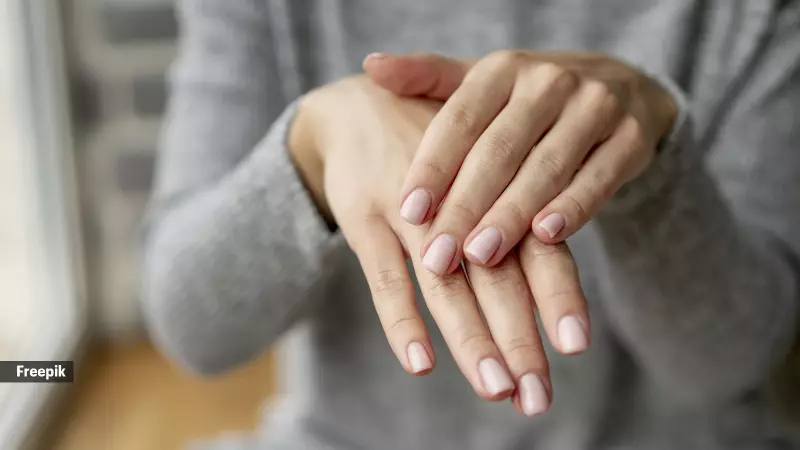
Our nails can be silent messengers, revealing critical clues about our internal health long before other symptoms appear. A recent warning from a medical professional underscores the importance of paying attention to subtle shifts in our fingernails, as they can be the body's first cry for help for serious underlying conditions.
Decoding the Signals: Five Nail Changes You Must Not Ignore
Dr Kunal Sood, an anaesthesiologist and interventional pain medicine physician, recently took to Instagram to highlight five distinct nail alterations that warrant medical attention. He emphasised that these observable changes can precede other symptoms for months, offering a valuable window for early diagnosis of chronic diseases.
Clubbing: This condition involves the fingertips becoming rounded with nails that curve downward. Dr Sood explains it happens when megakaryocytes bypass the lungs and release growth factors like VEGF and PDGF at the fingertips. It is strongly linked to chronic lung diseases such as lung cancer, bronchiectasis, pulmonary fibrosis, and cystic fibrosis, as well as heart conditions involving long-term low oxygen levels, like cyanotic congenital heart disease or endocarditis.

Koilonychia (Spoon-shaped Nails): This presents as thin, concave nails that look like tiny spoons. The doctor notes it results from impaired keratin formation when iron-dependent enzymes weaken. It often reflects an iron deficiency, which could be due to blood loss, heavy menstrual periods, low dietary intake, malabsorption issues, or increased needs during pregnancy.
From Red Streaks to Swelling: More Critical Signs
Splinter Haemorrhages: These appear as red-brown lines under the nails, caused by ruptured capillaries. While a single streak might result from trauma, Dr Sood cautions that multiple streaks or those near the nail base raise concern for systemic conditions like vasculitis, lupus, connective-tissue disease, or infective endocarditis.
Swollen Finger Joints: Swelling around the nails and finger joints can point to both degenerative and inflammatory arthritis. It may reflect osteoarthritis from cartilage loss or inflammatory arthritis like rheumatoid or psoriatic arthritis. Since trauma, gout, or metabolic issues can mimic this, a clinical exam and imaging are needed to distinguish the cause.
Nail Pitting: Small dents or pits in the nail surface can be an early clue for psoriasis. About one-third of psoriasis patients show these pits, and the prevalence increases with disease duration. This may accompany discolouration, thickening, or separation of the nail from the bed (onycholysis) and is common in psoriatic arthritis.
When to See a Doctor: Harmless Variation vs. Warning Sign
How can one differentiate between a benign nail quirk and a potential red flag? Dr Palleti Siva Karthik Reddy, a consultant physician in general medicine, clarifies that nails naturally undergo minor texture and colour variations. A harmless change usually resolves on its own within weeks and doesn't alter the nail bed or surrounding skin.
Warning signs that require a medical evaluation include:
- Nails becoming unusually thick or thin.
- Significant changes in nail curvature.
- Persistent discolouration that doesn't fade.
- New ridges running across the nail.
- Swelling and tenderness around the fingertips.
Dr Reddy stresses that the concern escalates when these changes are persistent, progressive, or appear without a clear trigger like an injury. The likelihood of an underlying systemic condition increases further if nail changes are accompanied by fatigue, breathlessness, joint pain, or skin rashes.
"These changes provide important early clues because many of the underlying diseases may remain silent until they are advanced," states Dr Reddy. He urges individuals to take any gradual structural change in the nails, especially if it affects multiple fingers, seriously. Early detection acts as an early warning system, accelerating diagnosis and treatment, which significantly improves health outcomes by enabling targeted investigations before major complications develop.