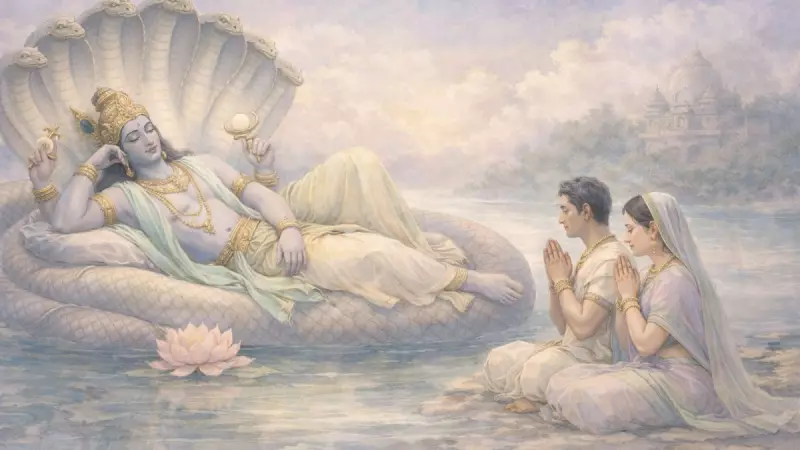
The final month of 2025 holds profound spiritual significance for Hindus, marked by the observance of two important Ekadashis. These sacred fasting days, dedicated to Lord Vishnu, are pivotal in the Hindu lunar calendar. In December 2025, devotees will observe Mokshada Ekadashi and Saphala Ekadashi, each carrying unique blessings and rituals. This guide provides the precise dates, timings, and traditional practices to follow for these observances.
Mokshada Ekadashi 2025: The Giver of Liberation
The first Ekadashi of December 2025 is Mokshada Ekadashi, a day believed to bestow the ultimate liberation or 'Moksha'. This fast falls during the Shukla Paksha (waxing phase of the moon) of the Margashirsha month. According to the Hindu calendar, Mokshada Ekadashi will be observed on Monday, December 1, 2025.
The exact timing for the fast is crucial. The Ekadashi Tithi begins at 10:04 AM on November 30, 2025, and concludes at 12:42 PM on December 1, 2025. However, the fasting day is observed on December 1. For those who cannot undertake a full nirjala (waterless) fast, the partial fast involves consuming satvik food without grains, beans, and certain vegetables like onions and garlic. Devotees engage in prayers, chanting of Vishnu Sahasranama, and reading the sacred legend of Mokshada Ekadashi from the Padma Purana.

Saphala Ekadashi 2025: The Bestower of Success and Prosperity
The second Ekadashi of the month is Saphala Ekadashi, observed during the Krishna Paksha (waning phase) of the Pausha month. This fast is dedicated to achieving success, prosperity, and the fruition of one's efforts, which is what 'Saphala' signifies. Saphala Ekadashi will be observed on Tuesday, December 16, 2025.
The Saphala Ekadashi Tithi starts at 4:11 PM on December 15, 2025, and ends at 6:33 PM on December 16, 2025. The fasting is observed on December 16. A unique ritual associated with this day is the offering of seasonal fruits, particularly pomegranates, betel nuts, and mangoes, to Lord Vishnu and Lord Krishna. Devotees also light a ghee lamp in the temple and stay awake during the night, engaging in devotional songs and prayers. It is believed that observing this fast diligently removes obstacles and brings success in all ventures.
The Spiritual Significance and Common Rituals
Observing Ekadashi is considered one of the most potent spiritual practices in Hinduism. It is a day for introspection, purification, and strengthening one's connection with the divine. The core practice involves a fast from sunrise on Ekadashi day until sunrise on the following Dwadashi day. While a strict nirjala fast is highly meritorious, many devotees follow a partial fast, consuming fruits, milk, and root vegetables like potatoes.
Key rituals common to both Ekadashis include:
- Taking a holy bath early in the morning.
- Performing puja to Lord Vishnu with tulsi leaves, flowers, and incense.
- Chanting the Vishnu Sahasranama or the sacred mantra "Om Namo Bhagavate Vasudevaya".
- Listening to or reading the Vrat Katha (legend) associated with the specific Ekadashi.
- Maintaining a satvik lifestyle, avoiding anger, falsehood, and non-vegetarian food.
- Engaging in charity (daan), such as donating food or essentials to the needy.
Breaking the fast (Parana) is done within a specific time window after sunrise on Dwadashi. The exact Parana time for each Ekadashi is determined by the end of the Dwadashi tithi and the presence of Hari Vasara. It is essential to avoid breaking the fast during the prohibited period known as 'Hari Vasara'.
By faithfully observing the Mokshada and Saphala Ekadashi fasts in December 2025, devotees seek to cleanse their soul, attain spiritual progress, and invite divine blessings of liberation, success, and prosperity into their lives. These sacred days offer a powerful opportunity to pause from worldly routines and focus on spiritual growth as the year comes to a close.