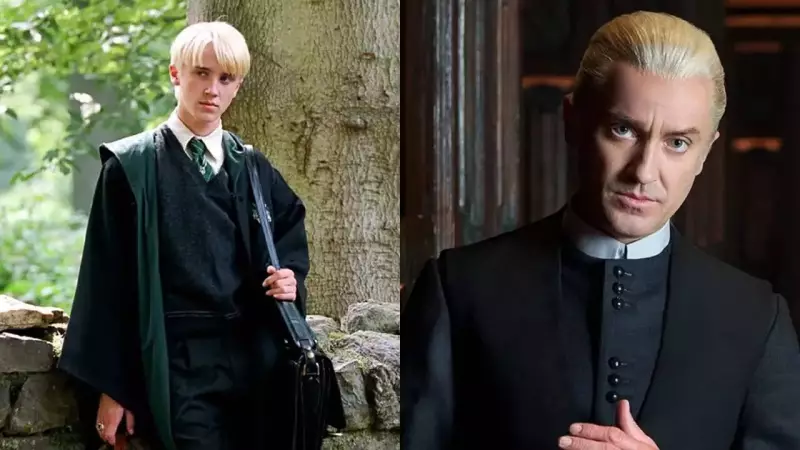
Tom Felton has made an emotional return to the Wizarding World, reprising his iconic role as Draco Malfoy in Harry Potter and the Cursed Child on Broadway. The actor's homecoming to the franchise that made him famous has been met with both roaring applause and quiet disappointment from the Harry Potter fandom.
The Dramatic Return to Hogwarts
In June 2023, it was officially announced that Felton would join the cast of the Tony Award-winning play for a 19-week limited engagement at New York's Lyric Theatre from November 11 to March 22. The production continues the story 19 years after the events of Harry Potter and the Deathly Hallows, focusing on the next generation of wizards and their conflicts.
Felton expressed childlike excitement about returning to the Potter universe, comparing it to "going back to high school." His debut performance was met with an electric reception—a packed theater, spontaneous standing ovations, and emotional moments that visibly moved the actor. The audience went particularly wild when he delivered his classic line: "Scared, Potter?"

The significance of Felton portraying Draco as a father, having originally played him as a son, created a powerful full-circle moment for both the actor and long-time fans. Even his on-screen father, Jason Isaacs (Lucius Malfoy), attended the play and expressed pride in his "son's" performance.
The Complexity of Draco Malfoy's Character
Felton's portrayal of Draco Malfoy fundamentally transformed the character from J.K. Rowling's original conception. In the books, Draco was largely a one-dimensional bully—emotionally stunted, cruel, and unremorseful. However, Felton infused the character with vulnerability and complexity that made him more human and relatable.
The pivotal moment in Harry Potter and the Half-Blood Prince on the Astronomy Tower revealed Draco not as a villain, but as a conflicted adolescent boy burdened by family expectations and the overwhelming task assigned by Voldemort. Felton's performance showcased Draco's inner turmoil, making him one of cinema's early gray characters who taught audiences about perspective and context.
This nuanced portrayal, combined with Felton's natural charm and charisma, created a character that resonated deeply with fans, even prompting Emma Watson to admit she had a crush on the young actor during filming.
The Shadow of Controversy
Felton's triumphant return has been complicated by the ongoing controversy surrounding J.K. Rowling's public statements on transgender issues. Since 2018, the author has repeatedly made comments and taken actions that many view as transphobic, including supporting exclusionary policies and rejecting the concept of gender identity.
This has created a significant rift within the Harry Potter community, with several major cast members—including Daniel Radcliffe, Emma Watson, and Rupert Grint—publicly affirming their support for transgender rights and distancing themselves from Rowling's views.
When asked about Rowling's comments on the Tony Awards red carpet, Felton responded that he was "not really that attuned" to the controversy and preferred to focus on the positive aspects of the franchise. This diplomatic neutrality has disappointed many fans who expected him to follow his co-stars in showing support for the transgender community.
The Ethical Dilemma for Fans and Performers
The situation raises complex questions about the relationship between art and artist, and the responsibilities of performers to the communities shaped by their work. For many LGBTQ+ fans, Harry Potter provided early refuge and community, making Rowling's subsequent positions feel like a profound betrayal.
While Felton's professional decision to return to the role is understandable, his unwillingness to even minimally acknowledge the pain felt by trans fans has been interpreted by many as complicity through silence. In the context of Rowling's influential platform and the real-world consequences of anti-trans rhetoric, neutrality becomes a position that aligns with harm.

The contrast with his co-stars is striking: Daniel Radcliffe has explicitly stated that "transgender women are women," while Emma Watson has repeatedly affirmed trans identities. Felton's claim of being "pro-love" and "pro-discussion" rings hollow when he refuses to engage with a discussion about the dignity and safety of marginalized people.
Looking Forward
As Felton continues his run in Harry Potter and the Cursed Child, the applause in the theater will likely continue, but the silence on important issues will remain deafening for many fans. The situation demonstrates that nostalgia cannot override ethical considerations, and that cultural repair requires more than polite neutrality.
The legacy of Harry Potter now exists in a complicated space—celebrated for the comfort and community it provided generations of fans, while simultaneously grappling with the harmful positions of its creator. How performers like Felton navigate this terrain will continue to shape how the franchise is remembered and valued in the years to come.