A recent Vanity Fair feature showcasing the inner circle of former President Donald Trump's White House team has ignited a fierce debate, not over politics, but over photography. The article, built around candid interviews by author Chris Whipple with White House Chief of Staff Susie Wiles, was accompanied by a series of stark, extreme close-up portraits shot by renowned Magnum photographer Christopher Andersen. These unflinching images have pulled back the curtain on the polished facade of American political power.
The Backlash Over Unvarnished Reality
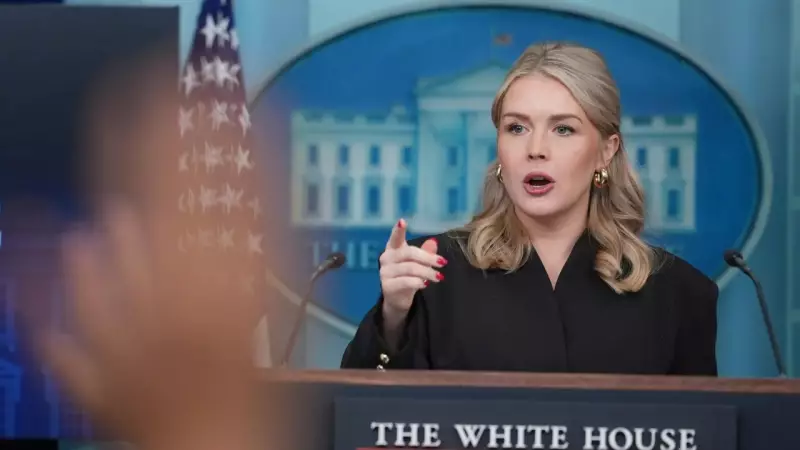
The portraits of key figures like Susie Wiles, Press Secretary Karoline Leavitt, Vice President JD Vance, and Secretary of State Marco Rubio were notable for their raw intimacy. Every pore, patch of powder, and skin imperfection was visible. In Leavitt's case, what some observers interpreted as marks from cosmetic lip injections were clearly depicted. The reaction was swift and polarized.
Susie Wiles herself dismissed the accompanying article as a "hit piece," while Leavitt affirmed the administration's continued support. Donald Trump, in comments to the New York Post, said he had not read the piece but praised Wiles as "fantastic." For photographer Christopher Anderson, however, the backlash was both predictable and revealing of a deeper issue in how society consumes images.

"Penetrating the Theatre of Politics": A Deliberate Approach
In an exclusive interview with the Washington Post, Anderson, speaking from an airport, clarified that his approach was neither accidental nor politically motivated. He traced this style back years, specifically to his 2014 book Stump, which featured similar close-ups of politicians from across the spectrum.
"It was my attempt to circumnavigate the stage-managed image of politics and get at something more revealing," Anderson explained. He stressed that the tight framing is a conscious choice to remove background distractions, not to distort reality. "Everything that’s in the frame is what I choose to keep in the frame," he said, noting he has applied the same technique to figures like Barack and Michelle Obama, rejecting claims of a targeted attack on Trump's team.
Ethics Over Aesthetics: The Retouching Debate
The most intense criticism focused on the portrait of Press Secretary Karoline Leavitt, with many accusing Anderson of deliberately trying to embarrass her. The photographer responded with blunt clarity. "I didn’t put the injection sites on her," he stated.
He expressed surprise that anyone would expect him to use Photoshop to retouch blemishes. "If I had retouched those things out, that would be a lie," Anderson asserted. "I would be hiding the truth of what I saw." He emphasized that his role was that of a journalist documenting what he witnessed, not a celebrity photographer creating a glamorous shot. He added that most subjects arrived camera-ready, and their personal grooming choices were not his responsibility.
A Career Built on Uncomfortable Truths
Anderson's stance is consistent with a career forged in the demanding world of conflict and documentary photography. Born in Canada in 1970 and raised in Texas, he first gained international recognition for his harrowing images of Haitian refugees, work that earned him the prestigious Robert Capa Gold Medal.
After working for Newsweek and National Geographic, he moved into portraiture, serving as New York Magazine's first photographer-in-residence. Through projects like Capitolio, Stump, and Approximate Joy, he has consistently explored themes of truth and intimacy.
In an era dominated by filters, AI retouching, and meticulously managed public images, Anderson believes his work serves a vital purpose. "The fact that the internet is freaking out because they’re seeing real photos says something about the world we live in," he observed. "The public shouldn’t only see the mask." His controversial Vanity Fair spread is a direct challenge to that very norm, forcing a conversation on authenticity in the visual representation of power.