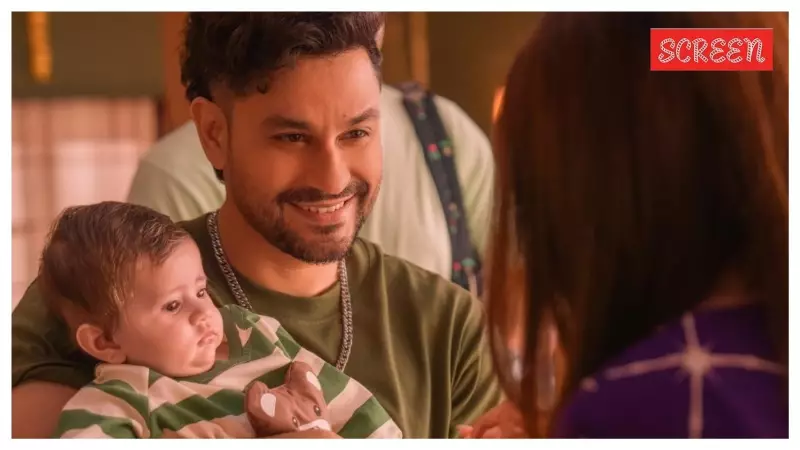
In an exclusive and wide-ranging conversation with SCREEN, the cast of the upcoming Netflix family drama Single Papa opened up about the show's sensitive themes, its portrayal of modern parenthood, and the collaborative spirit behind its creation. The interview featured actors Kunal Kemmu, Prajakta Koli, Neha Dhupia, Manoj Pahwa, and Ayesha Raza, who delved into the politics of the narrative and shared their personal views on family life.
Navigating Fatherhood and Gender Sensitivities
Kunal Kemmu, who plays the lead role of Gaurav Gehlot, an aspiring single father seeking to adopt a baby named Amul, addressed a pivotal concern head-on. When asked if the show's advocacy for fatherhood inadvertently compromises a woman's agency in the choice to not have children—highlighted by his character's divorce from Isha Talwar's character over this issue—Kemmu was unequivocal in his defense of the writing.
"It doesn't do that at all," Kemmu stated. "As the show progresses, you'll see the conversation they have is very different. It's a show in which the writers have been sensitive to everybody." He emphasized the balanced perspective brought by creators Ishita Moitra and Neeraj Udhwani, a real-life couple. "It's written by a woman and a man together... I don't think it'd make either gender feel shortchanged."

A Relatable, Multi-Generational Family Portrait
The show, created by Moitra and Udhwani, presents a multi-generational look at family dynamics. Manoj Pahwa and Ayesha Raza play Gaurav's parents, while Prajakta Koli portrays his sister. Ayesha Raza added nuance to the portrayal of motherhood within the series, noting, "There's not just one kind of a mother. There's also a mother who's overly involved... so you want to kill that mother. Both perspectives are there."
Prajakta Koli's character grapples with societal expectations, including being asked to remove bikini photos from social media for her in-laws. Reflecting on this, Koli said, "Of course, yes, it's most women. I'm very privileged that I get to say that's not what I relate to... but I know it's a very regular thing." She described the family's conflicts as relatable "kalesh" that audiences will identify with, making the drama a humorous and authentic slice-of-life.
Cast Chemistry and Evolving Views on Parenthood
The interview also revealed the easy chemistry among the cast. Ayesha Raza and Manoj Pahwa, reuniting after Dil Dhadakne Do (2015), described the shoot as a "holiday." Raza shared amusing anecdotes about her husband Kumud Mishra and Pahwa's dynamic on other sets, calling them the "badmash bachche" who play cricket between intense scenes.
The conversation naturally shifted to the actors' personal philosophies on parenthood. When asked if men have a biological clock, Kunal Kemmu offered a pragmatic view: "For men, the biological clock continues pretty much till the time they're alive... The age is a mindset." He advised prospective fathers to consider their future energy levels to actively engage with their growing children.
Neha Dhupia, who plays the head of the adoption agency in the show, reflected on her own journey with husband Angad Bedi. "We had Guriq when I was 40," she said, acknowledging the talk around later-age motherhood. "The second time, you know the beats. You know what to expect."
Prajakta Koli highlighted the generational shift in attitudes. "This generation is a lot more conscious about that decision," she observed, contrasting it with a time when having children post-marriage was a given. "Now, it's a choice." Ayesha Raza firmly supported this, adding, "It's important everybody should be given that respect as a couple... There should be no judgement."
Finally, Kemmu revisited his critically acclaimed roots, recalling Mahesh Bhatt's praise for his childhood performance in Zakhm (1998). "Zakhm was the first time I saw a difference in opinion... It was about my performance. So, they respected me as an actor there," he said, marking it as the moment he decided to pursue acting seriously.

Single Papa, a show that promises to blend family drama with contemporary conversations about choice and responsibility, is now streaming on Netflix.