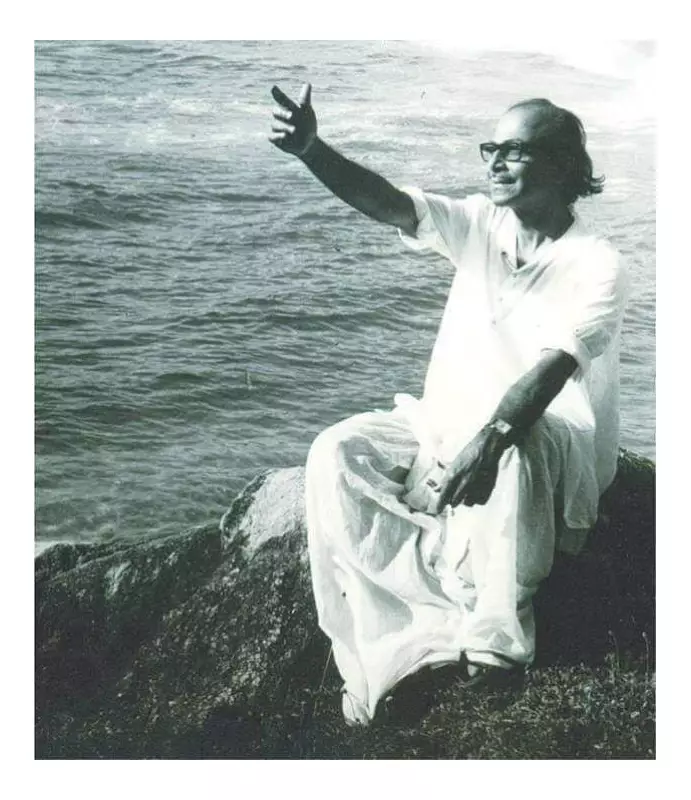
The Maestro's Southern Sojourn Begins
When Salil Chowdhury arrived in Chennai during the mid-1960s, he brought with him a musical sensibility that would forever change the soundscape of South Indian cinema. Much like his iconic song 'Suhana safar aur mausam haseen' from Dilip Kumar's 1958 classic 'Madhumati', which captured the exhilaration of travel, Chowdhury's Chennai chapter represented a fresh musical journey for both the composer and those who collaborated with him.
During his time in the city's legendary recording studios, Chowdhury created music for five Tamil films and 27 Malayalam films, bringing his distinctive auteur-composer approach to soundtracks that felt authentic in every language while transcending linguistic boundaries.
The Chowdhury Signature Sound
What made Chowdhury's music truly unique was his remarkable ability to blend complete creative originality with sophisticated Western music elements. His childhood exposure to Western classical music through an Irish doctor's gramophone records in Assam's tea-garden regions enabled him to seamlessly integrate harmony, counterpoint, and orchestration into his Indian compositions.

His southern cinema journey commenced with the Malayalam masterpiece 'Chemmeen' in 1965, directed by his IPTA comrade Ramu Kariat. Ironically, the magically entrancing songs picturized against Kerala's breathtaking coastline were actually fashioned within Chennai's recording studios.
Collaborations and Innovations
Upon arriving in Chennai for 'Chemmeen', Chowdhury stayed at the Old Woodlands Hotel and began searching for local musical talent. A western violinist named Francis directed him to a young, exceptionally gifted L Vaidyanathan. The legendary composer tested the 20-something violinist by singing his compositions just once, expecting him to notate them later.
To Chowdhury's astonishment, Vaidyanathan captured every note perfectly after a single hearing. Delighted with this discovery, Chowdhury kept the young musician by his side for an entire month, working intensively from his hotel room. Years later, Vaidyanathan would credit Chowdhury with teaching him the importance of constant innovation in music composition.
Guitarist Sadanandam, who played for Chowdhury in the early 1970s, revealed that the composer rarely worked with natural scales like most contemporaries, preferring instead the more challenging flat scales. "They were difficult to play, but when you heard the music, it sounded so different," Sadanandam recalled. "He would take his time with the background score too, sometimes spending ten days on a single film."
The Tamil Cinema Connection
Despite his frequent presence in Chennai for Malayalam projects, Tamil cinema unfortunately didn't benefit fully from Chowdhury's genius. His first Tamil film work came with 'Uyir' in 1971, a B-grade movie for which he composed background music. Ironically, this film is now better remembered as a false start for another musical legend, Ilaiyaraaja, who had expected to make his debut with it but was denied the opportunity.
A glimpse of what Tamil cinema missed can be seen in 'Karumbu', an early 1970s Ramu Kariat production that never released. Chowdhury composed a song based on the Tamil epic 'Silappadikaram' ('Thingal Maalai'), effortlessly setting this classical poem to music in Yesudas's voice, making it accessible to contemporary Tamil audiences.
The 1978 adaptation of American romantic drama 'Love Story' as 'Paruva Mazhai' in Tamil featured Kamal Haasan and Zarina Wahab as young lovers, with legendary lyricist Kannadasan writing all songs for Chowdhury's tunes. Each composition perfectly embodied specific emotions, whether happiness or pathos, while maintaining lovely musicality.
Director Balu Mahendra, who had debuted as cinematographer with Chowdhury's musically rich 'Nellu' (1974) in Malayalam, chose the composer for his Tamil coming-of-age film 'Azhiyatha Kolangal' (1979). The bewitchingly lovely melody 'Naan ennum pozhudhu' served as perfect accompaniment to the film's stunning visuals.

Another notable Tamil project was 'Doorathu Idi Muzhakkam', selected for the International Film Festival panorama in Delhi in 1981. Starring Vijaykant in a rustic tale about coastal fisherfolk, director K Vijayan later felt the film straddled art and commercial cinema genres. Nevertheless, Chowdhury provided beautiful songs that matched the film's tone, tenor, and visual landscapes.
Legacy and Lasting Impact
Though 'Chemmeen' became one of Indian cinema's greatest achievements, Chowdhury never attributed his success in unfamiliar languages to linguistic knowledge. He firmly believed that film songs had accomplished what the nation hadn't - developing a pan-India language that transcended regional boundaries.
His philosophy held that a tune born in Bengali could find home in Malayalam, while a melody created in Chennai could move listeners in Kerala or Bombay. Chowdhury trusted that when a composition carried genuine soul, language would never be a barrier - and his extraordinary body of work proved him absolutely right.
Born on November 19, 1925, in Bengal, Chowdhury spent his childhood in Assam's tea-garden regions, where he absorbed local folk traditions alongside Western classical music. Drawn into the Indian People's Theatre Association (IPTA) after the Bengal famine, he achieved fame in Bengali and Hindi cinema, particularly with the landmark 'Do Bigha Zamin' (1953), before embarking on his Southern Indian musical journey that would leave an indelible mark on the region's cinematic history.