Aditya Suhas Jambhale's directorial venture, Baramulla, has arrived on Netflix, presenting audiences with a uniquely atmospheric cinematic experience. This film masterfully weaves together elements of supernatural horror, deep psychological tension, and sharp political commentary, all set against the visually striking, snow-covered landscape of Kashmir.
A Chilling Mystery Unfolds
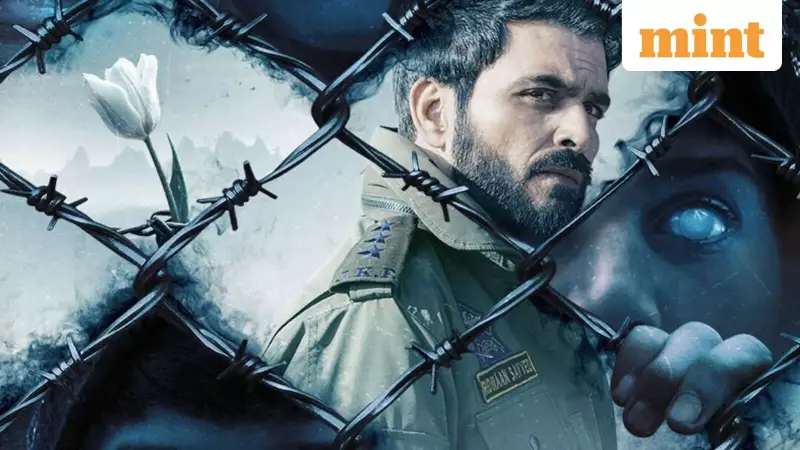
The narrative centers on Deputy Superintendent of Police Ridwaan Sayyed, portrayed with profound depth by the exceptionally versatile Manav Kaul. Ridwaan is tasked with investigating a series of deeply unsettling and mysterious disappearances of children plaguing a town. What begins as a professional assignment quickly spirals into a personal nightmare, pulling his own family into an ever-tightening and terrifying web.
From its very first scene, the film establishes a chilling and gripping tone. The cinematography employs a recurring palette of white and grey—seen in the constant snowfall, a mysterious white flower, and overall washed-out hues—to create a spectral, haunting quality. This visual language is deliberate; the whiteness symbolizes not purity, but a profound emptiness, loss, and the erasure of innocence, keeping viewers perpetually on edge.

Powerful Performances and Emotional Depth
Manav Kaul delivers a quietly powerful and emotionally layered performance as Ridwaan. He is a man of logic and order, thrust into a situation that defies all rationality. Kaul's portrayal is restrained and stoic, yet his eyes vividly communicate a deep, simmering anguish. Opposite him, Bhasha Sumbli plays his wife, Gulnaar, and she serves as the emotional anchor of the story. Her calm presence provides a beautiful contrast to the chaos, introducing a tender domestic tension amidst the overarching supernatural dread.
One of the film's most compelling arcs is the strained relationship between Ridwaan and his daughter, Noorie. Haunted by a past incident, Ridwaan struggles to connect with her. This subplot adds significant emotional weight to his character, especially when Noorie herself becomes a target of the mysterious force, forcing Ridwaan to confront both an external evil and his own internal guilt.
A Triumph of Writing and Technical Craft
The screenplay, crafted by Aditya Dhar, Aditya Suhas Jambhale, and Monal Thaakar, is a testament to skilled writing. It deftly balances multiple subplots involving folklore, politics, and horror without ever feeling disjointed. The pacing is deliberate, allowing tension to simmer slowly, which makes the film's eventual revelations all the more impactful.
Technically, the film is a triumph. The cinematography captures the haunting beauty of Kashmir with precision, while the sound design and a sparse, effective score work in tandem to amplify a pervasive sense of dread, creating a fully immersive sensory experience.
More Than Just a Horror Film
Baramulla boldly grapples with historical trauma, specifically addressing the painful 1991 exodus of Kashmiri Pandits. This political dimension is subtly woven into the supernatural narrative, lending the film a powerful sense of urgency and authenticity. The horror here is not merely spectral; it is also social and historical, reflecting on themes of grief, displacement, and the unseen forces that can fracture both families and nations.
Ultimately, Baramulla is a must-watch. It is chilling, beautifully crafted, and profoundly thought-provoking. This is a rare supernatural thriller that dares to look into the abyss, asking what happens when the ghosts of the past refuse to stay buried. It is now available for streaming on Netflix.