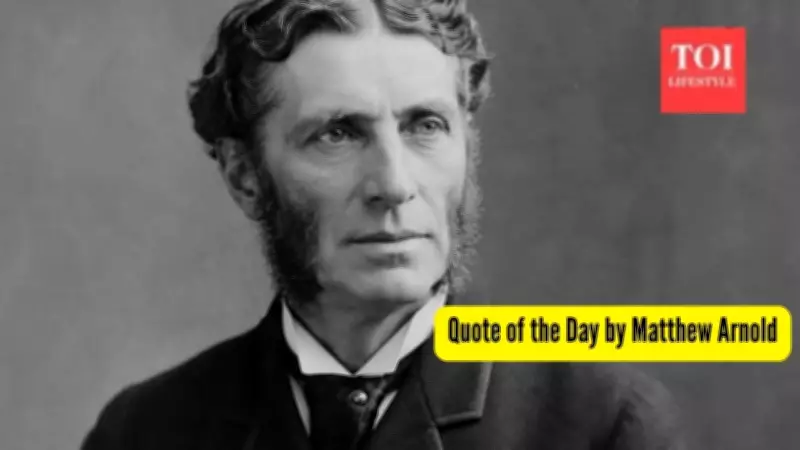
Matthew Arnold stands as one of the most iconic poets and critics of the Victorian era. A poet, essayist, critic, and teacher, his work profoundly shaped English literature and modern literary discourse. Arnold is remembered not only for his melancholic poems reflecting the anxieties of modern life but also for his prose writings on religion, culture, society, and education. He emerged as a voice of reason during a period of significant economic and social transformation in England.
Early Life and Education
Matthew Arnold was born in Laleham, Middlesex, England, in 1822. His father, Dr. Thomas Arnold, was a renowned headmaster of Rugby School and a respected educator who deeply influenced his son's intellectual development. Growing up in this environment, Arnold acquired a strong sense of morality, discipline, and academic excellence. He attended Rugby School and later Balliol College, Oxford, where he excelled in literature and classical studies. In 1843, he won the prestigious Newdigate Prize for poetry, marking an early recognition of his literary talent. His time at Oxford fostered a lasting appreciation for Greek and Roman classics, which shaped his writing and critical perspective.
Career and Personal Life
After completing his education, Arnold served as private secretary to Lord Lansdowne and later became an Inspector of Schools, a position he held from 1851 to 1858. This role required extensive travel across England, providing him with firsthand insights into the educational system and social conditions. His experiences inspired numerous essays on culture and education. In 1851, he married Frances Lucy Wightman, with whom he had six children. Despite family responsibilities, Arnold continued to write poetry and essays until his death.

Poetic Works and Themes
Arnold first gained fame as a poet. His poems often convey sadness, loneliness, doubt, and the search for meaning in a changing world. Writing during the Victorian era, when science and industrialization challenged traditional religious faith, Arnold's poetry reflects a crisis of belief, distinguishing him from Romantic poets like Wordsworth and Shelley. His most famous poems include Dover Beach, The Scholar-Gipsy, Thyrsis, Sohrab and Rustum, and Rugby Chapel.
Key themes in his poetry include the loss of faith, isolation, the contrast between nature's beauty and human suffering, and the clash between old and new values. In Dover Beach, Arnold describes the "melancholy, long, withdrawing roar" of the Sea of Faith, symbolizing the erosion of religious certainty.
Influence on Society and Culture
During the Industrial Revolution, England underwent rapid urbanization, technological change, and class conflict. Arnold worried that material progress was not matched by moral advancement. In his work Culture and Anarchy, he criticized narrow-mindedness and advocated for education and culture as means to improve society. He believed that people should seek beauty, moral balance, and intellectual excellence rather than mere wealth or political power. His ideas influenced debates on educational reform, social class, and the role of literature in public life.
Legacy and Impact on Future Writers
Matthew Arnold's influence extended to later poets, critics, and thinkers such as T. S. Eliot, F. R. Leavis, and Lionel Trilling. While not always in agreement with his views, they respected his serious approach to literature and culture. Dover Beach remains one of the most quoted Victorian poems, its themes of doubt and emotional struggle still resonant today. Arnold died in Liverpool in 1888 and was buried in Laleham. His reputation continued to grow posthumously.
Arnold was more than a poet; he was a Victorian thinker who used poetry and essays to address the spiritual and social challenges of his time. His poems employ beautiful language to express doubt, loneliness, and beauty, while his essays promote culture, reason, and moral growth. His work has left a lasting impact on English literature and critical thought, and it continues to be read for its timeless exploration of faith, society, and the meaning of art.
Quote of the Day
The following lines from Matthew Arnold's Empedocles on Etna and Other Poems raise profound questions:

“Is it so small a thing
To have enjoy'd the sun,
To have liv'd light in the spring,
To have lov'd, to have thought, to have done;
To have advanc'd true friends, and beat down baffling foes…?”
Arnold's words reflect a deep contemplation of the value of human life. He questions whether living through joys, struggles, and achievements is truly a "small thing." The passage suggests that life should not be judged solely by wealth, fame, or ultimate success, but by the experiences, emotions, relationships, and actions that make it meaningful. The line "Is it so small a thing / To have enjoy'd the sun" highlights the simple pleasure of being alive in nature, with the sun representing warmth, light, hope, and happiness. Arnold implies that even such simple joys are significant. The next line, "To have lived light in the spring," evokes youth, new beginnings, and vitality, referring both to the season and the "spring" of life. He argues that memories of happy times make life worthwhile despite later hardships. Then, "To have loved, to have thought, to have done" moves from natural pleasures to human accomplishments. Love represents emotional connection and care; thought stands for intelligence, reflection, and intellectual life; and action signifies contribution to the world. These three verbs encapsulate a full and meaningful existence. The passage concludes that the value of life lies in our experiences—feeling joy, knowing youth, loving, thinking, acting, helping friends, and overcoming obstacles. These are not "small things" but the true treasures of life.
About the Author
The TOI Lifestyle Desk is a dynamic team of dedicated journalists who passionately curate lifestyle news for The Times of India readers. They go beyond the obvious to delve into the extraordinary, providing a daily dose of inspiration and information on fashion, travel, food, wellness, and more.