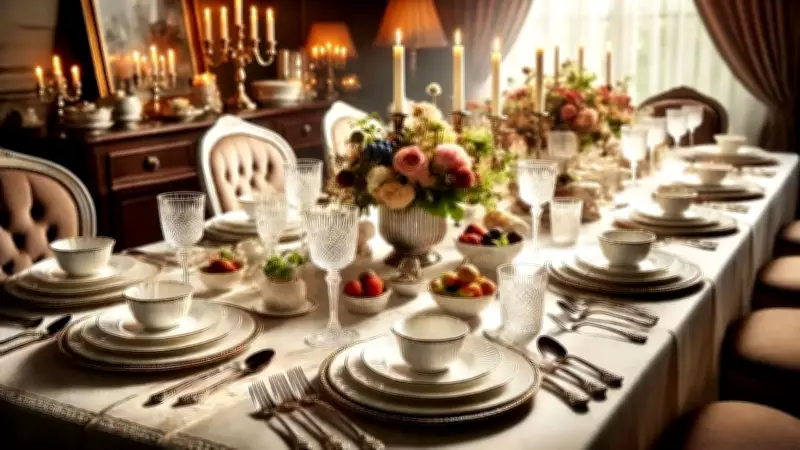
Hosting a meal might seem enjoyable, but for those responsible, it can be surprisingly nerve-wracking. And that is not because of the food itself, but because of the table. Suddenly, you ask yourself: Does the fork go on the left or right? Where does the soup bowl go? And why are there three spoons for one meal? All that second-guessing can quickly zap your confidence.
But here is the truth: Great hosting is not about being perfect or acting like you are in a royal palace. It is really about making people feel welcome, as if you put thought into their experience. A well-set table does that quietly. The best part is that table setting follows simple logic. Whether you are keeping things casual or going all-out formal, most setups stick to one main idea: Arrange utensils in the order they will be used, from the outside in. Forks go on the left, knives and spoons on the right, and glasses above the knives. Once you understand this key logic, it becomes easy to apply.
The Golden Rule: Outside-In
Use utensils in the outside-in order. Start with the fork farthest from the plate for your first course, then move inward as the meal progresses. The same applies to spoons and knives. If you remember only one thing, let it be this simple rule.

Plates: What Goes Where
Charger Plate
This is the large, decorative plate that stays on the table as a base during early courses. You do not eat directly off it; other plates or bowls go on top. Remove it when the main course arrives. Use it for formal dinners, weddings, and holidays.
Dinner Plate
The main plate sits right in the center. It is typically used for the main course and works for almost every meal, regardless of the event type.
Salad Plate
Slightly smaller than the dinner plate, this is used for salad or appetizers. It can go on top of the dinner plate or charger. Suitable for casual or fancy meals.
Bread Plate
A small plate positioned above the forks, to the upper left (think 10 or 11 o'clock). Used for bread or small extras. Best for formal settings and dinner parties.
Bowls: Not All Are Created Equal
Soup Bowl
Place it on top of the salad plate or charger only if soup is served first. Do not leave it floating alone. Ideal for soup as a starter.
Dessert Bowl
For pudding, fruit, mousse, or ice cream. It is usually brought out with dessert, not at the start.
Forks: Each Has Its Moment
Dinner Fork
The largest fork, placed closest to the plate on the left. Used for the main course.
Salad Fork
Smaller and sits to the left of the dinner fork. Used first since salads typically come before mains. Guests use it for salad or starters.
Dessert Fork
This breaks the pattern slightly. It goes above the plate horizontally or comes with dessert later. The handle points left. Used for cakes, tarts, and pastries.
Seafood/Oyster Fork
An oddball that may be on the right side instead of left. It is smaller and designed for shellfish or oysters. Used for fancy seafood courses.
Knives: Always Point Toward the Plate
Dinner Knife
Sits closest to the plate on the right side. Used for the main course.
Butter Knife
Blunter, placed on the bread plate. Used only for butter.
Spoons: More Than Just Soup
Soup Spoon
Sits at the far right of the knives and is rounder and larger than a teaspoon. Used for soup.
Dessert Spoon
Usually placed above the plate horizontally (handle pointing right) or brought out with dessert. Used for pudding and other desserts.
Teaspoon
The most common spoon, brought later with tea, coffee, or dessert service.
Glassware Placement
The water glass goes right above the knife. Wine glasses go to the right of the water glass, in the order they will be used.
Casual vs Formal Table Setting
Casual Table
Keep it simple: a dinner plate, one fork, one knife, one spoon, a napkin, and a water glass.
Formal Table
Add a charger, salad plate, soup bowl, bread plate, extra forks and spoons, dessert cutlery, and wine glasses. Avoid putting out utensils people will not use; unnecessary forks or spoons create confusion instead of classiness.

Final Tip on Hosting
Comfort always beats perfection. Nobody remembers if your salad fork was a smidge too far left. What sticks is how relaxed guests felt. A great host makes people comfortable because ease matters more than silverware. Learn the basics, but remember: Warm food, full glasses, a good laugh, and a candle or two do much more for your guests than perfect knife placement. Hosting is not about how many forks you have; it is about making folks want to stay a little longer at your table.