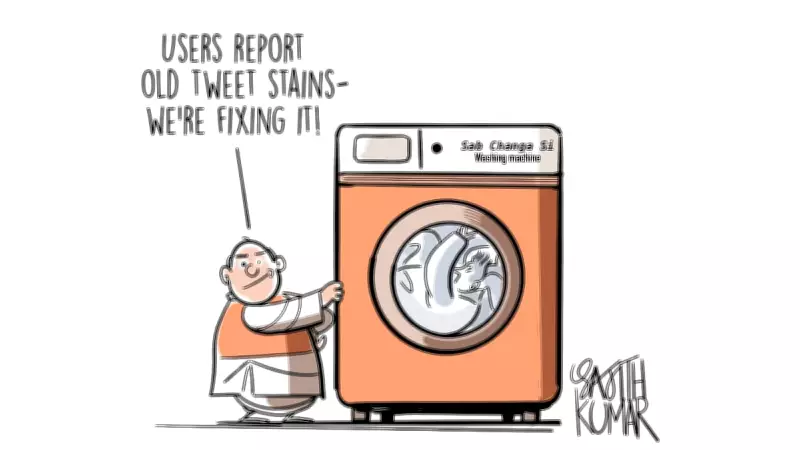
The Deccan Herald's recent cartoon, titled 'Washing Machine,' offers a satirical take on the frequent and often opportunistic switching of political parties by Indian politicians. The cartoon depicts a washing machine with the label 'Party Hopping' and politicians jumping in and out, emerging clean and ready to join a new party. This visual metaphor highlights the lack of ideological consistency and the convenience-driven nature of such switches.
The Satirical Message
The cartoon criticizes politicians who change parties as easily as changing clothes, often for personal gain or to stay in power. It underscores the erosion of political principles and the transactional nature of modern politics. The washing machine symbolizes the 'cleansing' of past affiliations, allowing politicians to start afresh without accountability.
Relevance in Current Politics
This cartoon is particularly relevant in the context of recent political developments in India, where several high-profile leaders have switched sides before elections. The satire resonates with voters who are disillusioned by such moves and question the integrity of their representatives.

Artistic Style
The cartoon uses simple yet effective imagery, with bold lines and minimal text, making the message clear and accessible. The washing machine is drawn with exaggerated features, emphasizing the absurdity of the situation. The politicians are depicted with recognizable traits, adding a layer of humor.
Impact on Public Discourse
Political cartoons like this one play a crucial role in shaping public opinion by simplifying complex issues and encouraging critical thinking. They provide a platform for satire and dissent, often reaching a wide audience through newspapers and social media.
In conclusion, the 'Washing Machine' cartoon is a sharp commentary on the state of Indian politics, urging citizens to reflect on the values and motivations of their leaders.