Universal Music India's Strategic Bollywood Return: Focusing on Storytelling Partnerships
Universal Music India has made a significant comeback to Bollywood through recent strategic acquisitions and partnerships, with a clear focus on securing a stronger role in storytelling across Hindi and regional language cinema. The company is actively seeking more deals in both film and independent music spaces, aiming to enhance its market presence and create long-term value in the entertainment industry.
Strategic Moves and Long-Term Vision
The company, a division of Universal Music Group, recently acquired a 30% equity stake in Excel Entertainment, a prominent film and digital content studio. Additionally, it entered into a strategic partnership with Dinesh Vijan's production house Maddock Films and its new label Mad For Mussic last year. These moves reflect the company's commitment to long-term collaborations rather than participating in bidding wars for film soundtracks.
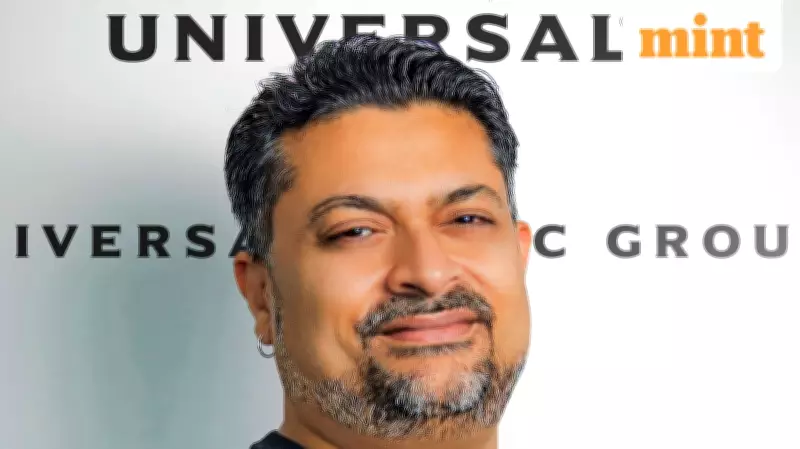
Devraj Sanyal, chairman and CEO for India, South Asia, and senior vice-president of strategy for Africa, Middle East, and Asia at Universal Music India, emphasized the company's storytelling ambitions. "We want to be part of the storytelling process," Sanyal stated in an interview. "We won't chase multiple new partnerships, but nothing is off the table for us. We are looking at acquiring catalogues and companies across spaces—regional films, regional independent companies which are in the periphery of the businesses that we are in, like music and brands or our merchandise business."

Financial Performance and Market Strategy
Universal Music India reported a net profit of ₹29.5 crore on revenue of ₹638.6 crore for FY24, according to data from financial intelligence firm Tofler. The company, which owns rights to classic soundtracks like Sholay, Bombay, and Devdas, has shifted away from the traditional Bollywood model where soundtracks are awarded to the highest bidder.
Instead, Universal Music India has focused on building market share in the independent music scene over recent years. This strategy has been supported by marketing innovations, video and audio strategies, events, pop-ups, and curated fan experiences. "We saw an uplift in our market share across these years, commanding 70-80% of the independent music market," Sanyal noted.
Industry Trends and Challenges
Music labels are increasingly showing interest in film companies, highlighting evolving trends and challenges in both sectors. For instance, Saregama invested ₹325 crore in an initial stake in filmmaker Sanjay Leela Bhansali's company in December, mirroring Universal's strategic moves.
Experts point out that music streaming continues to face weak monetization, with per-stream payouts often amounting to only a few paise. This makes it difficult for labels to generate meaningful long-term value, even from extensive catalogues. Additionally, fragmented rights enforcement limits the effective monetization of music intellectual property beyond traditional distribution channels.
In contrast, the film and OTT ecosystem offers deeper and more diversified revenue streams, including:
- Content distribution rights
- Music royalties
- Performance rights
- Global syndication
Investment and Economic Impact
Uday Sodhi, a senior partner at Kurate Digital Consulting, commented on the trend: "Everyone is realizing music revenues are shrinking so it only makes sense to move towards production. Companies like T-Series and Tips have already done so. However, these should be seen as purely investment moves that help returns—they cannot impact the label's market position in any way because there is only so much music that a studio brings out a year across films and shows."
Sanyal highlighted that such partnerships benefit all parties involved. By engaging early in the scripting stage, Universal can influence music creation and target audience positioning, leading to better marketing strategies. This approach not only promotes artists but also fosters a stronger paid subscription economy for music.

"To create a paid economy in this world, you need to give quality and quantity equally to the consumer in a way that he feels compelled to pay. When an individual pays, the entire economy and not just the platform, label or publisher grows," Sanyal explained. He pointed to the growth of the global music-streaming economy in regions like Japan, North America, Europe, and South America, where people actively pay for music.
"And I think not playing in the film business space would not help anyone achieve that goal, and that dream very quickly," Sanyal added, underscoring the importance of film industry involvement for broader economic growth in music.