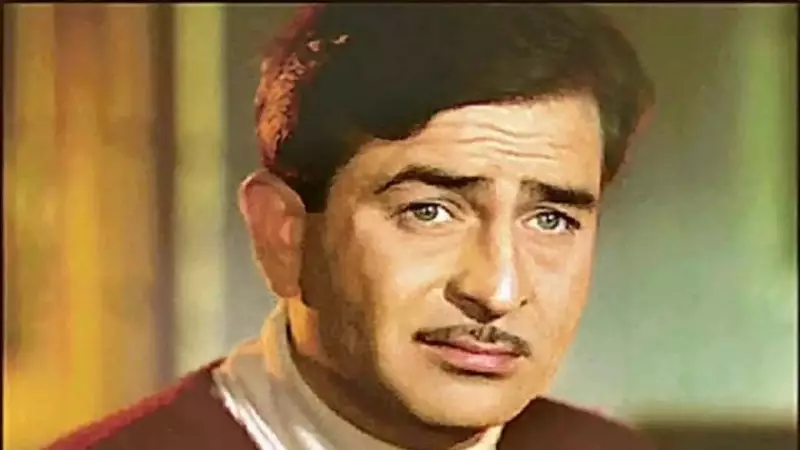
Raj Kapoor, immortalized as 'The Showman' of Indian cinema, faced one of the most challenging phases of his life following the colossal box office failure of his passion project, 'Mera Naam Joker'. A recent revelation by author and entrepreneur Bina Ramani, who was close to the Kapoor family, sheds light on this period of profound financial and personal distress, which ultimately preceded his triumphant comeback with the blockbuster 'Bobby'.
The Perfect Storm: Financial Ruin and Family Illness
In an interview on ANI's podcast, Bina Ramani detailed the dire circumstances Raj Kapoor found himself in during the early 1970s. The commercial disaster of 'Mera Naam Joker' had left him virtually bankrupt. Compounding this crisis was the deteriorating health of his father, the legendary Prithviraj Kapoor, who was battling cancer in the hospital. Ramani, who was living in San Francisco at the time with her husband Andy and two young children, provided shelter and support to the filmmaker.
"Raj Kapoor was broke," Ramani stated plainly. She recalled how both her husband, who worked for Air India, and Kapoor would take buses to get around, as the latter could not afford cabs. Kapoor was so financially strained that he chose to sleep on a mattress on the floor in Ramani's open-plan apartment, refusing more comfortable arrangements to save money for his father's medical needs. "He denied taking a cab and said ‘I don’t know how long father will be here, it would be expensive’. He had run out of money by then," she revealed.

Ramani also pointed to another financial blow: the Hinduja family, who owed him money from the profits of his earlier hit 'Sangam', had not paid him completely. This default, lasting about six weeks, exacerbated his precarious situation at this critical juncture.
A Man of Many Faiths: Spiritual Anguish in Crisis
Bina Ramani's account also provides a rare glimpse into Raj Kapoor's complex spiritual beliefs during this turbulent time. She described him as a Hindu who also believed in Islam and other faiths, evident from the pictures of Sai Baba, Lord Ganesh, and Jesus Christ he kept. One night, she heard him yelling and found him in a state of deep distress, holding the photograph of Jesus.
"He was completely abusing him, in Hindi and English," Ramani recounted. When she questioned him, Kapoor explained his outburst, saying, ‘I have loved him, have given my full love to him, he has returned his love to me, how dare he let me down?’ Ramani elaborated that Kapoor believed one must communicate directly with their God to be heard, and his anger stemmed from the relentless bad news about his father's health. "He was fed up, his father wasn’t getting better, that too added up," she said.
The Phoenix Rises: The Serendipitous Birth of 'Bobby'
Despite the darkness, this period also sowed the seeds for a spectacular comeback. In a fascinating anecdote, Bina Ramani revealed her unexpected role in the creation of one of Bollywood's most iconic youthful looks. She personally bought the costumes for the teenage leads of 'Bobby', Rishi Kapoor (Chintu) and Dimple Kapadia.
"I bought the costumes for Bobby. There was a cheap store called Alexander children’s clothes where I used to shop for my children so I thought of checking it out," she said. For about 500 dollars, she procured the entire wardrobe, including Dimple's famous knot blouses and shorts, and Rishi Kapoor's polka-dotted shirts that became a nationwide fashion trend. This frugal shopping trip helped create the fresh, relatable aesthetic that was central to the film's massive appeal.
Raj Kapoor's resilience in the face of overwhelming odds cemented his legacy. The failure of 'Mera Naam Joker' and his father's illness could have ended his career, but instead, he channeled his experiences and emerged with 'Bobby', a film that redefined romance for a new generation and restored his fortunes, proving why he was, and will always be, the great Showman of Indian cinema.