Javed Akhtar Enthralls Jaipur Literature Festival with Insights on Language, Cinema and Society
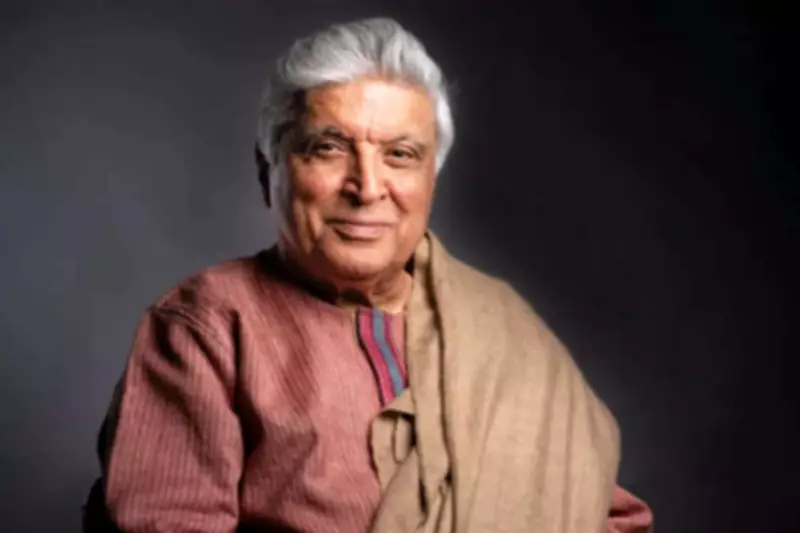
The celebrated poet, lyricist and screenwriter Javed Akhtar delivered a captivating session at the Jaipur Literature Festival, engaging audiences with a wide-ranging discourse that traversed the beauty of Urdu, the dynamics of cinema, societal shifts, faith, free thought, and the contemporary pressures confronting young people. Moderated by a host who opened with a lyrical homage to Urdu, the conversation was described as a living symbol of India's linguistic diversity, born from the interaction of Hindi, Persian, Arabic, Turkish, Sanskrit and Khari Boli.
Personal Reflections and Literary Legacy
Introducing Akhtar through a poetic blend of literary giants, the moderator portrayed him as an embodiment of Faiz's passion, Ghalib's depth, Sahir Ludhianvi's fire, Kaifi Azmi's compassion and revolutionary spirit, infused with Shelley's idealism and Christopher Hitchens' rationalism. Akhtar commenced by sharing deeply personal memories of his mother, who passed away when he was eight but left an indelible mark on his love for language and storytelling. He recalled how she taught him words as a playful game and narrated novels after school, carefully editing out romantic portions, thereby planting the seeds for his future as a writer.
When questioned about whether growing up in a family of renowned poets and progressive thinkers felt intimidating, Akhtar firmly rejected notions of comparison. "Getting threatened by talent is an unhealthy attitude," he asserted. "You should have the confidence to appreciate people who are better than you, not compete with them." He elaborated on the influence of the Progressive Writers' Movement, emphasizing that values are not consciously chosen but absorbed through atmosphere and upbringing—"like breathing." Secularism, he argued, cannot be taught as a crash course but must be lived as a way of life.

Rationalism, Religion and Poetic Recitations
Sharing anecdotes about his deeply religious grandparents alongside a fiercely independent grandmother who refused to impose religion on him, Akhtar noted that this moment marked the end of his formal religious education and the dawn of his lifelong rationalism. The audience erupted in applause as he recited two of his poems—one a powerful meditation on crowds, conscience and moral responsibility, and another exploring the multifaceted nature of sadness—reminding listeners of his enduring poetic prowess beyond the realm of cinema.
Bollywood's Evolution and Societal Reflections
Turning to Bollywood, Akhtar traced how mainstream cinema mirrors social and economic transformations. From socialist heroes like mill workers and taxi drivers to the rise of vigilantes during periods of institutional distrust, he explained that film protagonists reflect the moral aspirations of their eras. He highlighted how economic liberalisation, the growth of the middle class, and the emergence of multiplex culture have reshaped storytelling, making cinema increasingly tailored to urban, affluent audiences. "Cinema doesn't exist in a cultural vacuum," he remarked. "It shows what society is becoming—its desires, insecurities and ambitions."
On complaints about declining lyricism and language in songs, Akhtar was forthright: if families no longer read poetry or expose children to literature, they cannot expect refined language from popular culture. "You broke the relationship with language and now blame cinema," he stated. Addressing why many in Bollywood hesitate to speak truth to power, Akhtar pointed out that few media houses, corporations or public figures are truly anti-establishment. "Power," he said wryly, "is what most institutions ultimately serve."

Advice for Young Writers and Societal Observations
To aspiring young writers, his advice was simple yet uncompromising: read relentlessly—classics and light fiction alike. "Input is essential before output," he cautioned, warning against relying on shortcuts like social media summaries instead of books. He also addressed rising on-screen violence, suggesting it reflects latent anger and dissatisfaction within society itself, and spoke strongly against communal stereotyping. "No community, city or country is a monolith," he emphasized. "Judging in bulk is not just unfair—it's foolish."
In a particularly animated moment, Akhtar dismissed comparisons between Urdu and Sanskrit's antiquity, noting that Sanskrit and Tamil are among the world's oldest living languages, while Urdu is relatively young—a reminder, he said, of how linguistic histories are often misunderstood.
A Grounding Message for the Youth
As the session concluded, Akhtar left young listeners with a grounding message in an age of relentless comparison: "Your real competition is with yourself. Some people will always be better than you, some worse. If you measure your life that way, you'll always be unhappy. Focus on becoming better than you were yesterday." The conversation—humorous, reflective and deeply human—extended beyond its scheduled time, with both audience and organisers reluctant to end it, a testament to Akhtar's enduring power as a thinker, storyteller and public intellectual.