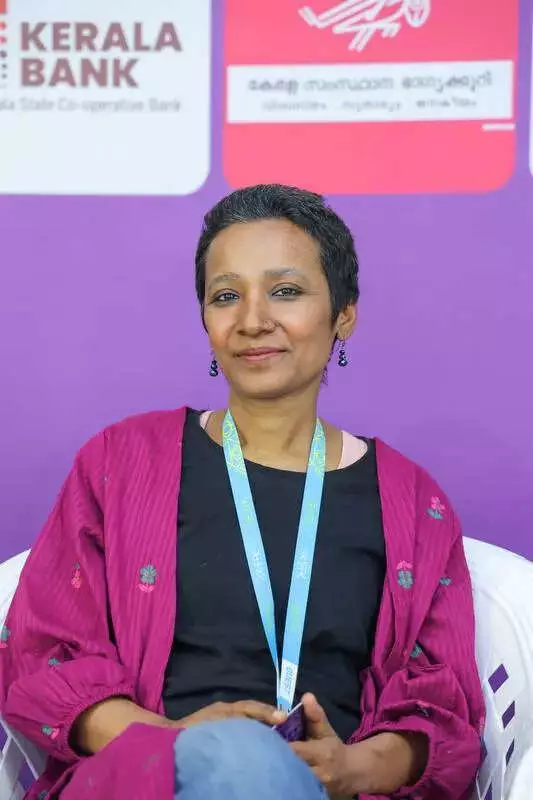
In a powerful testament to artistic resilience, acclaimed filmmaker and actor Tannishtha Chatterjee opened up about her deeply personal cinematic journey while presenting her film 'Full Plate' at the 30th International Film Festival of Kerala (IFFK). Chatterjee, who directed the feature while undergoing treatment for stage-four cancer, emphasized approaching every phase of cinema with the curiosity and humility of a beginner.
International Acclaim and a Director's Dual Role
Speaking to reporters in Thiruvananthapuram on Monday, Chatterjee reflected on the warm reception 'Full Plate' has received on the global stage. The film was previously screened at prestigious festivals including the Busan International Film Festival and the Dharamshala International Film Festival. She expressed initial concern that the film's nuanced humour might not translate across cultures through English subtitles. However, the overwhelmingly positive response from diverse international audiences proved her fears unfounded.
On her transition from being a renowned actor to stepping behind the camera as a director, Chatterjee offered a unique perspective. She never viewed the two roles as separate entities. "I am an actor first and then a director," she explained. Her directorial method was deeply informed by her acting experience, with the screenplay written in complete alignment with the characters' inner lives.

Cinema as Healing During Life's Greatest Challenge
The creation of 'Full Plate' is inextricably linked to one of the most challenging periods of Chatterjee's life. She was diagnosed with stage-four cancer during the filmmaking process. Remarkably, she revealed that the project became a crucial part of her emotional and psychological healing. Chatterjee underwent chemotherapy during the post-production stage, a time when editing was complete but other technical work remained.
"Immersing myself in the music and the technical aspects of the film never made me feel that my life was nearing its end," she shared. The creative process served as a profound source of inspiration, pushing her to continue writing and creating despite the immense physical and emotional toll of her illness.
The IFFK Distinction and a Philosophy of Continuous Learning
Chatterjee also highlighted what sets the International Film Festival of Kerala apart from other global cinematic events. For her, the festival's exceptional public engagement is its defining feature. The active and enthusiastic participation of local audiences transforms IFFK into a vital platform for filmmakers to connect with the world, she noted.
Central to her philosophy is a commitment to perpetual growth. Chatterjee firmly believes that the path to better filmmaking lies in constant learning. "By trying to understand new things more deeply and learning continuously, it becomes possible to make each film better than the previous one," she stated. This mindset of a perpetual student, she insists, is key to evolving as an artist, whether in front of the camera or behind it.