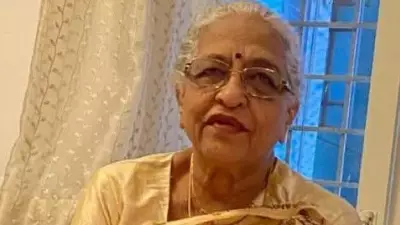
During a recent visit to Bengaluru, veteran Bollywood actress Bhagyashree opened up about the profound impact South Indian cinema, particularly Kannada films, had on her artistic journey. She shared how this chapter reshaped her approach to acting, language, and narrative.
A Superstar's Guidance in an Unfamiliar Land
Bhagyashree's foray into Kannada cinema began with the film 'Ammavra Ganda', where she was cast opposite the already-iconic star Shivarajkumar. Recalling the experience, she admitted to feeling intimidated. She was new to the Southern film industry and did not understand a single word of Kannada. The prospect of memorizing lengthy dialogues in an unfamiliar language was, in her own words, petrifying.
What became her anchor was the generous mentorship of Shivarajkumar himself. The superstar, then at the peak of his career, patiently guided her through scenes. He helped her grasp the nuances of pauses, pitch, and overall performance. For Bhagyashree, collaborating with an actor who possessed such an instinctive understanding of the craft felt like a true blessing.

Shattering the 'Suman' Image
The film's role demanded a dramatic shift from her established Bollywood persona. 'Ammavra Ganda', which loosely translates to 'The Lady's Husband', featured Bhagyashree as a character who beats up and misbehaves with her spouse. This was a stark contrast to her debut role as the gentle and idealistic Suman in the blockbuster 'Maine Pyaar Kiya'.
Bhagyashree emphasized that Kannada cinema played a crucial role in helping her break that sugary-sweet image early in her career. It revealed a fiercer, more assertive side of her that audiences had not witnessed before, allowing her to showcase her versatility as a performer.
Lessons in Language and Emotive Storytelling
Beyond breaking typecast, the experience offered Bhagyashree deeper lessons. She explained that a basic familiarity with Sanskrit aided her, as many Indian languages share roots with it. Breaking down words made languages like Kannada, Tamil, or Telugu more accessible.
For her, the key was moving beyond mere line delivery. Understanding the meaning of the dialogue transformed her performance. "When the meaning reflects in your eyes, you connect more deeply with the audience," she stated. This insight into emotive storytelling, gained from her Kannada film stint, is something she carries with her to this day.
Bhagyashree fondly stated that Kannada cinema occupies a special corner of her heart, not just for the films but for the invaluable lessons in empathy and narrative depth it provided. It was far from a mere detour; it was a formative chapter that enriched her craft.