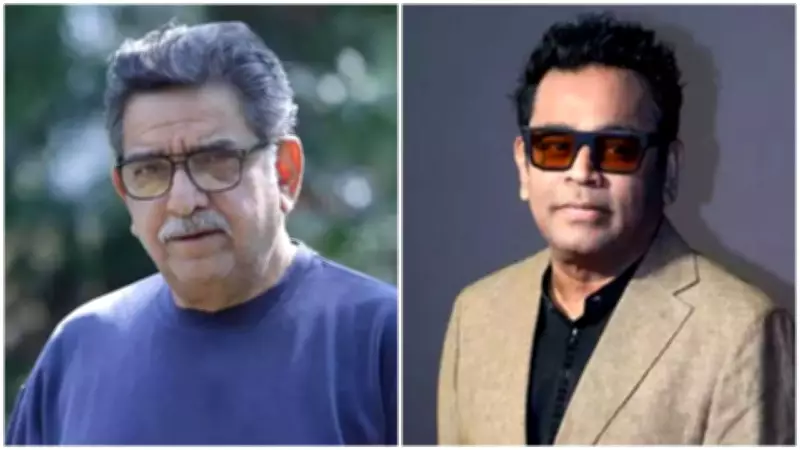
AR Rahman recently found himself at the center of a significant controversy after suggesting that he may have lost work opportunities in Bollywood over the past eight years due to growing communal undercurrents. His remarks sparked intense reactions across the entertainment industry and on social media platforms, drawing sharp criticism from some quarters while others expressed cautious disagreement.
Rahman's Clarification and the Ongoing Debate
Following the uproar, AR Rahman issued a clarification and apology, attempting to contextualize his statements. However, the broader discussion about polarization within the film industry continued to simmer, with many industry insiders and observers weighing in on the sensitive topic.
Baba Azmi's Perspective on Industry Polarization
Amid this ongoing debate, veteran cinematographer Baba Azmi was asked whether he has personally experienced increasing polarization in the Hindi film industry. Speaking to Just Too Filmy, the son of legendary poet Kaifi Azmi and brother of acclaimed actress Shabana Azmi played down these concerns.

"I don't think so. This might just be a passing phase, might be in a small percentage, but no," Azmi stated clearly. He suggested that while isolated instances may exist, they do not define the industry at large and should not be viewed as representative of broader trends.
Cinema Transcends Identity According to Azmi
Stressing that cinema ultimately transcends identity politics, Baba Azmi asserted that talent and storytelling remain the only true measures for audiences when engaging with films.
"Absolutely. Because when you are watching a film, you don't think about whether it's a Muslim person acting in it or not. Either you're so engrossed in the story, or you don't like the film at all," Azmi explained. According to him, the audience's connection with cinema is instinctive and emotional, fundamentally driven by artistic merit rather than the creator's religious or cultural background.
Lagaan as an Example of Art Beyond Identity
To further underline his point, Azmi cited the iconic film Lagaan as a powerful example of how art is consumed without religious filters or considerations of the creators' identities.
"You don't see who wrote the songs in Lagaan, that aarti. Whether it was a Muslim or a Hindu. That doesn't matter. You are listening to it, and you either like it, period, or you don't, period," he emphasized. Azmi added that such divisions are still far from becoming the norm within the industry.
"There is nothing beyond that. At least, for now, I think we are far away from anything like that, and that's how it should be," the veteran cinematographer concluded, expressing hope that artistic considerations would continue to prevail over identity politics in Bollywood.
The discussion comes at a time when the entertainment industry continues to navigate complex social dynamics while maintaining its creative integrity and universal appeal to diverse audiences across India and beyond.