Baba Azmi Rejects AR Rahman's Communal Claim, Highlights Bollywood's Talent-Centric Nature
In a recent development that has stirred the Indian film industry, veteran cinematographer Baba Azmi has publicly disagreed with Oscar-winning composer AR Rahman's statement suggesting increasing polarization in Bollywood. Azmi, the brother of acclaimed actress Shabana Azmi and son of legendary poet Kaifi Azmi, emphasized that the industry remains a space where talent ultimately triumphs, regardless of religious or communal backgrounds.
The Controversial Comment and Its Aftermath
AR Rahman sparked a heated debate when he indirectly hinted at losing work in Bollywood over the past eight years, attributing it to a possible communal shift in the industry. His remarks quickly went viral, drawing mixed reactions from celebrities and the public alike. While some, like Kangana Ranaut, criticized Rahman, others such as Javed Akhtar denied witnessing such polarization but refrained from direct condemnation. The controversy escalated to the point where Rahman issued a public apology, though the discussion continued to resonate across social media platforms and industry circles.
Baba Azmi's Perspective on Talent and Unity
When asked about his experience as a Muslim in Bollywood and whether he has observed increasing polarization, Baba Azmi responded with a firm denial. "I don't think so. This might just be a passing phase, might be in a small percentage, but no," he stated in an interview with Just Too Filmy. He further elaborated that when audiences watch a film, they are engrossed in the story or simply dislike it, without considering the actor's religious identity.

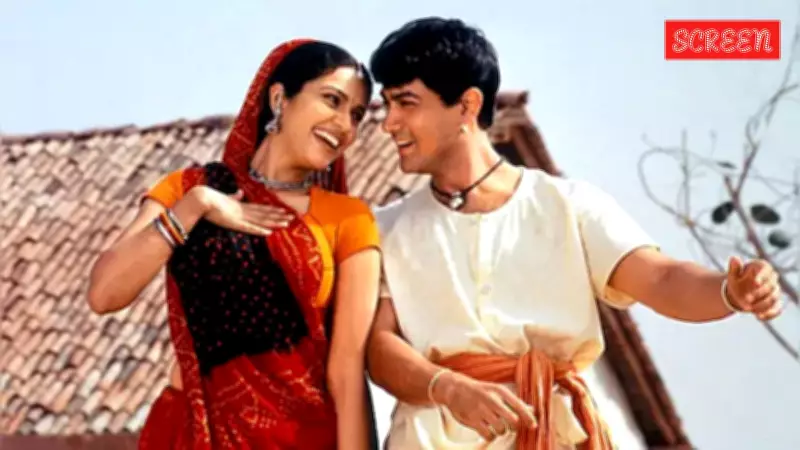
To illustrate his point, Azmi cited the iconic film Lagaan, whose music was composed by AR Rahman and lyrics penned by Javed Akhtar. "You don't see who wrote the songs in Lagaan, that aarti. Whether it was a Muslim or a Hindu. That doesn't matter. You are listening to it, and you either like it, period, or you don't, period. There is nothing beyond that," he asserted. He added that, for now, the industry is far from such divisive trends, and it should remain focused on artistic merit.
AR Rahman's Original Statement and Clarification
For context, AR Rahman initiated this discourse during an interview with BBC Asian Network, where he suggested that a power shift in Bollywood might have led to communal biases affecting work opportunities. He mentioned hearing whispers about being replaced by other composers but maintained a philosophical outlook, stating he prefers work to come to him based on sincerity rather than actively seeking it.
Following intense online backlash, Rahman shared a video statement on Instagram to clarify his position. In the video, he expressed deep respect for India as his home and inspiration, emphasizing that his intentions were never to cause harm. "India is my inspiration, my teacher, and my home. I understand that intentions can sometimes be misunderstood. But my purpose has always been to uplift, honour, and serve through music," he said, reaffirming his commitment to celebrating multicultural voices.
Industry Reactions and Broader Implications
The exchange between Baba Azmi and AR Rahman has highlighted ongoing discussions about diversity and inclusion in Bollywood. While some argue that communal biases may be creeping in, others like Azmi believe that the core of the industry remains rooted in talent and creativity. This debate underscores the importance of maintaining an environment where art transcends communal lines, as exemplified by collaborative works like Lagaan.
As Bollywood continues to evolve, voices like Baba Azmi's serve as a reminder that the industry's strength lies in its ability to unite people through storytelling, music, and performance, rather than dividing them along religious or communal grounds.