Amaal Mallik's Battle to Secure Sonu Nigam for Bhool Bhulaiyaa 3's Iconic Track
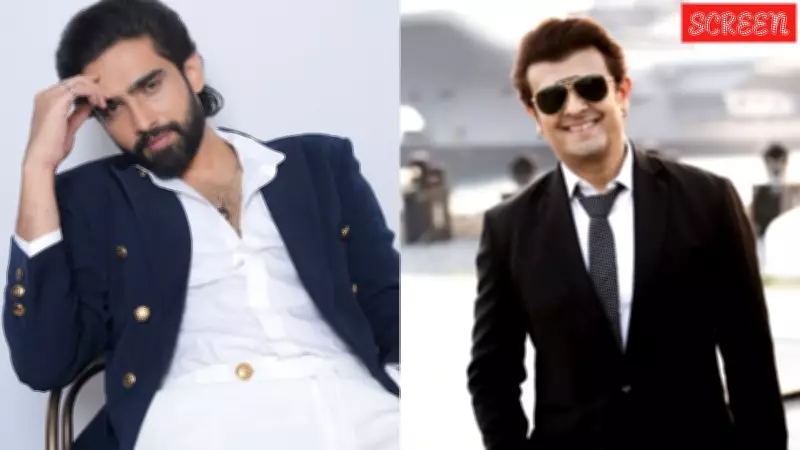
In a revealing interview, music composer Amaal Mallik has opened up about the intense behind-the-scenes struggle to get legendary singer Sonu Nigam to voice the hit song "Mere Dholna 3.0" for the film Bhool Bhulaiyaa 3. The track, featuring stars Kartik Aaryan, Vidya Balan, and Tripti Dimri, has become a standout, but its creation was marred by significant industry resistance.
Industry Skepticism and Pressure to Choose Other Singers
Amaal Mallik disclosed that during the song selection process, he faced considerable pushback from various quarters. "They didn't want someone as amazing as Sonu Nigam to sing 'Mere Dholna 3.0'; they were not sure we should go with someone like Sonu Nigam," he stated. Despite this, Mallik remained steadfast in his vision, arguing that Sonu Nigam's classical prowess made him the ideal choice.
The pressure came from multiple sources, including marketing teams and the actor's management. "From the marketing team someone's coming; from the actor's team, the manager's coming who are then suggesting 'Why shouldn't we go with Arijit Singh? Shouldn't we go with Vishal Mishra?'" Mallik explained. He acknowledged that while Arijit Singh and Vishal Mishra were talented options, he believed only Sonu Nigam could deliver the bold, classical voice required for the song.

Sonu Nigam's Remarkable 45-Minute Recording Session
Despite the initial doubts, Sonu Nigam proved his mettle by recording the complex song in an astonishing 45 minutes. Mallik recounted, "He completed the song in 45 minutes. It is the toughest song on Earth that I have recomposed." The session, which involved intricate sargam passages, was completed late at night after Nigam arrived directly from a show in the US, leaving everyone in awe of his talent and efficiency.
Creative Risks and Professional Consequences
Mallik highlighted the creative struggles composers face in the Hindi film industry, where external opinions often override their expertise. "During the process to bring his voice for the song, they were ready to remove me from the film saying that you aren't listening to us!" he revealed. This incident underscores a broader issue where composers risk being replaced for insisting on their artistic choices.
Over the past five years, Mallik disclosed that he has been removed from 40 to 45 films, illustrating the precarious nature of the profession. He also touched on legal battles within the industry, noting, "There was a time when I was working with someone on a film, and by the evening we were fighting a court case."
Disparities in Compensation and Industry Economics
In the interview, Mallik pointed to significant disparities in compensation for composers and singers. He cited the example of the song "Sooraj Dooba Hai" from the film Roy, which was produced on a budget of Rs 8–9 lakh but earned music labels around Rs 60–70 crore. Mallik received only minimal publishing rights, far less than Rs 1 crore, highlighting the economic imbalances in Bollywood's music sector.
This revelation sheds light on the challenges faced by music creators, where financial rewards often do not match the commercial success of their work.
Conclusion: A Testament to Artistic Conviction
Amaal Mallik's experience with "Mere Dholna 3.0" serves as a powerful reminder of the importance of artistic conviction in the face of industry pressures. His fight to secure Sonu Nigam's voice ultimately paid off, with the song becoming a major hit. However, it also exposes ongoing issues in Bollywood, from creative interference to unfair compensation, that continue to affect composers and singers alike.