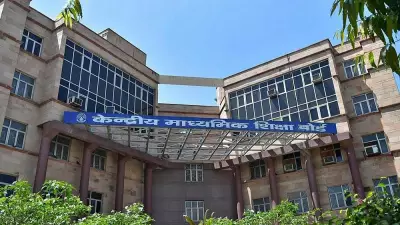
In a significant shift in strategy, the prestigious National Law School of India University (NLSIU) in Bengaluru has announced it will not increase student intake for the upcoming 2026-27 academic year. This decision marks a pause after four consecutive years of steady expansion in student numbers.
A Strategic Pause After Rapid Growth
The law school's registrar, Nigam Nuggehalli, confirmed the move, stating the institution's current aim is to stabilise its academic programmes. This follows the execution of the 'NLSIU Inclusion and Expansion Plan 2021-25', which was unveiled in April 2021. Under that plan, the student body grew substantially from 660 students in 2021 to 1,734 students currently.
"We don't intend to increase intake for any of our programmes for the next academic year," Nuggehalli said. "We've expanded the student cohort over the past four years. Now, our aim is to stabilise the programmes."

Strengthening Faculty and Pioneering Research
With the expansion phase on hold, NLSIU is redirecting its energies towards enhancing research output and faculty strength. The registrar highlighted that while the institution's historical focus has been on teaching and learning, the goal now is to build a robust research cadre.
"We will be recruiting more faculty members," he stated. "Meanwhile, our focus will now be on research... Now, with world-class faculty, we hope to spend more effort on legal research, including legal system research, climate change, and taxation laws."
The institute has been instituting fellowships to support this new research-oriented vision. Furthermore, NLSIU's new land parcel across the road is likely to be developed to house residences for students and researchers, supporting this academic ecosystem.
New Programmes and a Focus on Indian Languages
Alongside stabilisation and research, NLSIU is also innovating its curriculum. A new programme on Indian languages and literature is in the pipeline, starting with Kannada and Hindi. This course will be offered to BA (Hons) students at beginner and intermediate levels as an elective.
In a move to extend its reach beyond regular students, the university plans to offer these language courses to the general public as certificate courses, designed to combine communication skills with cultural appreciation.
Emphasising the importance of this initiative, Nuggehalli explained, "Law graduates require strong proficiency in Indian languages — be it in the courts, public administration, or policy. The ability to work with formal language, build conversation, and think critically in regional languages is important in the field. The languages and literature programme hopes to help in this."
The intake for the flagship five-year integrated LLB programme remains at 310 seats. For the three-year LLB (Hons) programme in 2026-27, 120 students will be admitted through the National Law School Admission Test (NLSAT).