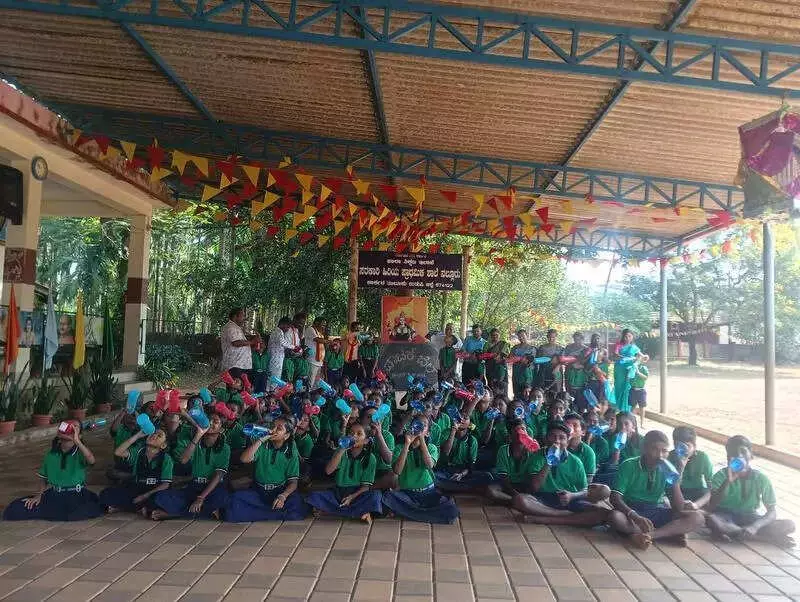
The Government Higher Primary School in Nallur, Karkala taluk, recently launched a new program to help students drink water regularly. Officials called it the water bell initiative. They want to build healthy hydration habits among children.
Inauguration Ceremony Details
Lokesh C, the deputy director of public instruction for Udupi district, started the program. He offered water to students during the inauguration event. Lokesh spoke to everyone gathered at the school. He emphasized that caring for government school children's health is a shared duty. He urged all teachers to pay special attention to make this initiative work well.
Organizing the Event
Nagesh, the headmaster of the school, organized the program. In his opening remarks, he thanked Diwakar Shetty Gundyadka for donating water bottles. This donation supported the initiative directly.

Several important people attended the launch. Satish Shetty, president of the Shikshana Premi Shatamanotsava Samithi, was there. Harish, a member of the School Development and Monitoring Committee, also came. Kondalli Prabhakar Shetty, who leads the Udupi District High School Assistant Teachers' Association, joined the event. Satish Vaddarse, a technical assistant, and others participated too.
How the Water Bell Initiative Works
This school-based program promotes healthy hydration habits among students. It encourages children to drink water at regular times during school hours. A bell rings at fixed intervals each day. The sound reminds students to stop their activities and take a water break. This simple action helps prevent dehydration, fatigue, and related health problems.
Benefits for Government Schools
The program proves especially useful in government schools. Many children in these schools might forget to drink enough water otherwise. By adding this practice to the daily routine, the water bell initiative supports physical well-being. It also boosts concentration, alertness, and overall learning results.
Nagesh, the headmaster, explained the effort. He said this was an attempt to promote healthy living through simple, low-cost steps in education. The initiative shows how small changes can make a big difference for students' health and academic performance.