Jharkhand is set to expand its flagship multilingual education initiative, the Palash programme, to cover all districts in the state, with the inclusion of four additional regional languages. This announcement was made by the state's Higher and Technical Education Minister, Sudivya Kumar, during a national conclave in Ranchi.
Minister Champions Linguistic Diversity as Foundation
Addressing a two-day national-level multilingual education conclave organised by the Jharkhand Education Project Council (JEPC) on Wednesday, Minister Sudivya Kumar underscored the critical role of multilingual learning. He stated that multilingual education forms the bedrock of cultural identity, inclusivity, and quality learning.
"Early learning must be simple, engaging, and practical to build aware and responsible citizens," Kumar emphasised. He highlighted that Jharkhand itself is a living example of linguistic diversity, being home to five tribal and four regional languages.

Major Expansion of the Palash Programme
The minister revealed a significant expansion plan for the 'Palash' multilingual education programme. Currently operational in eight districts, the programme will now be extended to the remaining districts of the state.
In a key development, four regional languages – Khortha, Nagpuri, Panchpargania, and Kurmali – will be incorporated into the Palash programme. This move aims to strengthen mother-tongue-based learning for a larger number of students.
The Palash programme, launched in 2022 with 259 schools across seven districts, is a direct implementation of the National Education Policy (NEP) 2020. The NEP recommends the mother tongue or regional language as the medium of instruction until at least Class VIII.
Currently, the programme supports nearly 35,400 students across the districts of Simdega, Gumla, Khunti, Lohardaga, Latehar, Dumka, Sahibganj, and West Singhbhum. Teaching-learning materials are being provided in 1,041 schools, and the state has already developed textbooks in five tribal languages.
Structured Policy and Academic Review
To frame a comprehensive and sustainable language policy, the state's school education and literacy department has constituted a state-level language policy committee. This committee is tasked with promoting tribal and regional languages in school education.
The committee comprises representatives from prestigious institutions including the Tribal Research Institute (TRI), the Tribal and Regional Language Department, and central universities. One of its primary functions is to review successful multilingual education models implemented in other Indian states.
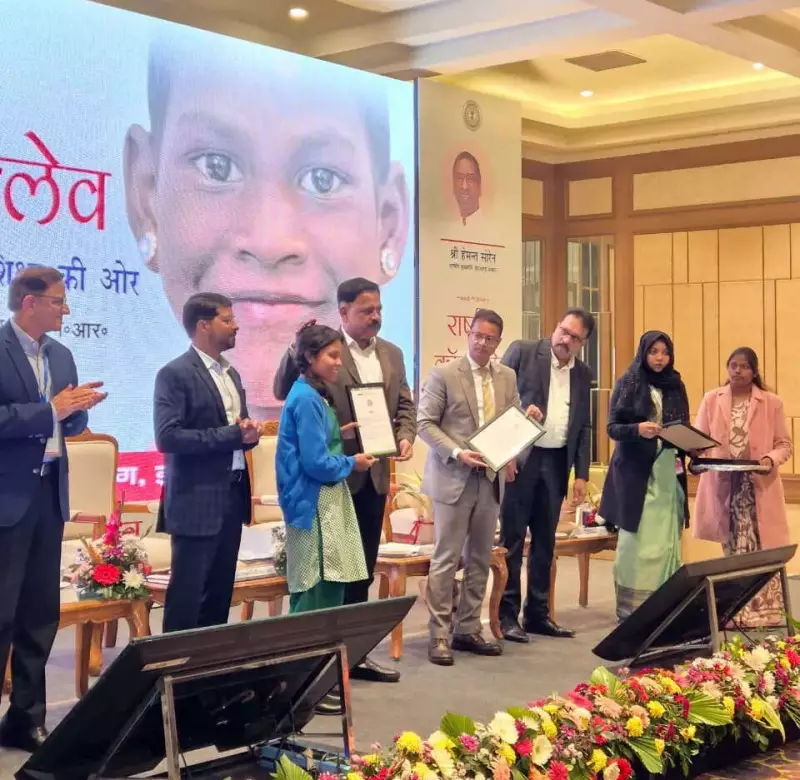
During the conclave, the government honoured the contributions of ten teachers and students who were instrumental in developing and illustrating the teaching-learning materials for the Palash programme.
Officials Hail Programme's Success
School Education Secretary Umashankar Singh noted that the conclave served as a platform to honour the state's rich cultural heritage through education. He affirmed that the Palash programme has successfully helped connect children with formal schooling and boosted their interest in learning over the years.
State Project Director Shashi Ranjan explained that Jharkhand adopted a structured approach to multilingual education following the NEP 2020. He highlighted the proven benefits, stating that children who receive early education in their mother tongue develop stronger academic foundations, greater confidence, and deeper cultural awareness.
The conclave also facilitated panel discussions where national-level experts and practising teachers shared insights on the opportunities and challenges of implementing multilingual education in classrooms across India.