Gurgaon Education Department Proposes Shift to Single-Session Government Schools
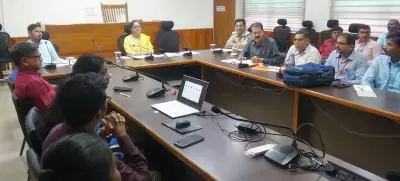
The state education department in Haryana has initiated a significant proposal to convert government schools currently operating in double shifts into single-session institutions. District education officers (DEOs) have been instructed to submit detailed feasibility reports within a strict three-day deadline. This directive follows high-level discussions during a recent direction meeting chaired by the chief minister, highlighting the urgency of this educational reform.
Feasibility Reports to Include Comprehensive School Data
DEOs are required to compile school-wise data encompassing total student strength, existing shift arrangements, classroom availability, and infrastructure requirements necessary to accommodate all students in a unified session. The reports must also clarify whether this transition can be achieved without constructing additional rooms, addressing potential logistical and spatial constraints.
Officials emphasized that the primary goal of this move is to improve academic efficiency, increase instructional time, and strengthen co-curricular activities. By adopting a single-shift system, the department aims to streamline teaching hours, reduce logistical challenges, and enhance monitoring and supervision across schools.

Comparative Analysis of Shift Schedules
A Gurgaon-based teacher provided insights into the current operational disparities. In a standard single-shift environment, students typically follow an 8 a.m. to 2:30 p.m. schedule, benefiting from 6.5 hours of comprehensive instruction, sports, and extracurricular activities. Conversely, double-shift schools operate on a compressed timeline: the first shift runs from 7 a.m. to 12:30 p.m., and the second from 12:45 p.m. to 6:15 p.m., reducing total instructional time to just 5.5 hours. This gap widens to 2 hours during winter months, further impacting student engagement and learning outcomes.
Current Landscape and Infrastructure Challenges
Gurgaon currently has 35 government schools operating in double shifts, with the majority concentrated in specific blocks: 27 in Gurgaon block, 4 in Farukhnagar, and 4 in Sohna block. Officials acknowledged that the department is exploring long-term infrastructure upgrades, including additional construction and optimized classroom allocation, to support the transition. However, accurate data collection is deemed critical for assessing feasibility.
Another teacher highlighted practical challenges, noting that many double-shift schools are located in highly congested areas with limited physical space. Merging two entire shifts into one session is particularly tough without new construction, as the directorate collects data on room shortages to evaluate the viability of this shift merger.
Regulatory Framework and Fairness Measures
Officials stressed that double shifts are not a permanent entitlement for schools. They are permitted on an annual basis only if institutions lack sufficient facilities. Each year, the directorate conducts checks to determine if new classrooms have been constructed or if there has been a drop in student numbers that would allow a return to a single shift. To ensure fairness for all students, officials are now rigorously auditing schools to prevent administrators from concealing their true capacity, thereby promoting transparency and equitable resource allocation.