Goa Government Introduces Bill to Raise School Entry Age to Six Years
The Goa government has taken a significant step in education reform by introducing the Goa School Education Bill, 2026. This new legislation proposes to raise the minimum age for admission to Class 1 to six years. The move directly aligns with the National Education Policy (NEP) 2020, which advocates for a uniform school-start age across India.
Chief Minister Pramod Sawant presented the bill during the ongoing winter session of the state Assembly. It seeks to amend Section 18 of the Goa School Education Act, 1984. Currently, children aged five years and six months can enter Class 1. The proposed change will set a stricter threshold.
Key Provisions of the Goa School Education Bill, 2026
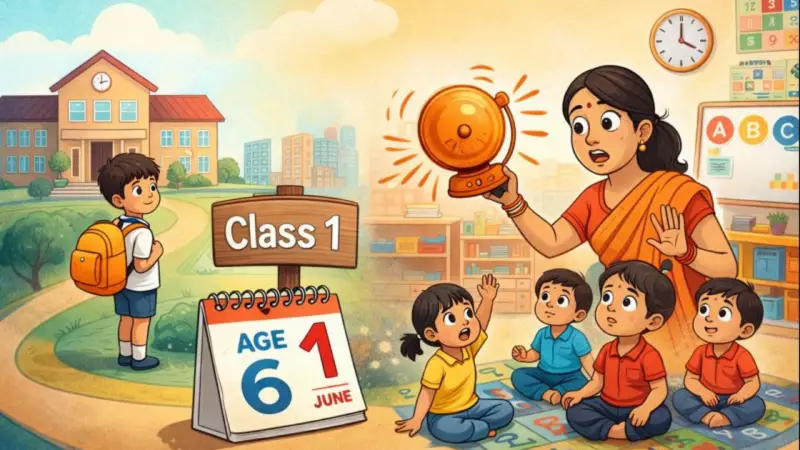
The bill outlines clear rules for school admissions. A child must complete six years of age on or before June 1 of the academic year to be eligible for Class 1. This applies to all recognized schools in Goa. The legislation also includes measures to prevent disruption for current students.

For the 2025–26 academic year, a one-time relaxation will allow children who turn five years and six months by June 1, 2025, to join Class 1. This provision ensures a smooth transition for families and schools. The bill further tightens age norms for admissions to higher classes.
It specifies that students seeking first-time admission to classes above Class 1 must meet the six-year age requirement. Authorities will deduct the normal schooling years between that class and Class 1 to check eligibility. This clause aims to close backdoor entry routes that bypass age rules.
Aligning with National Education Policy and RTE Act
The stated objective of the amendment is to ensure uniformity with national frameworks. Both the National Education Policy 2020 and the Right of Children to Free and Compulsory Education Act, 2009, prescribe six years as the minimum age for formal schooling. Goa's move brings the state closer to this national standard.
In 2023, the Ministry of Education urged all states and Union Territories to align their admission norms with NEP 2020. Since then, several regions have begun implementing this directive. Goa's legislative action represents a concrete step in this ongoing process.
National Trend: States Adopting the Six-Year Rule
Various states and educational systems across India have started adopting the six-year minimum age for Class 1. They are implementing the change through different methods, including new laws, government orders, and revised admission rules.
- Delhi has mandated six years for Class 1 starting from the 2026–27 academic session.
- Uttar Pradesh enforced the minimum age of six following the Centre's directive.
- Punjab implemented the rule through pre-primary restructuring and age bands.
- Haryana issued official notifications fixing the minimum age at six.
- Karnataka adopted the six-year cut-off with phased tightening measures.
- Kendriya Vidyalayas follow central admission guidelines requiring six years for Class 1.
Why NEP 2020 Emphasizes Six Years as the Starting Age
The National Education Policy 2020 makes a clear distinction between early learning and formal schooling. It recognizes that learning begins at birth but argues that structured education should start only after early childhood development. The policy's 5+3+3+4 structure reflects this approach.
This design begins with a foundational stage covering ages 3 to 8. It includes three years of pre-primary education for ages 3 to 6, followed by Classes 1 and 2 for ages 6 to 8. Subsequent stages build upon this foundation: preparatory (Classes 3–5, ages 8–11), middle (Classes 6–8, ages 11–14), and secondary (Classes 9–12, ages 14–18).
Setting six years as the entry point for Class 1 serves as a crucial hinge. It maintains the integrity of the foundational stage. Starting formal education earlier often turns kindergarten into a disguised version of Class 1. This practice can create unnecessary pressure on young children. The six-year rule aims to prevent this drift and allow proper developmental readiness.

Research Supports Readiness Over Early Academic Pressure
Educational research provides strong evidence for raising the school entry age. Studies indicate that early gains from starting school younger often fade over time. Long-term achievement depends more on school-entry readiness than on early admission.
A landmark longitudinal study, School Readiness and Later Achievement by Greg J. Duncan and colleagues, tracked children from school entry into later years. Published in Developmental Psychology, the study found that durable academic success correlates with specific readiness factors. These include language ability, basic numeracy, attention span, and self-regulation skills.
This research challenges India's culture of early academic starts. Many families and schools reward children who achieve early milestones, even when these gains are superficial or stress-induced. The government's push for a six-year entry age attempts to interrupt this cycle. It creates space for genuine developmental progress before formal schooling begins.
Preschool Education: The Critical Link in the Chain
Raising the Class 1 entry age to six years highlights the importance of preschool education. If Class 1 starts later without improving early childhood education, academic pressure may simply shift downward. India faces challenges in regulating and standardizing preschool pedagogy.
The country has several frameworks for early childhood education. The National Early Childhood Care and Education (ECCE) Policy, 2013 sets quality standards. The National Curriculum Framework for the Foundational Stage (NCF-FS), 2022 integrates ages 3–8 into a developmental continuum. The NIPUN Bharat Mission focuses on foundational literacy and numeracy outcomes.
However, enforcement remains inconsistent. Preschool education operates outside the Right to Education Act, which begins at age six. This legal gap results in a fragmented system with varying standards across anganwadis, government pre-primary programs, and private preschools.
Research data reveals ongoing challenges. The Annual Status of Education Report (ASER) 2022 shows that at age five, children attend various types of early education institutions. The report also indicates weak foundational learning outcomes despite widespread early enrolment. This suggests that attendance alone does not guarantee readiness for formal schooling.
The six-year rule for Class 1 admission serves as more than just an age cut-off. It creates leverage for improving early childhood education. By setting this standard, the government implicitly asks preschools to focus on developmental goals rather than academic preparation. The success of this reform depends on how effectively early years education cultivates genuine readiness in children.