25 Years of Bhuj Earthquake: Essential Knowledge for UPSC Aspirants
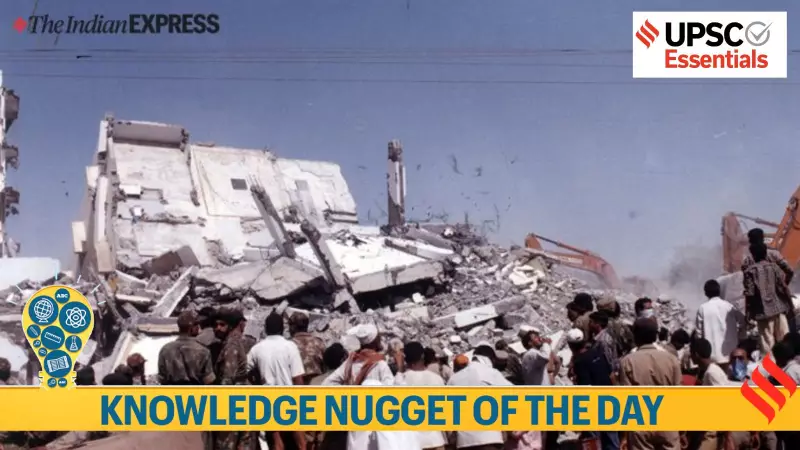
As India commemorates its 77th Republic Day, the nation also reflects on the 25th anniversary of the devastating Bhuj earthquake that struck Gujarat on January 26, 2001. This tragic event serves as a critical case study for UPSC Civil Services Examination candidates, particularly in subjects like Geography and Disaster Management. Understanding earthquakes, their mechanisms, and India's preparedness is vital for aspirants aiming to excel in current affairs and general studies papers.
Why the Bhuj Earthquake Remains Relevant Today
The Bhuj earthquake, measuring 6.9 on the Richter scale, resulted in over 20,000 fatalities, 166,000 injuries, and the destruction of nearly 400,000 homes. Its impact extended across 21 districts, leaving 600,000 people homeless and shockwaves felt over 700 kilometers. This disaster marked a pivotal shift in India's approach to disaster management, transitioning from reactive relief efforts to a proactive, institutionalized system. The recent Republic Day parade featured a tableau by the Ministry of Home Affairs highlighting the National Disaster Management Authority (NDMA) and National Disaster Response Force (NDRF), underscoring the theme of resilience and the lessons learned from Bhuj.
Understanding Earthquakes: Core Concepts for UPSC
An earthquake is defined as an intense shaking of the ground caused by movements beneath the Earth's surface. According to the United States Geological Survey (USGS), this occurs when two blocks of the Earth suddenly slip past each other, releasing stored elastic strain energy as seismic waves. The Earth's crust is divided into tectonic plates, with boundaries known as faults. When these plates move and their rough edges get stuck, an earthquake happens once they unstick. Key terms include the hypocenter, where the earthquake originates below the surface, and the epicenter, the point directly above it on the surface.

Earthquake Waves: Types and Characteristics
Seismic waves generated during an earthquake are categorized into body waves and surface waves. Body waves, which travel through the Earth's interior, include Primary (P) waves and Secondary (S) waves. P waves are compressional sound waves that can move through solids, liquids, and gases, even traversing the Earth's liquid outer core. In contrast, S waves are shear waves that cannot propagate through liquids or gases, limiting their travel through oceans or the outer core. Surface waves, confined near the Earth's surface, consist of Love waves and Rayleigh waves, with the latter mimicking ocean wave motions.
India's Vulnerability to Earthquakes
India ranks as the seventh most earthquake-prone country globally due to its geographical position at the convergence of multiple tectonic plates, complex geological structures, and rapid urbanization with unregulated construction. Approximately 59% of India's land area is at risk of moderate to severe seismic events, with intensities of VII or higher on the MSK scale. This vulnerability highlights the importance of disaster preparedness and mitigation strategies in national policies.
Beyond the Basics: National Disaster Management Authority (NDMA)
The National Disaster Management Authority (NDMA) serves as India's apex body for disaster management, established under the Disaster Management Act of 2005. Headed by the Prime Minister, NDMA formulates policies, plans, and guidelines to enhance disaster resilience. The act also mandates State Disaster Management Authorities (SDMAs) and District Disaster Management Authorities (DDMAs) to ensure coordinated responses at all levels. India's commitment to global efforts is evidenced by its adherence to the Sendai Framework for Disaster Risk Reduction (SFDRR), setting targets for risk reduction and management.
Post-Read Question for Self-Assessment
Consider the following statements regarding earthquakes:
- Primary waves are capable of traveling through solids, liquids, and gases.
- Secondary waves cannot travel through liquids or gases.
- The location below the Earth's surface where the earthquake starts is called the hypocenter.
How many of these statements are correct?

- (a) One only
- (b) Two only
- (c) All three
- (d) None
Answer Key: (c) All three statements are correct, reinforcing key concepts for UPSC preparation.