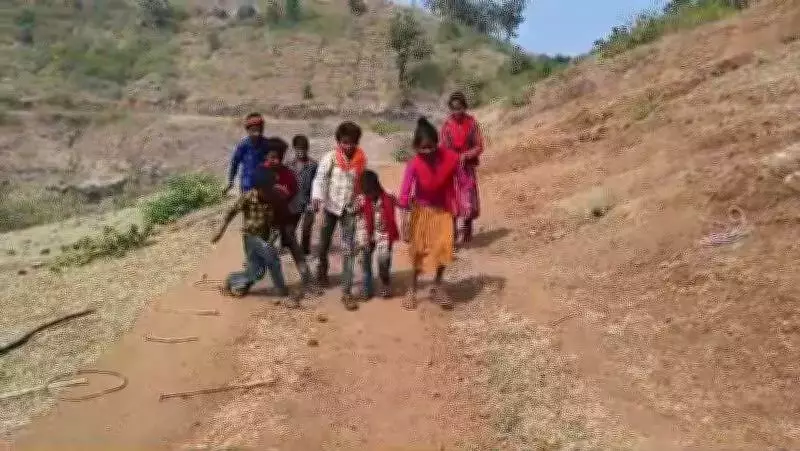
82 Tribal Children in Barwani Miss State Board Exams Due to Absence of Local School
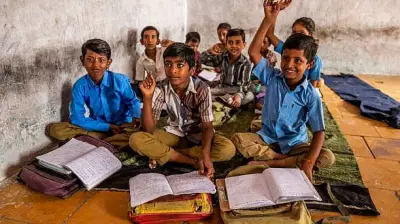
As Class 5 Madhya Pradesh state board examinations began across the state on Friday, a distressing situation unfolded in the remote tribal hamlet of Khedi Faliya. A total of 82 children from this settlement were unable to appear for their crucial exams because they could not attend school throughout the entire academic year.
Remote Location and Dangerous Route Prevent School Attendance
Khedi Faliya, located approximately 55 kilometers from the Barwani district headquarters, is a secluded tribal community comprising around 40 households. The hamlet is home to 82 children in the 6 to 14 age group, yet it lacks a primary school facility. The nearest educational institution is situated about 4 kilometers away, requiring children to traverse a path through dense forest areas.
"There is no school in our settlement," explained villagers Mohan and Kirasha. "The nearest one is about 4 km away, and the route passes through dense forest." Parents expressed serious safety concerns about sending young children along this isolated path, citing the presence of wild animals and the complete absence of safe connectivity infrastructure.

Monsoon Conditions Exacerbate Accessibility Challenges
The situation deteriorates significantly during monsoon seasons when streams swell and uneven terrain becomes treacherous. What might be a difficult journey during dry months transforms into an impassable route during rainy periods, effectively cutting off educational access for months at a time.
As a direct consequence of these geographical and infrastructural barriers, children who should be preparing for examinations are instead occupied with household responsibilities. Many never enrolled in school initially, while others gradually dropped out due to irregular attendance caused by the distance and safety concerns.
Repeated Appeals to Authorities Yield Limited Results
Residents of Khedi Faliya have repeatedly approached public representatives and the education department, demanding the establishment of a primary school within their hamlet. However, they allege that neither proper surveys have been conducted nor concrete steps taken to address their educational needs.
"If a school is opened here, our children will definitely attend regularly," villagers asserted, highlighting their commitment to education if accessible facilities were provided locally.
Official Responses and Alternative Proposals
Block Resource Coordinator Dinesh Chauhan from Pati block confirmed the villagers' claims and revealed that a detailed report regarding the issue was prepared and sent to the district project coordinator of Sarva Shiksha Abhiyan in Barwani on February 18.
Chauhan explained that authorities had offered children the option of studying while residing at the Ashram school in Bokrata, but families declined this proposal due to safety concerns and their strong preference for having a school within the hamlet itself.
The official report submitted to district authorities stated that the nearest primary school is approximately 2 kilometers away, while the closest middle school is 3 kilometers from Khedi Faliya. The route to these educational institutions includes crossing a stream and navigating forested stretches, raising legitimate parental concerns about child safety, particularly regarding potential encounters with wild animals.
District Education Authorities Acknowledge the Problem
In-charge District Project Coordinator and In-charge District Education Officer Ashraf Khan confirmed that the matter has come to his attention. He acknowledged that several children from Khedi Faliya are officially enrolled in schools, but their parents are unable to send them due to the considerable distance and unsafe travel route.
This situation highlights significant gaps in educational accessibility in remote tribal areas of Madhya Pradesh, raising questions about the implementation of inclusive education policies and the practical challenges facing the Sarva Shiksha Abhiyan mission in geographically difficult regions.