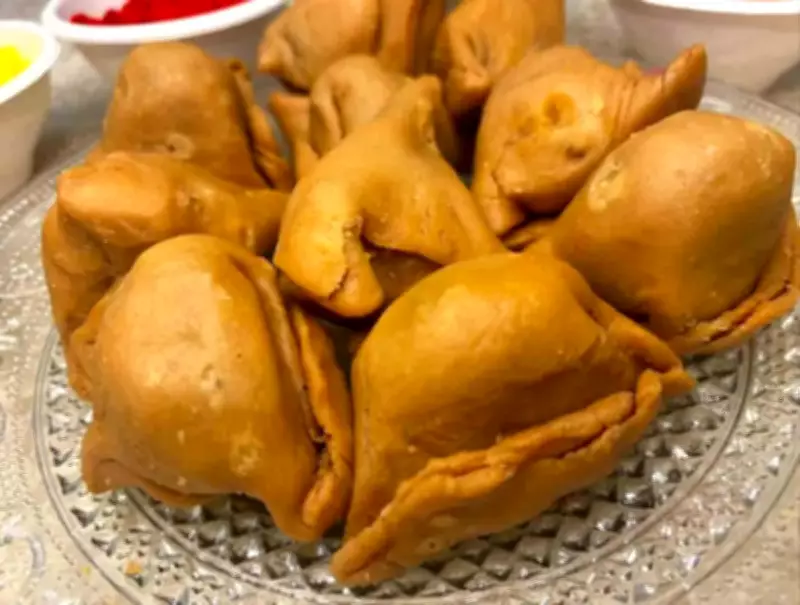
Prayagraj: The iconic samosa — a savoury blend of spiced potatoes encased in a crisp, golden crust — has been declared the district's official signature dish under Uttar Pradesh government's newly launched 'One District, One Dish' scheme.
Selection Process
The samosa outpaced popular local delicacies such as kachori, imarti and rabri lassi in the selection process. Introduced in the 2025–26 state budget, the scheme seeks to identify and promote one distinctive dish from each district, with the aim of giving it wider recognition and global visibility.
Deputy commissioner of industries Sharad Tandon said the selection followed extensive consultations with experts on local culture, food habits and culinary traditions. Inputs were also gathered from a divisional-level expert committee on gastronomy, while a public opinion survey was conducted among stakeholders linked to the food industry.

"Based on the comprehensive evaluation and feedback, the samosa was chosen as Prayagraj's dish under the scheme," Tandon said.
Production and Economic Impact
Following the selection, the department conducted a survey to assess the production and sale of samosas across the district. The report, which has been submitted to state government, indicates the dish's widespread presence, with more than 1,000 operational units associated with the trade. These include around 600 manufacturers, 200 street vendors, 200 restaurants and nearly a dozen self-help groups. A list of 30 major samosa-making units has also been prepared.
Tandon said that, on the lines of the 'One District, One Product' initiative, the government will soon offer financial assistance and training to those interested in starting food businesses or outlets under the 'One District, One Dish' scheme.
Historical Significance
Noting the strong link between cuisine, culture and tourism, historian and former head of the department of medieval and modern history at Allahabad University, Dr Heramb Chaturvedi, traced the samosa's journey into Indian cuisine.
"India has a rich culinary heritage. While we developed several dishes locally, many others were Indianised over time. The samosa falls in the latter category," he said, citing 11th-century historian Abul Fazl Baihaqi's reference to 'sambosa' in Tarikh-e-Baihaqi.
Dr Chaturvedi added that the dish arrived in India from Iran in the 13th century, where it was known as 'sanbosag' — a triangular pastry filled with pine nuts or minced meat. With the introduction of potatoes to the subcontinent, the samosa evolved into the spiced version widely consumed today.
Cultural and Social Role
Writer and commentator Ravinandan Singh said Loknath has historically been the city's stronghold of samosa culture, where the balance of savoury and sweet snacks helped popularise the dish. He added that Prayagraj's status as a major education hub has also played a role, with generations of students embracing the samosa as an affordable staple — paired with dahi-jalebi in the mornings or tea in the evenings.
With its new official status, the samosa is expected to gain further prominence, generating employment for traditional cooks and food entrepreneurs, while helping standardise quality, improve packaging, strengthen marketing, and create fresh opportunities for small vendors and self-help groups.