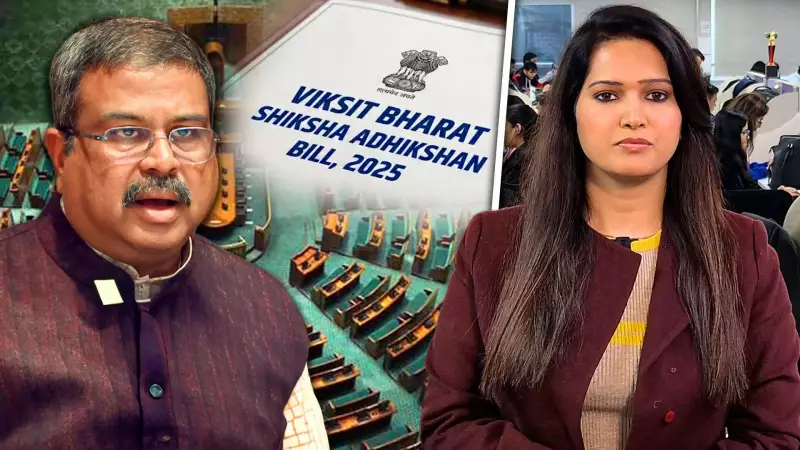
The Indian government has introduced the Viksit Bharat Shiksha Adhishthan Bill, a proposed legislation marketed as a transformative reform for the higher education sector. Presented as a move to align with the National Education Policy (NEP) 2020, the bill aims to streamline regulation by creating a single, powerful apex body. However, this initiative, announced in December 2025, has ignited a fierce debate that goes beyond administrative efficiency, touching the very core of India's federal structure.
The Promise of Simplification vs. The Fear of Centralization
According to the government, the primary objective of the Viksit Bharat Shiksha Adhishthan Bill is to end regulatory chaos and cut through bureaucratic red tape that currently plagues India's higher education system. The proposed single regulatory body is envisioned as a solution to the overlapping jurisdictions of multiple existing councils, promising a more efficient and coherent governance framework.
However, opposition parties and a significant section of education experts view the bill with deep apprehension. They argue that the fine print reveals a framework for excessive central control. Key points of contention include provisions for centralized appointments to the regulatory body, which would diminish state involvement, and the grant of unchecked executive discretion to the Union government. Critics also highlight that the proposed body's financial dependence on central grants would make it susceptible to direct influence from the Centre, undermining its autonomy.

Key Powers Raising Alarm
The bill grants the new apex authority sweeping powers that have intensified the debate. Two provisions, in particular, are seen as major red flags:
1. Power to Dissolve Existing Regulators: The bill empowers the new body to dissolve current higher education regulators. Critics fear this could be used to sideline independent or dissenting voices, consolidating all regulatory power under one centralised command.
2. Authority to Impose Binding Policy Decisions: The proposed legislation allows the body to issue policy directives that would be binding on states and universities. This power is seen as a direct challenge to the spirit of cooperative federalism, where the Centre and states collaborate on policy matters, especially in a domain like education that is on the Concurrent List of the Constitution.
A Broader Constitutional Debate
The controversy surrounding the Viksit Bharat Shiksha Adhishthan Bill is not merely a technical discussion about university administration. It has evolved into a fundamental debate about governance and power-sharing in India's democracy. At its heart lies the critical question: Who decides India's education future—the states or the Centre?
Proponents argue that a strong central hand is necessary to drive uniform quality standards and rapid reform across the country. They see the bill as a necessary step to realize the ambitious goals of the NEP 2020 without being bogged down by inconsistent implementation across different states.
Opponents, however, warn that the bill represents a quiet erosion of federal principles. They contend that replacing collaborative decision-making with top-down diktats and administrative compliance will stifle innovation, ignore regional diversities in educational needs, and concentrate too much power in the hands of the Union executive. The fear is that this model could set a precedent for centralizing power in other sectors governed by the Concurrent List.
As the bill moves through the legislative process, its fate will likely hinge on this larger political and constitutional struggle. The outcome will signal whether India's education policy will be shaped by a collaborative partnership with states or directed primarily from New Delhi.