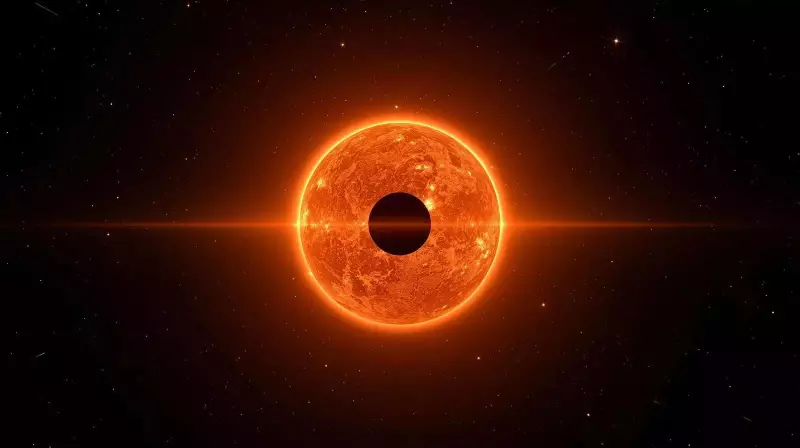
Have you ever watched a sci-fi film or seen a dramatic image online and wondered, 'What if the Sun suddenly exploded?' It's a common and chilling thought, especially for young minds who see our star as a permanent, unchanging fixture in the sky. Each day, it rises reliably, warming our world and nurturing life, often taken for granted. Yet, the Sun is not eternal. It is a star, governed by the same universal laws as all others, but its story is one of slow, patient change rather than cinematic fireworks.
Can Our Sun Actually Go Supernova?
According to astrophysicists at the University of Warwick, the straightforward answer is a resounding no. Stars like our Sun simply lack the necessary mass to end their lives in a cataclysmic supernova explosion. Such violent finales are reserved for stellar giants—stars many times larger and heavier than the Sun. These massive stars burn through their nuclear fuel at a furious pace, leading to a rapid and dramatic collapse and rebound.
In contrast, our Sun is a relatively modest, stable star. It has been fusing hydrogen into helium in its core for roughly 4.6 billion years and is expected to continue doing so for another 5 billion years. The popular imagination of a sudden, blinding flash that vaporizes everything is gripping, but it does not align with the physics governing our home star.

The Sun's True, Gradual Demise
So, how will the Sun actually die? Its end will be a long, drawn-out process beginning in about five billion years. As the hydrogen fuel in its core eventually depletes, the Sun will start to undergo a profound transformation. It will begin to expand and cool at its surface, evolving into what astronomers call a red giant.
During this colossal expansion phase, the Sun will swell to such an enormous size that it will engulf the inner planets of our solar system. Mercury and Venus will be consumed first. Current models suggest Earth's fate hangs in the balance, likely to be swallowed as well, depending on how much mass the Sun loses during its expansion. This entire phase unfolds over millions of years, not in an instant.
The Legacy of a Red Giant and a White Dwarf
The red giant Sun will become unstable, its outer layers turning puffy and drifting away into the void of space. This process of shedding material is a crucial form of cosmic recycling. The elements forged in the Sun's heart—like carbon and oxygen—will be scattered into the interstellar medium, eventually becoming the building blocks for new stars, planets, and perhaps even life elsewhere in the galaxy.
After this, the Sun's core will collapse under its own gravity, leaving behind a super-dense, Earth-sized remnant known as a white dwarf. This stellar cinder will no longer generate energy through fusion. It will simply glow with residual heat, slowly cooling and fading over eons. The outer planets, from Mars onward, will continue to orbit this dark, dense relic in a cold and quiet solar system.
Could life survive? In its current form, absolutely not. Without the Sun's warmth, Earth would become a frozen wasteland. While futuristic concepts like planetary migration or advanced space habitats are fascinating to ponder, they remain speculative. The key takeaway is the immense timescale. The Sun's transformation is an event so far in the future it is almost beyond human comprehension. For now, and for billions of years to come, our Sun will continue its steady, reliable journey across our sky, the silent architect of life on Earth.