The Changing Value of Elite Education in the AI Era
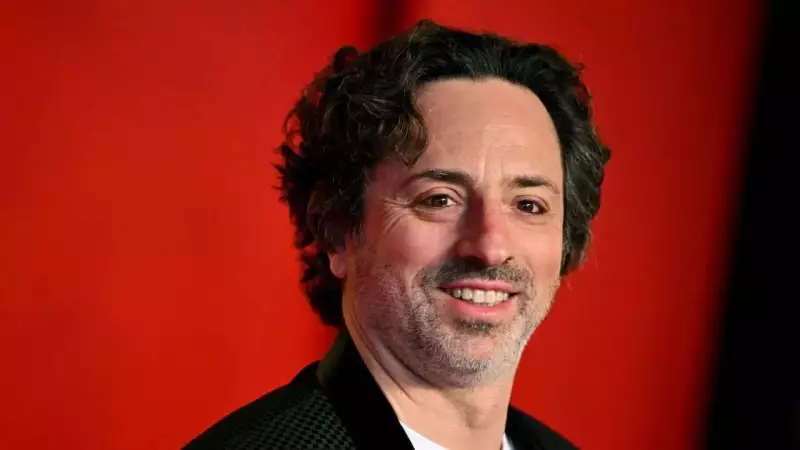
For many years, Stanford University held a legendary position in the technology world. Its alumni list included famous names like LinkedIn founder Reid Hoffman and Google co-founder Sergey Brin. This reinforced a widespread belief that elite education served as a sure path to top opportunities. A four-year degree, especially from schools connected to Silicon Valley, acted as both a signal of ability and a filter for employers.
That fundamental assumption now faces serious challenges. Artificial intelligence is transforming entry-level jobs. Companies are rethinking how they find and evaluate talent. As a result, the college degree is gradually losing its role as the automatic gatekeeper to employment. This shift comes not from universities themselves but from employers who increasingly view formal credentials as inefficient proxies for actual skills.
Sergey Brin's Perspective on Education and AI
Speaking to Stanford engineering students recently, Brin reflected on his own educational journey. He did not dismiss his choices but offered thoughtful commentary. Brin explained that he studied computer science out of genuine interest rather than career strategy. He told students he followed his passion for the field, which happened to be transforming rapidly.

At the same time, Brin cautioned against making educational decisions based solely on fears about automation. He suggested that AI does not neatly spare some disciplines while dismantling others. Brin humorously noted that AI might excel in comparative literature just as much as in coding. His message was clear: students should not abandon technical fields simply because AI advances.
Google's Evolving Hiring Practices
Brin's comments gain significance when viewed alongside Google's actual hiring changes. The company once strongly favored academic pedigree. Now it has steadily reduced its reliance on college degrees for many positions. Brin acknowledged that Google hires many people without bachelor's degrees. These individuals often teach themselves skills in unconventional ways.
Hiring data supports this observation. Research from the Burning Glass Institute shows a notable decline in degree requirements at Google. Between 2017 and 2022, the percentage of Google job postings requiring a college degree dropped from 93% to 77%. Other major tech firms like Microsoft, Apple, and Cisco have made similar adjustments. This collective move signals a broader transition toward skills-based hiring instead of credential-based screening.
This recalibration raises important questions. If degrees no longer reliably signal ability, what purpose do they serve in the labor market?
Business Leaders Express Doubts About Elite Credentials
Leaders outside the technology sector share similar concerns. JPMorgan Chase CEO Jamie Dimon recently stated that elite education does not automatically translate to workplace effectiveness. He questioned whether attending an Ivy League school or having excellent grades guarantees someone will be a great worker. Dimon emphasized that many valuable skills remain invisible on traditional resumes.
Palantir CEO Alex Karp offered an even more direct perspective. Despite holding three degrees himself, including a Stanford law degree, Karp dismissed the long-term relevance of educational pedigree once someone joins a company. He declared that at Palantir, everyone becomes a "Palantirian" regardless of their educational background.
According to Great Place to Work CEO Michael Bush, this thinking is spreading beyond a small group of firms. Bush observed that nearly every company now realizes they miss out on great talent by insisting on degree requirements. He described this realization as a growing snowball effect.
Implications for Universities and Students
For Brin, the implications extend far beyond hiring practices. As credentials lose their power as screening tools, universities themselves may need to reassess their role. Brin suggested rethinking what a university represents in today's world.

The landscape is changing rapidly. Degree requirements are becoming optional. Alternative hiring routes are expanding. Skills learned outside formal institutions now gain legitimacy. Universities will continue to matter, but perhaps less as gatekeepers and more as one pathway among many.
Students may not feel the impact immediately. Over time, however, the distance between education as credential and education as capability will likely widen. As companies like Google continue to hire beyond the degree, the long-standing contract between universities and the labor market is being rewritten in fundamental ways.