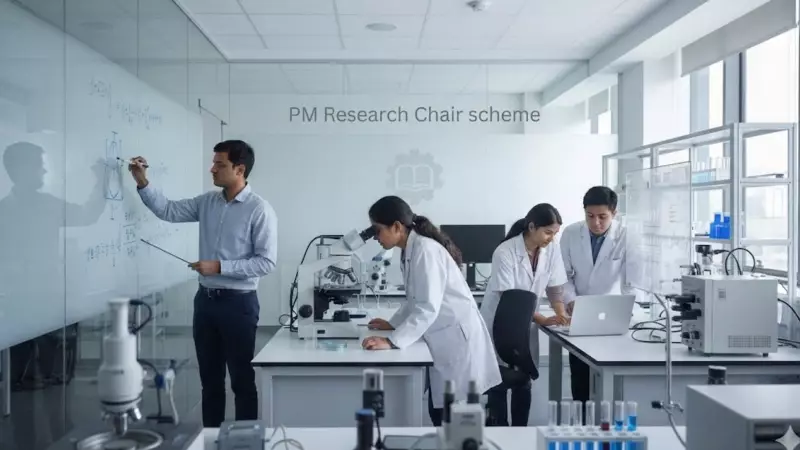
In a major push to reverse the brain drain and bolster its research ecosystem, India is set to launch a high-profile initiative to attract top Indian-origin scientists from across the globe back to its premier engineering institutes. The proposed Prime Minister Research Chair (PMRC) scheme aims to engage 120 research fellows and chairs over a span of five years.
A Strategic Move to Attract Global Indian Talent
The proposal was presented before the IIT Council, the apex body for the Indian Institutes of Technology, during its meeting in August last year. According to the minutes released recently, the scheme is designed to strengthen India's higher education and research ecosystem by tapping into the vast pool of global talent of Indian origin. The council has given an in-principle agreement, with the understanding that the initiative will be launched soon in a structured, large-scale manner.
The scheme will operate across three distinct categories: Young Research Fellows, Senior Research Fellows, and Research Chairs. Its focus will be sharply aligned with national priorities, targeting 14 critical sectors including artificial intelligence (AI), semiconductors, clean energy, and advanced materials. The objective is clear: to improve institutional research capacity, boost innovation, and enhance India's global standing in science and technology.

IIT Council's Parallel Focus on Research Pathways and Alumni
Alongside the PMRC announcement, the IIT Council has taken significant steps to understand and improve the domestic research landscape. It has recommended expanding a detailed alumni survey to all 23 IITs for the graduating batches of 2013, 2014, and 2015. This survey aims to capture comprehensive data on alumni outcomes and their socio-economic impact.
More crucially, the council has directed a deep dive into a persistent challenge: the exodus of IIT graduates for PhD and postdoctoral programmes outside India. It has recommended that the reasons behind this trend be thoroughly analysed, and concrete measures be proposed to strengthen research pathways within the country and improve academic retention. IIT Bombay has been tasked with acting on these recommendations.
Revamping Postgraduate Education for Better Retention
The council, which met after a two-year gap, also addressed reforms in postgraduate programmes. It identified key reasons why BTech graduates often bypass MTech programmes in India: limited specialisations and a lack of internship opportunities. To counter this, the council emphasised making industry internships a compulsory component of MTech programmes.
Consequently, it has recommended that all IITs revamp their MTech curriculum to align with specific institutional needs and vision, making them more attractive and industry-relevant for students. This multi-pronged approach—attracting top global faculty, analysing the student brain drain, and reforming postgraduate courses—signals a comprehensive strategy by the government and the IIT Council to build a self-sustaining, world-class research environment within India.